Garlic might be the most underrated plant in your garden—but only if you use it strategically. Plant it in the wrong spot, and it quietly grows like any other crop.
But plant it next to the right companions, and it can help you maximize space, reduce pest pressure, and create a more balanced garden ecosystem.
The problem is, most gardeners only see basic lists of “good” and “bad” companion plants without understanding why those relationships matter.
In this guide, you’ll learn not just what to plant with garlic, but how to use it as a powerful tool to design a healthier, more productive garden—whether you’re a beginner or an experienced grower.
Garlic grows well with many vegetables, herbs, flowers, and fruits due to its compact growth and strong aroma.
The best garlic companion plants include lettuce, spinach, beets, carrots, tomatoes, peppers, strawberries, chamomile, and roses. These plants benefit from garlic’s space efficiency and may experience fewer pest issues, while beans and peas should generally be avoided.
Why Garlic Works So Well as a Companion Plant
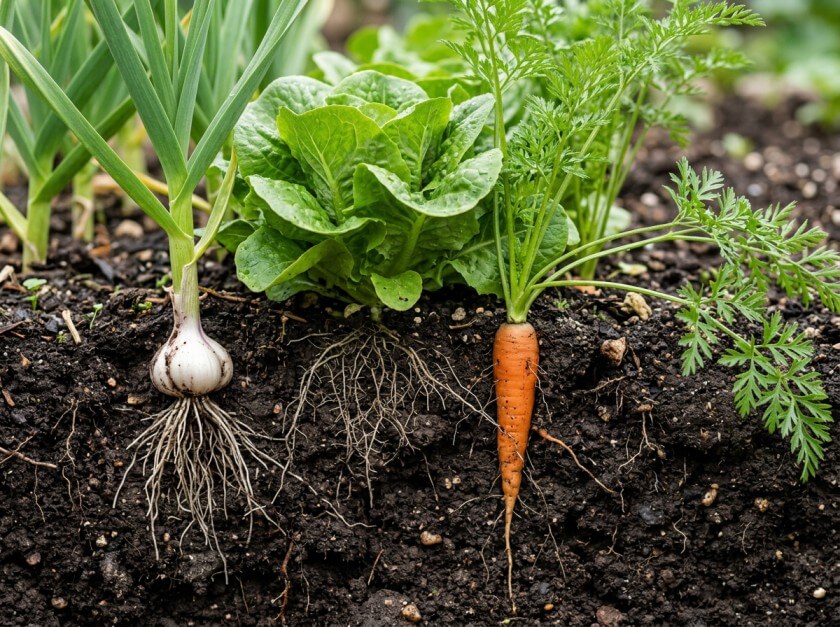
Garlic is one of the most versatile companion plants because it fits easily into almost any garden layout.
Unlike sprawling crops, garlic grows vertically and takes up very little horizontal space, making it ideal for interplanting.
This allows gardeners to maximize productivity, especially in smaller gardens or raised beds.
Another key reason garlic works well is its strong natural aroma. Garlic contains sulfur compounds—most notably allicin—that are released into the surrounding air and soil.
Many gardeners believe this helps mask the scent of nearby plants, making it harder for pests to locate their target. 6
While not all of these effects are fully proven in controlled studies, garlic has a long history in traditional and organic gardening for this purpose.
Garlic also has a relatively low nutrient demand compared to heavy-feeding crops like corn or squash.
This means it can coexist with many vegetables without competing aggressively for resources. When paired correctly, it complements rather than competes.
Additionally, garlic’s long growing season makes it a stable presence in the garden. It can be planted in fall and remain in place while other crops come and go, making it a reliable anchor for garden planning.
💡 Pro Tip: Garlic works best as part of a broader strategy. It won’t eliminate pests or fix poor soil on its own, but when used thoughtfully, it becomes a valuable component of a healthy garden ecosystem.
Learn More about When to Plant Garlic in Illinois
Garlic’s Basic Growing Requirements (Know Before You Plant)
Before choosing companion plants, it helps to understand what garlic itself needs—so you can choose companions that won’t interfere.
- Sunlight: Full sun (6–8 hours daily)
- Soil pH: 6.0–7.0 (slightly acidic to neutral)
- Watering: Consistent moisture; avoid waterlogged soil
- Spacing: Cloves planted 4–6 inches apart, rows 12 inches apart
- Planting time: Fall (hardneck varieties) or early spring (softneck varieties)
- Harvest: Late spring to early summer when lower leaves turn brown
💡 Pro Tip: Hardneck garlic varieties like Rocambole or Purple Stripe have a bolder flavor and are better suited for cold climates. Softneck varieties like Artichoke or Silverskin store longer and work well in milder climates.
Best Garlic Companion Plants by Goal
Instead of just listing plants, it’s more useful to think about why you’re pairing garlic with them. Different companion plants serve different purposes, and choosing based on your goal leads to better results.
🌿 For Pest Management
Garlic is often used alongside crops that are prone to insect issues. Plants like tomatoes, peppers, and cabbage are commonly paired with garlic because its sulfur compounds may help deter pests such as aphids, spider mites, and Japanese beetles.
While results vary, many gardeners report fewer visible pest problems in mixed plantings compared to monoculture rows.
🥬 For Space Efficiency
Garlic pairs extremely well with fast-growing, shallow-rooted crops. Lettuce, spinach, and radishes can be planted between garlic rows without interfering with bulb development.
These crops grow quickly and are often harvested before garlic needs more space—making them perfect “living mulch” companions.
🌱 For Soil and Root Balance
Root crops like carrots and beets complement garlic well because they grow at different soil depths.
Garlic bulbs sit in the top 6–8 inches of soil, while carrots can extend 8–12 inches deep. This reduces competition and allows both crops to develop properly—especially useful in compact raised beds.
🌸 For Pollinator and Garden Health
Herbs and flowers such as chamomile and marigolds are often planted near garlic to attract beneficial insects like ladybugs and lacewings, which prey on pests.
This adds another layer of biodiversity to the garden and supports overall plant health beyond what garlic alone can provide.
15 Best Plants to Grow Near Garlic
Here are the top companion plants in detail, along with exactly how they benefit from being near garlic and practical tips for each pairing.
🥬 Leafy Greens
Lettuce Lettuce is one of the easiest and most rewarding companions for garlic. It grows quickly, stays shallow-rooted, and doesn’t compete with garlic’s bulb development at all.
Plant lettuce between garlic rows at 6–8 inch spacing. Because lettuce is harvested well before garlic matures in summer, there’s no timing conflict.
The light shade garlic provides in spring can actually help lettuce avoid bolting in warmer spells.
Spinach Like lettuce, spinach thrives in similar cool-season conditions as garlic. It can be tucked neatly between rows or at bed edges without crowding.
Spinach is a fast grower and will be ready to harvest 4–6 weeks after planting—long before garlic needs extra space. Both crops benefit from the same consistent watering schedule, making bed management easier.
🥕 Root Crops
Carrots Carrots and garlic are a classic companion planting combination because their root systems occupy completely different soil layers.
Garlic stays in the top 6–8 inches; carrots extend 8–12 inches or more. This means no root competition.
Some gardeners also report that the scent of garlic may confuse carrot flies. Space them 3–4 inches apart within the row and keep rows 12 inches apart for easy access.
Beets Beets follow the same logic as carrots—their roots grow deep enough to avoid competing with garlic bulbs.
Beets are also light feeders, which means they won’t strip nutrients away from garlic. They’re a great fit for fall planting alongside garlic, since both are cool-season crops.
Use beet greens as a bonus harvest while waiting for bulbs and roots to mature.
🍅 Fruiting Crops
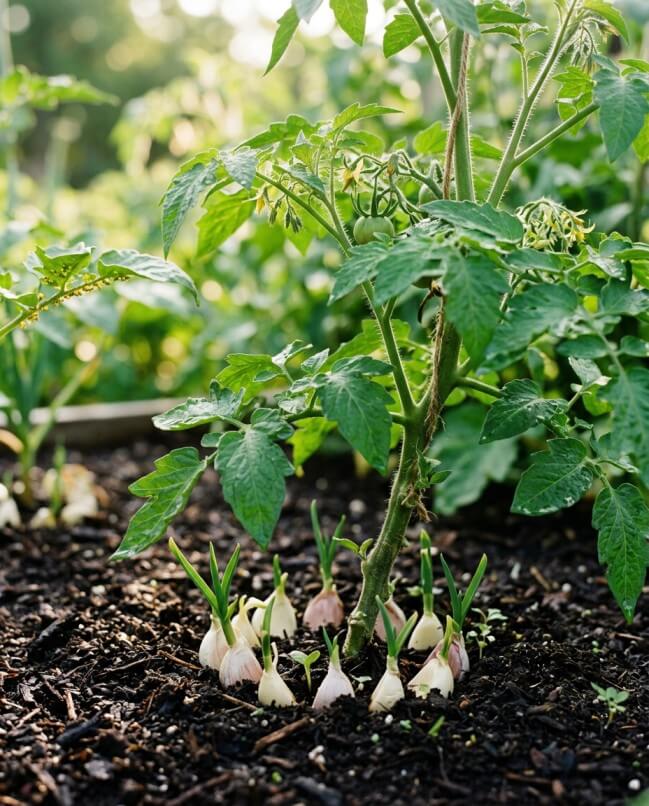
Tomatoes The garlic-tomato pairing is one of the most popular in companion planting. Gardeners commonly plant garlic at the base of tomato plants to help deter aphids, whiteflies, and spider mites.
The sulfur compounds in garlic may also offer some resistance to fungal diseases like early blight when garlic is densely interplanted.
Give each tomato plant 18–24 inches of space and plant 2–3 garlic cloves around the drip line.
Peppers Peppers benefit from similar growing conditions to garlic—full sun, well-drained soil, and consistent moisture.
Garlic planted nearby may help deter aphids and pepper weevils, two of the most common pepper pests.
Both crops are moderate feeders, so they work well sharing bed space without depleting nutrients.
🍓 Fruits
Strawberries Garlic and strawberries have been planted together for generations. The belief is that garlic’s strong scent deters slugs, aphids, and spider mites—three of the biggest threats to strawberry plants.
Plant garlic cloves 4–6 inches away from strawberry crowns, alternating them along the row. Avoid planting garlic directly on top of runners that the strawberries send out in summer.
🌼 Flowers and Herbs
Chamomile Chamomile is a gentle but powerful companion. It attracts hoverflies, parasitic wasps, and other beneficial insects that prey on garden pests.
Some gardeners also claim that chamomile improves the flavor of nearby plants—though the science behind this is limited.
Plant chamomile at the border of your garlic bed to create a buffer zone that welcomes helpful insects without competing for space.
Marigolds Marigolds are widely used in companion planting systems because of their ability to deter nematodes in the soil and repel whiteflies and aphids above ground. French marigolds (Tagetes patula) are particularly effective.
Plant them as a border around your garlic bed or intersperse them throughout the planting. As a bonus, they add color and attract pollinators.
Dill Dill is often overlooked as a garlic companion, but it earns its place. It attracts beneficial predatory insects like lacewings and parasitic wasps, which keep common garlic pests in check.
Keep dill at the edges of the bed rather than directly adjacent to garlic rows, as mature dill can grow tall and compete for sunlight if left unchecked.
🥦 Brassicas
Cabbage Cabbage is commonly paired with garlic in traditional companion planting because garlic may help deter cabbage loopers, cabbage worms, and whiteflies.
These pests navigate largely by scent, and garlic’s sulfur compounds may interfere with their ability to locate host plants. Space cabbage 18–24 inches apart and plant a ring of garlic cloves around each head.
Broccoli Broccoli faces the same pest pressures as cabbage—aphids, loopers, and flea beetles.
Garlic interplanted between broccoli rows may help reduce pest pressure throughout the growing season. Both crops enjoy cool weather, making spring or fall planting ideal for this combination.
Kale Kale is one of the most pest-prone brassicas, which makes it a strong candidate for garlic companionship.
Aphids in particular love kale, and garlic planted alongside it may help deter heavy infestations. Plant garlic cloves 4–6 inches from kale plants and ensure neither crop is in the other’s direct shade.
🌹 Ornamentals
Roses Garlic has been planted beneath rose bushes for centuries—particularly to deter aphids and black spot fungus, which is a common rose disease caused by a fungal pathogen.
Plant 3–4 garlic cloves in a ring around each rose bush, about 6 inches from the base. This combination looks attractive too, especially with ornamental garlic varieties that produce purple globe flowers in late spring.
Expanded Garlic Companion Planting Chart
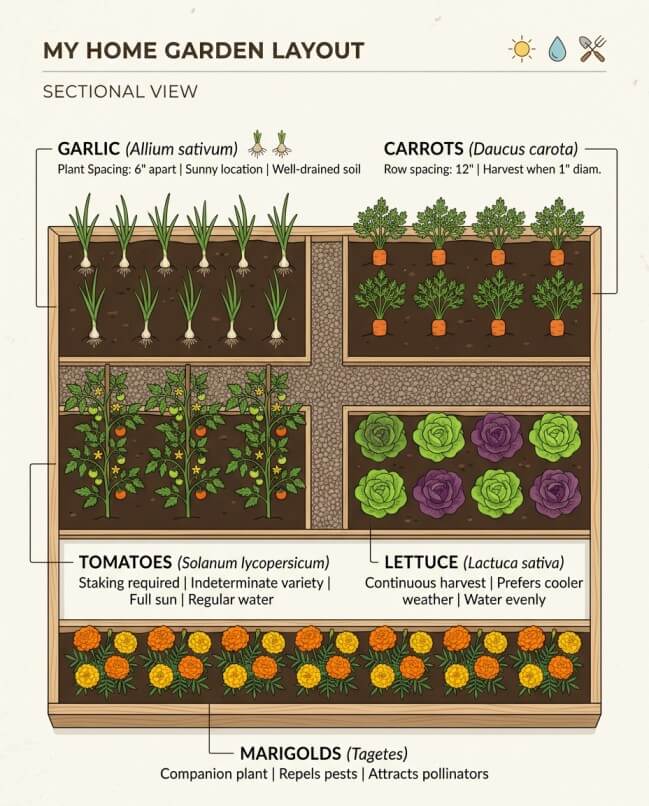
| Plant | Good with Garlic? | Primary Benefit | Spacing Tip | Notes |
| Lettuce | ✅ Yes | Space saving | 6–8″ between plants | Harvest before garlic matures |
| Spinach | ✅ Yes | Cool-season pairing | 4–6″ between plants | Same watering needs |
| Carrots | ✅ Yes | Root depth separation | 3–4″ apart in rows | May deter carrot fly |
| Beets | ✅ Yes | Root depth separation | 4–6″ apart | Great for fall planting |
| Tomatoes | ✅ Yes | Pest deterrence | 2–3 cloves per plant | Plant around drip line |
| Peppers | ✅ Yes | Aphid deterrence | 4–6″ from stem | Similar sun & water needs |
| Strawberries | ✅ Yes | Slug & aphid deterrence | 4–6″ from crowns | Avoid blocking runners |
| Chamomile | ✅ Yes | Beneficial insect attraction | Border planting | May enhance neighboring flavor |
| Marigolds | ✅ Yes | Nematode & whitefly control | Border or interspersed | Use French marigolds |
| Dill | ✅ Yes | Predatory insect habitat | Bed edges only | Keep from shading garlic |
| Cabbage | ✅ Yes | Looper & worm deterrence | 18–24″ from garlic row | Classic pairing |
| Broccoli | ✅ Yes | Aphid deterrence | 12–18″ from garlic | Cool season pairing |
| Kale | ✅ Yes | Aphid deterrence | 4–6″ from plant | Monitor for heavy aphid loads |
| Roses | ✅ Yes | Aphid & fungal resistance | 6″ ring around base | Historically proven pairing |
| Beans | ❌ No | Poor pairing | Avoid entirely | May stunt each other’s growth |
| Peas | ❌ No | Poor pairing | Avoid entirely | Similar issue as beans |
| Sage | ⚠️ Caution | Possible growth conflict | Keep separated | Some sources suggest incompatibility |
| Other Alliums | ⚠️ Caution | Disease risk | Rotate annually | Increases risk of white rot |
What Not to Plant With Garlic
Knowing what to avoid is just as important as knowing what works.
❌ Beans
Garlic and beans are one of the most well-known incompatible pairings in companion planting. The exact mechanism isn’t fully understood, but many gardeners and traditional growers report that garlic stunts bean growth when planted in close proximity.
Beans are also nitrogen fixers—they work with soil bacteria to pull nitrogen from the air—and some believe garlic may interfere with this process. Keep beans at least 2–3 feet away from garlic.
❌ Peas
Similar to beans, peas are legumes that fix nitrogen and are commonly kept separate from garlic. Planting them together can reduce yields in both crops.
If your garden is small and you must grow both, plant them in separate sections of the bed with other plants as a buffer in between.
⚠️ Sage
Sage is sometimes listed as a companion for garlic, but other sources suggest it may compete for the same soil chemistry or create growth conflicts.
If you grow sage, it’s safest to give it its own section of the herb garden rather than interplanting it directly with garlic.
⚠️ Other Alliums (Onions, Leeks, Chives)
While garlic doesn’t harm these plants directly, planting multiple allium family members in the same bed increases the risk of white rot (Stromatinia cepivora)—a serious soil-borne fungal disease that spreads through allium roots.
If white rot establishes in your soil, it can persist for 20+ years. Rotate alliums to a new bed location each year.
💡 Rotation Note
Never plant garlic in the same spot two years in a row, and avoid following any allium crop (onions, leeks, chives) in the same bed. A 3–4 year rotation cycle significantly reduces disease pressure.
How to Design a Garden Bed Around Garlic
Garlic works best when integrated thoughtfully into your garden layout—not just tossed in wherever there’s space.
🌱 Raised Beds
Raised beds are ideal for garlic companion planting because you control the soil quality and drainage completely.
Plant garlic cloves along the edges of the bed, where their upright growth won’t shade lower-growing companions in the interior.
Lettuce, spinach, and herbs can fill the center rows. Keep the bed no wider than 4 feet so you can reach the middle without stepping in.
🌿 Row Planting
In traditional row gardens, alternate garlic with compatible crops for maximum efficiency. A practical layout: one row of garlic, one row of carrots, one row of garlic, one row of beets.
This staggered approach is easy to manage and creates a natural diversity barrier that makes it harder for pests to sweep through an entire section of the garden.
🌸 Mixed Beds
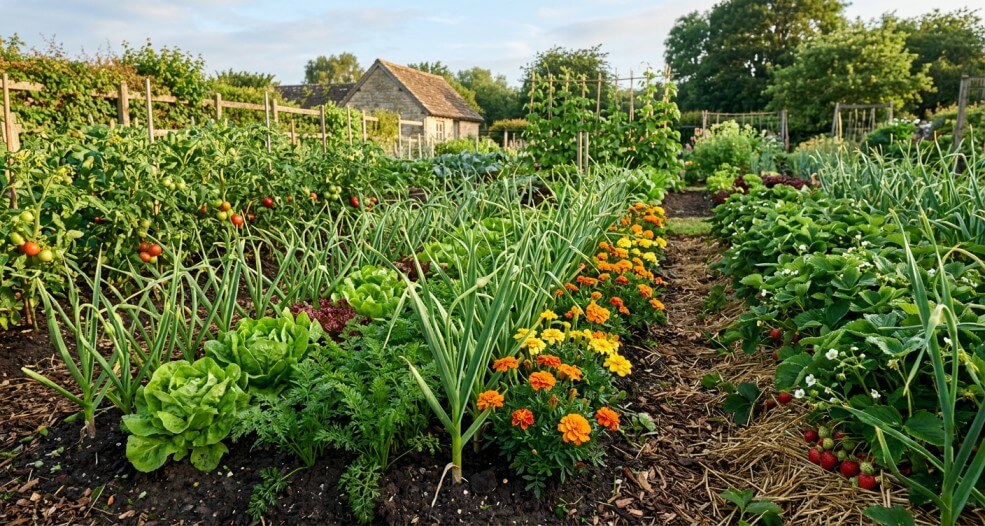
Combine garlic with flowers and vegetables in the same bed for a cottage-garden style approach that’s also highly functional.
A border of marigolds, interior rows of garlic and tomatoes, and chamomile in the corners creates multi-layered pest management and attracts pollinators—all in one small space.
Step-by-Step Layout Strategy
- Choose your main crop (e.g., tomatoes, kale, or strawberries)
- Identify your goal (pest deterrence, space efficiency, or pollinator support)
- Place garlic according to that goal (ring around plants, between rows, or bed edges)
- Add a secondary companion (marigolds or chamomile for beneficial insect attraction)
- Check spacing — garlic cloves need 4–6 inches; give main crops their full recommended space
- Plan harvest timing — make sure early companions (lettuce, radishes) are harvested before garlic needs their space in spring
Garlic Companion Planting for Beginners
For beginners, simplicity is key. Don’t try to implement every combination at once.
✅ Easiest Starter Pairings
- Garlic + lettuce — Nearly foolproof. Plant lettuce between rows and harvest before summer.
- Garlic + spinach — Same growing conditions; both are cool-season crops.
- Garlic + beets — Different root depths; no competition, no fuss.
- Garlic + marigolds — Plant marigolds as a border; great visual appeal plus pest deterrence.
❌ Common Beginner Mistakes
- Overcrowding — Give each plant its proper spacing. Crowded garlic produces small, underdeveloped bulbs.
- Ignoring sunlight — Garlic and most companions need full sun. Don’t plant taller crops where they’ll shade garlic.
- Planting near beans or peas — This is the most commonly repeated mistake; keep legumes separated.
- Skipping crop rotation — Many beginners plant garlic in the same spot every year, which increases disease risk dramatically.
Learn More about when to plant garlic in Colorado
Garlic Companion Planting for Advanced Gardeners
Experienced gardeners can use garlic more strategically as part of an integrated garden management system.
🌿 Advanced Uses
Integrate into pest management zones: Designate sections of your garden as “pest buffer zones” where garlic, marigolds, and dill are planted together specifically to attract beneficial insects and deter problematic ones. Position these zones upwind from your most vulnerable crops.
Combine with pollinator corridors: Create a strip through or around the garden that combines garlic, chamomile, dill, and wildflowers.
This corridor encourages pollinators and predatory insects to move through the entire garden rather than staying in one section.
Use in crop rotation planning: Build garlic into a formal 4-year rotation plan —
Year 1: garlic with lettuce and brassicas;
Year 2: legumes (moved away from garlic);
Year 3: heavy feeders like squash or corn;
Year 4: root crops. This keeps soil biology healthy and disease pressure low.
Plant fall garlic as a cover crop anchor: Fall-planted garlic can anchor a mixed winter planting that includes overwintering greens and cover crops. This keeps the soil active through winter and reduces weeding the following spring.
Does Garlic Really Improve Nearby Plants?
Garlic is often credited with many benefits, but it’s worth separating what’s well-supported from what’s more anecdotal.
🧠 What We Know
Garlic contains allicin and other organosulfur compounds that are released both above ground (through the aroma) and below ground (through root exudates into the soil).
These compounds have demonstrated antimicrobial and antifungal properties in laboratory studies.
In garden settings, this may explain why garlic is associated with reduced fungal issues near roses and reduced pest populations near brassicas.
Research on companion planting in general is growing, but most studies look at large-scale agricultural systems rather than home gardens.
The results are promising but variable—which is why anecdotal reports from gardeners should be taken seriously as data points even when formal trials are limited.
⚠️ What to Keep in Mind
- Results vary by garden, climate, soil type, and pest pressure levels
- Garlic is a support tool, not a replacement for good growing practices (proper spacing, healthy soil, crop rotation)
- Even if garlic doesn’t significantly reduce pests, the space efficiency benefits alone make it a worthwhile companion
Common Garlic Companion Planting Mistakes
❌ Treating Garlic as a Cure-All
Garlic won’t solve a severe aphid infestation or fix a soil fungal problem on its own. Use it as part of a layered approach alongside other organic pest management strategies.
❌ Ignoring Spacing
The most common mistake—crowded garlic produces small bulbs. Even when interplanting, give each garlic clove its minimum 4–6 inches of space. Don’t sacrifice garlic quality for the sake of fitting in more companions.
❌ Poor Planning Around Harvest Timing
Garlic matures in late spring or early summer. If you plant companions that also need summer space (like sprawling squash), you’ll end up with a crowded bed right when garlic needs room to finish forming its bulbs.
❌ Planting in the Same Spot Repeatedly
Repeat planting of garlic or any allium in the same bed dramatically increases the risk of white rot and other soil-borne diseases. Rotate every year without exception.
Garlic Companion Planting in Containers
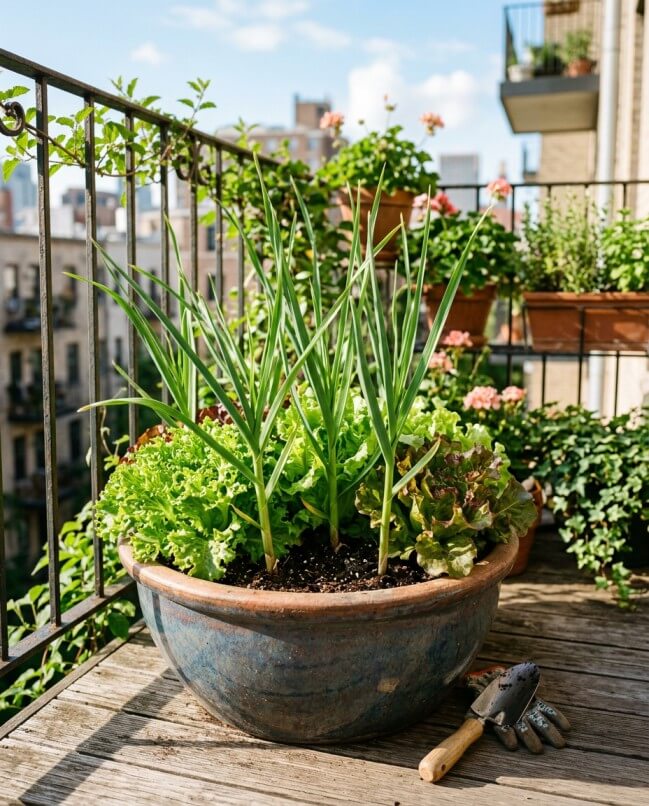
Growing garlic in containers is entirely practical, and companion planting still applies—just on a smaller scale.
🌿 Best Companion Options for Containers
- Lettuce — Shallow roots; grows well in the same large pot as garlic
- Herbs (basil, chives, parsley) — Most herbs don’t compete aggressively with garlic
- Small greens (arugula, mizuna) — Fast growers that can be cut and come again before garlic matures
Container Tips
- Use a container at least 12 inches deep and 16 inches wide for garlic; deeper is better
- Ensure drainage holes are adequate — garlic bulbs rot quickly in waterlogged soil
- Use a high-quality potting mix; garden soil is too dense for containers
- Feed with a balanced fertilizer (10-10-10) every 3–4 weeks once shoots appear
- Place in full sun — at least 6 hours daily — for proper bulb formation
💡 Pro Tip: A large (5-gallon or larger) half-barrel planter works beautifully for a garlic + lettuce combo. Plant garlic cloves 4–6 inches apart, then tuck lettuce seedlings between them. Harvest lettuce in spring before garlic needs the space.
Seasonal Companion Planting Timeline
🍂 Fall
Plant garlic cloves 4–6 weeks before the ground freezes. This is the best time to establish fall-planted companions like overwintering spinach, kale, or cold-hardy lettuces. Marigold beds can be cut back and composted in fall to add organic matter.
🌸 Spring
Add fast-growing greens nearby as garlic breaks dormancy and begins shooting up. Lettuce, radishes, and spinach can be sown directly between garlic rows. This is also the time to plant chamomile and marigold seeds at the borders of the bed.
☀️ Summer
Begin harvesting cool-season companions (lettuce, spinach) as temperatures rise. Garlic scapes appear in early summer on hardneck varieties—harvest these for cooking. Full garlic harvest happens when the bottom 3–4 leaves turn brown (typically June–July). After harvest, the bed is free for summer crops.
Garlic Companion Plant- FAQs
Can garlic be planted with tomatoes?
Yes—this is one of the most recommended pairings in companion planting. Plant 2–3 garlic cloves around the base of each tomato plant. The sulfur compounds in garlic may help deter aphids, spider mites, and whiteflies that commonly attack tomatoes.
Can garlic repel pests?
It can help, but results vary by pest type, garden conditions, and pest pressure levels. Garlic is most reliable at deterring soft-bodied insects like aphids and mites. It’s less effective against caterpillars, beetles, and other chewing insects that don’t navigate by scent.
Can garlic grow with strawberries?
Yes—garlic and strawberries are a compatible and popular pairing. Garlic may help deter slugs, aphids, and spider mites that damage strawberry plants. Plant cloves 4–6 inches from strawberry crowns and avoid covering the runners strawberries send out in summer.
When should I plant garlic with companions?
For fall-planted garlic (the most common method), plant cloves in September–November. Add cool-season companions like lettuce or spinach at the same time, or in early spring as garlic resumes growth.
How close should companions be to garlic?
Most companions should be 4–8 inches away from garlic cloves. Don’t plant them so close that roots compete directly or foliage overlaps heavily. Spacing depends on the companion—lettuce can be 6 inches away; tomatoes should have their own 18–24 inch zone.
Does garlic affect soil for the next crop?
Garlic can leave behind beneficial sulfur compounds in the soil, which may reduce certain fungal pathogens. However, because of white rot risk, avoid planting any allium family member in the same spot the following year.
Can I grow garlic alongside fruit trees?
Yes—garlic planted under or around fruit trees (apples, pears, peaches) is a traditional practice. It may help deter borers, aphids, and other tree pests. Plant a ring of cloves around the drip line of the tree each fall.
What’s the best container pairing for small spaces?
Garlic + lettuce in a large planter (16 inches wide, 12 inches deep) is the easiest and most productive small-space pairing. You’ll harvest the lettuce in spring and the garlic in early summer from the same container.
Final Takeaways
Garlic is a flexible and powerful companion plant when used correctly. Instead of relying on simple lists, focus on your garden goals—whether it’s saving space, improving plant health, or experimenting with natural pest management.
Choose compatible plants, avoid known poor pairings (especially beans and peas), and always prioritize proper spacing and crop rotation.
Understanding why each pairing works—whether it’s root depth separation, pest deterrence through sulfur compounds, or beneficial insect attraction—gives you the knowledge to design pairings beyond what any list can provide.
With the right approach, garlic can become one of the most valuable plants in your entire garden system—not just for the kitchen, but for the health of everything growing around it. 🌿