Growing garlic sounds simple—plant a clove and wait, right? Yet many gardeners end up with disappointing results: small bulbs, no cloves, or plants that never fully develop.
The truth is, garlic is easy to grow once you understand the few key factors that actually matter—timing, soil, and spacing.
One of the biggest mistakes beginners make is planting at the wrong time for their climate, which prevents proper bulb formation.
If you fix just this one issue—by planting 4–6 weeks before your first frost—you can dramatically increase your chances of growing large, healthy garlic bulbs.
In this guide, you’ll learn not just how to grow garlic, but how to grow it successfully, whether you’re a beginner or an experienced gardener.
What is the Best Way to Grow Garlic? (Quick Answer)
Garlic grows best when planted in fall in loose, well-draining soil with full sun. Separate bulbs into cloves, plant them 2 inches deep and 4–6 inches apart, water consistently, and harvest when the lower leaves turn brown. Proper spacing, soil preparation, and timing are key to producing large bulbs.
Why Grow Garlic at Home?
Growing garlic at home is one of the easiest ways to become more self-sufficient, even if you have limited gardening experience.
Unlike many vegetables, garlic requires minimal maintenance once established and can thrive in a wide range of climates.
The flavor of homegrown garlic is noticeably stronger and fresher than store-bought varieties, making it a favorite among cooks.
It also stores for months, which means a single harvest can supply your kitchen for a long time.
Additionally, garlic acts as a natural pest deterrent in the garden, helping protect nearby plants. For gardeners looking for high yield with low effort, garlic is one of the best crops to start with.
Key Benefits:
- 🌿 Better flavor than store-bought garlic
- 💰 Saves money long-term
- 🧄 Stores for 6–10 months
- 🛡️ Natural pest repellent in your garden
- 🌱 Low maintenance once established
Learn More About When to Plant Garlic in Illinois: Regional Guide
🧄 Garlic Types Explained (And Which One YOU Should Grow)
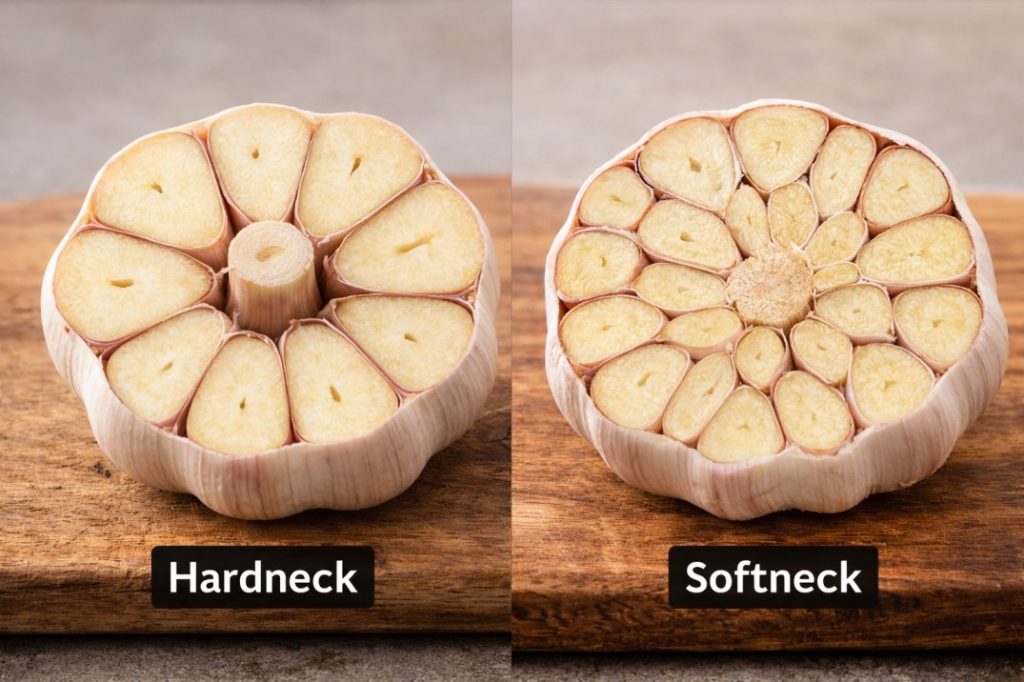
Choosing the right type of garlic is one of the most important decisions you’ll make, as it directly affects your yield and success rate.
Hardneck garlic is better suited for colder climates and produces fewer but larger cloves with more complex flavor.
Softneck garlic, on the other hand, thrives in warmer regions and stores much longer, making it ideal for long-term use.
Many beginners choose the wrong type for their climate, which leads to disappointing results. Understanding your local conditions will help you pick the right variety from the start.
By selecting the appropriate type, you set yourself up for stronger plants and bigger bulbs.
Growing Garlic in Containers
| Feature | Hardneck Garlic | Softneck Garlic |
| Climate | Cold climates | Warm climates |
| Flavor | Strong, complex | Mild |
| Storage | 3–5 months | 6–10 months |
| Scapes | Yes | No |
| Clove size | Large | Smaller |
Decision Guide (Important for Beginners)
👉 Choose Hardneck if:
- You live in a cold climate
- You want larger cloves
- You enjoy garlic scapes
👉 Choose Softneck if:
- You live in a warm region
- You want long storage
- You want to braid garlic
📅 When to Plant Garlic (Zone-Based Calendar)
Timing is critical when growing garlic, and planting at the wrong time is one of the most common mistakes beginners make.
Garlic needs a period of cold exposure to properly develop bulbs, which is why fall planting is generally recommended.
If planted too late, the roots won’t establish properly before winter, leading to smaller bulbs. If planted too early, excessive top growth can make plants vulnerable to frost damage.
A zone-based planting calendar helps you align your planting schedule with your local climate conditions.
By following the correct timing for your region, you dramatically increase your chances of a successful harvest.
Timing is one of the biggest reasons people fail with garlic.
🌍 Garlic Planting Calendar by Zone
| Zone | Planting Time | Notes |
| 3–5 | Late Sept – Oct | Must plant before frost |
| 6–7 | Oct – early Nov | Ideal garlic zones |
| 8–9 | Nov – Dec | Mild winters |
| 10+ | Dec – Jan | Chill bulbs before planting |
Key Rule:
👉 Plant garlic 4–6 weeks before the ground freezes
Many gardeners report significantly smaller bulbs when garlic is planted too late. In community forums like Reddit’s r/gardening, growers in Zone 6 often mention that mid-October planting produces much larger bulbs compared to late-season planting.
📍 Where to Grow Garlic (Soil + Sun Requirements)
Garlic thrives in environments that provide full sunlight and well-draining soil, both of which are essential for healthy bulb development.
Poor soil conditions, especially compacted or waterlogged soil, can severely limit growth and lead to rot. Garlic prefers loose, fertile soil enriched with organic matter like compost, which improves both drainage and nutrient availability.
Sunlight is equally important, as insufficient light can result in weak plants and underdeveloped bulbs. Raised beds are often ideal because they allow for better soil control and drainage.
Creating the right growing environment is one of the most impactful steps you can take for success.
Soil Requirements
Garlic HATES:
- Compacted soil
- Poor drainage
Garlic LOVES:
- Loose, fluffy soil
- Compost-rich beds
- pH between 6.0–7.0
Sunlight Requirements
- Minimum: 6 hours
- Ideal: 8+ hours full sun
Soil Preparation (Step-by-Step)
- Remove weeds and debris
- Loosen soil 8–12 inches deep
- Add compost or aged manure
- Avoid fresh manure (can rot bulbs)
🌱 How to Plant Garlic (Step-by-Step)
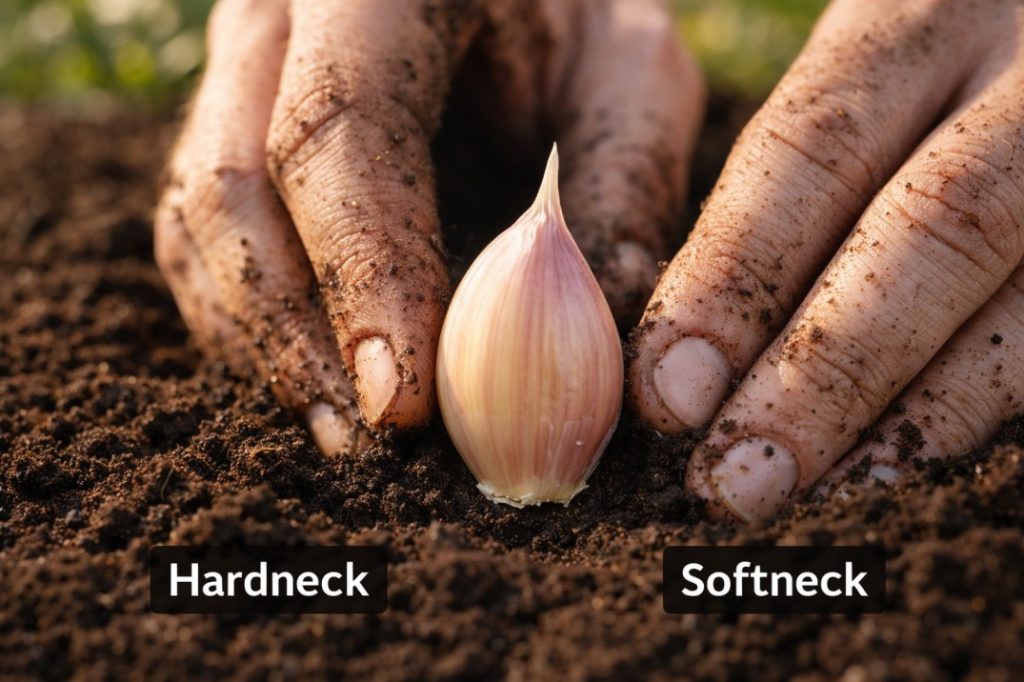
Planting garlic correctly is simple, but small mistakes can lead to poor results, so attention to detail matters.
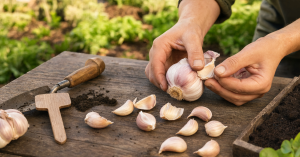
Always start with high-quality seed garlic, as this directly affects plant health and bulb size. Breaking the bulb into individual cloves just before planting ensures freshness and viability.
Proper spacing allows each plant enough room to develop a full-sized bulb without competition. Planting depth is also important, as shallow planting can expose cloves to temperature fluctuations.
Adding mulch after planting helps regulate soil temperature and retain moisture, giving your garlic the best possible start.
Step-by-Step Planting Guide
Step 1: Choose Quality Bulbs
- Use seed garlic (not grocery store if possible)
Step 2: Break Into Cloves
- Keep skins intact
- Use largest cloves
Step 3: Planting Depth & Spacing
- Depth: 2 inches
- Spacing: 4–6 inches
- Rows: 8–12 inches apart
Step 4: Mulch Heavily
- Straw, leaves, or grass clippings
🌟 Featured Tip:
👉 Bigger cloves = bigger bulbs
💧 Garlic Care Guide (From Planting to Harvest)
Garlic is relatively low maintenance, but consistent care throughout the growing season makes a noticeable difference in yield.
Watering should be steady, especially during early growth, but overwatering must be avoided to prevent rot.
Fertilization plays a key role, particularly during the early stages when the plant is developing leaves. As the plant matures, reducing nutrients allows it to focus energy on bulb formation.
Mulching continues to support growth by conserving moisture and suppressing weeds. With proper care, garlic plants remain healthy and productive throughout their long growing cycle.
Watering
- Keep soil moist (not soggy)
- Reduce watering before harvest
Fertilizing Strategy (IMPORTANT)
Early Stage:
- High nitrogen fertilizer
Mid Stage:
- Balanced nutrients
Late Stage:
- STOP fertilizing
Mulching Benefits
- Prevents weeds
- Retains moisture
- Protects from temperature swings
🌿 Companion Planting for Garlic
Garlic is not only a valuable crop on its own but also an excellent companion plant in the garden. Its natural pest-repelling properties help protect nearby vegetables from insects like aphids and beetles.
Planting garlic alongside crops such as carrots, lettuce, and beets can improve overall garden health.
However, not all plants benefit from garlic, and some, like beans and peas, may struggle when planted nearby.
Understanding these relationships helps you design a more efficient and productive garden layout. Companion planting is a simple yet powerful strategy to maximize your garden’s potential.
Best Companion Plants
- Carrots
- Lettuce
- Spinach
- Beets
Plants to Avoid
- Beans
- Peas
Why It Works:
Garlic repels pests naturally—especially aphids and beetles.
🧠 How to Grow Bigger Garlic Bulbs (Advanced Strategies)
Growing large garlic bulbs requires more than just basic care—it involves optimizing every stage of the plant’s growth.
One of the most effective techniques is removing scapes from hardneck varieties, which redirects energy into bulb development.
Proper spacing ensures that each plant has enough room to expand without competition. Soil quality and structure also play a major role, as loose soil allows bulbs to grow freely.
Timing fertilization correctly prevents excessive leaf growth at the expense of bulb size. By focusing on these advanced strategies, gardeners can significantly increase both yield and bulb quality.
1. Remove Scapes (Hardneck Only)
👉 This redirects energy into bulb growth
2. Space Properly
Crowding = smaller bulbs
3. Soil Aeration Matters
Loose soil = easier bulb expansion
4. Timing Fertilization
Too much nitrogen late = small bulbs
5. Choose the Right Variety
Some varieties naturally produce bigger bulbs
“The year I started removing scapes, my bulbs doubled in size.”
— Facebook gardening group member
🚨 Garlic Problem Diagnostic Tool
Even experienced gardeners encounter problems when growing garlic, but identifying issues early makes them much easier to fix.
Small bulbs, yellowing leaves, and poor growth are often signs of underlying issues such as soil quality or improper watering.
A diagnostic approach helps you quickly pinpoint the cause rather than guessing. By understanding the symptoms and their root causes, you can take targeted action to correct them.
This not only saves your current crop but also improves future harvests. Having a clear troubleshooting system is essential for consistent success.
🟡 Problem: Small Bulbs
Causes:
- Late planting
- Poor soil
- Overcrowding
Fix:
- Improve spacing
- Add compost
- Plant earlier
🟡 Problem: Yellow Leaves Too Early
Causes:
- Overwatering
- Nitrogen deficiency
Fix:
- Adjust watering
- Feed early
🟡 Problem: Rotting Bulbs
Causes:
- Poor drainage
- Overwatering
Fix:
- Raised beds
- Improve soil
🟡 Problem: No Bulb Formation
Causes:
- Warm climate without chilling
- Wrong garlic type
Fix:
- Chill cloves before planting
🐛 Pests & Diseases (And How to Handle Them)
Although garlic is naturally resistant to many pests, it is not completely immune to problems. Insects like onion maggots and thrips can still damage plants if left unchecked.
Diseases such as white rot and fungal infections are often linked to poor soil conditions or excessive moisture.
Preventative measures, including crop rotation and proper spacing, are the most effective way to avoid these issues.
Organic solutions like neem oil can help manage infestations without harming the environment. Maintaining healthy soil and proper care practices is the best defense against pests and diseases.
Common Pests
- Onion maggots
- Thrips
Solutions:
- Crop rotation
- Neem oil
- Healthy soil
Common Diseases
- White rot
- Fungal infections
👉 Prevention is key (don’t overwater)
✂️ When and How to Harvest Garlic
Harvesting garlic at the right time is crucial for achieving the best flavor and storage quality. If harvested too early, bulbs may be underdeveloped, while waiting too long can cause them to split.
Observing the plant’s leaves is the most reliable way to determine readiness. Carefully loosening the soil before pulling prevents damage to the bulbs.
Handling garlic gently during harvest helps preserve its outer layers, which are important for storage. Proper timing and technique ensure that your hard work throughout the season pays off.
Signs Garlic is Ready
- Bottom leaves turn brown
- Top leaves still green
Harvest Steps
- Loosen soil
- Pull gently
- Don’t wash bulbs
⚠️ Common Mistake:
Waiting too long = split bulbs
🏡 How to Cure and Store Garlic
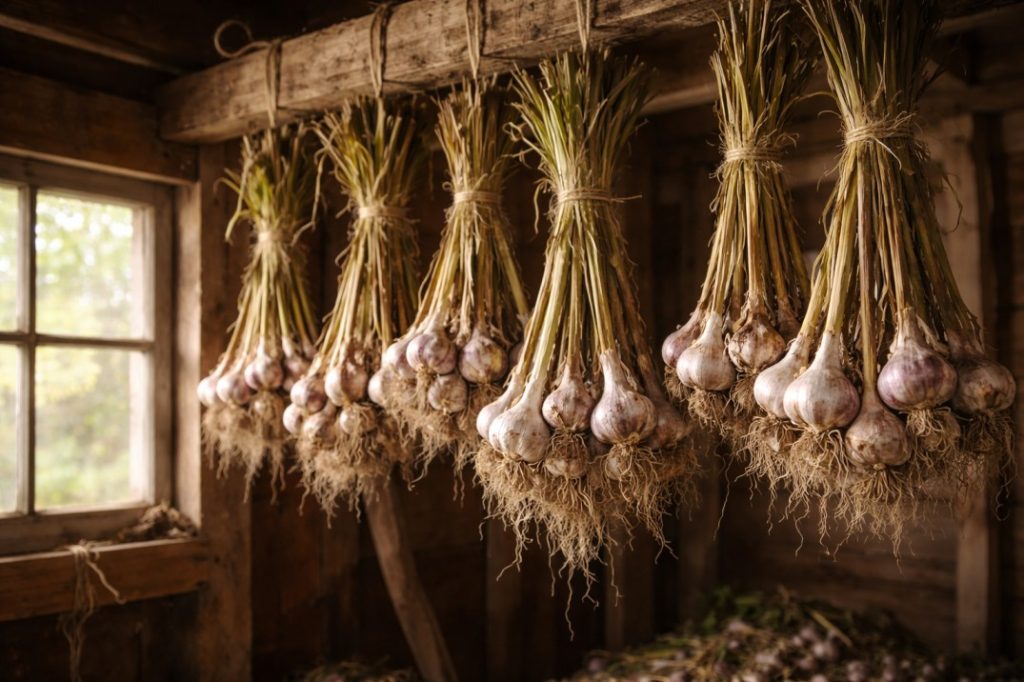
Curing garlic properly is essential for long-term storage and maintaining flavor. After harvesting, bulbs need to dry in a well-ventilated area for several weeks.
This process allows the outer layers to harden and protects the cloves inside. Storage conditions should be cool, dry, and well-aerated to prevent spoilage.
Softneck garlic typically lasts longer than hardneck varieties, making it a better choice for extended storage.
By following proper curing and storage methods, you can enjoy your garlic harvest for many months.
Curing Process
- Hang in dry, ventilated space
- Leave for 2–3 weeks
- Keep out of sunlight
Storage Conditions
- Cool (50–60°F)
- Dry
- Good airflow
Storage Life
- Hardneck: 3–5 months
- Softneck: 6–10 months
🪴 Growing Garlic in Containers
Growing garlic in containers is an excellent option for gardeners with limited space, such as those living in urban areas.
Containers allow you to control soil quality and drainage more easily than in-ground planting. Choosing the right pot size is important to ensure adequate root development.
Garlic grown in containers may require more frequent watering due to faster soil drying. Placement is also key, as containers must receive enough sunlight for optimal growth.
With proper care, container-grown garlic can produce yields comparable to traditional garden beds.
Container Requirements
- Minimum depth: 8–10 inches
- Good drainage
Soil Mix
- Potting soil + compost
Key Tips
- Don’t overcrowd
- Water more frequently
❓ FAQs: Growing Garlic
Can you grow garlic from store-bought cloves?
Yes, but results may vary. Store garlic is often treated to prevent sprouting and may not be suited for your climate. For best results, use seed garlic from a local supplier.
How long does garlic take to grow?
Garlic typically takes 8–9 months from planting to harvest when planted in fall.
Can garlic grow in pots?
Yes, garlic grows well in containers as long as there is enough depth, proper drainage, and full sun exposure.
Why didn’t my garlic form bulbs?
This is usually due to incorrect planting time, poor soil, overcrowding, or lack of cold exposure in warm climates.
Final Thoughts
Success with garlic comes down to consistency, timing, and attention to detail throughout the growing process.
Starting with high-quality seed garlic gives you a strong foundation from the beginning. Maintaining healthy soil and proper watering practices supports steady growth.
Avoiding common mistakes, such as overcrowding or overwatering, can significantly improve results. Patience is also important, as garlic has a long growing cycle compared to other crops.
By following these core principles, gardeners of all skill levels can achieve a productive and rewarding harvest.