Planting garlic in Colorado can feel like a guessing game—one year it thrives, the next year you end up with tiny bulbs or nothing at all. The reason isn’t your effort—it’s timing.
Colorado’s unique mix of high elevation, dry air, and unpredictable frost patterns means that planting even a week or two too early or too late can dramatically impact your harvest.
Most generic gardening advice doesn’t account for these local conditions, which is why so many gardeners struggle.
The good news is that once you understand exactly when to plant based on your zone, elevation, and soil temperature, growing garlic becomes far more predictable.
In this guide, you’ll learn the precise planting window for your area, how to adjust for Colorado’s climate, and how to set your garlic up for bigger, healthier bulbs from the start.
🌱 When Should You Plant Garlic in Colorado?
Garlic should be planted in Colorado between late September and late October, about 4–6 weeks before the ground freezes.
Gardeners in colder mountain regions should plant earlier (late September), while those in warmer areas like the Western Slope can plant later (mid to late October).
Proper timing ensures strong root development before winter, which leads to larger bulbs at harvest.
Why Timing Matters More in Colorado Than Anywhere Else
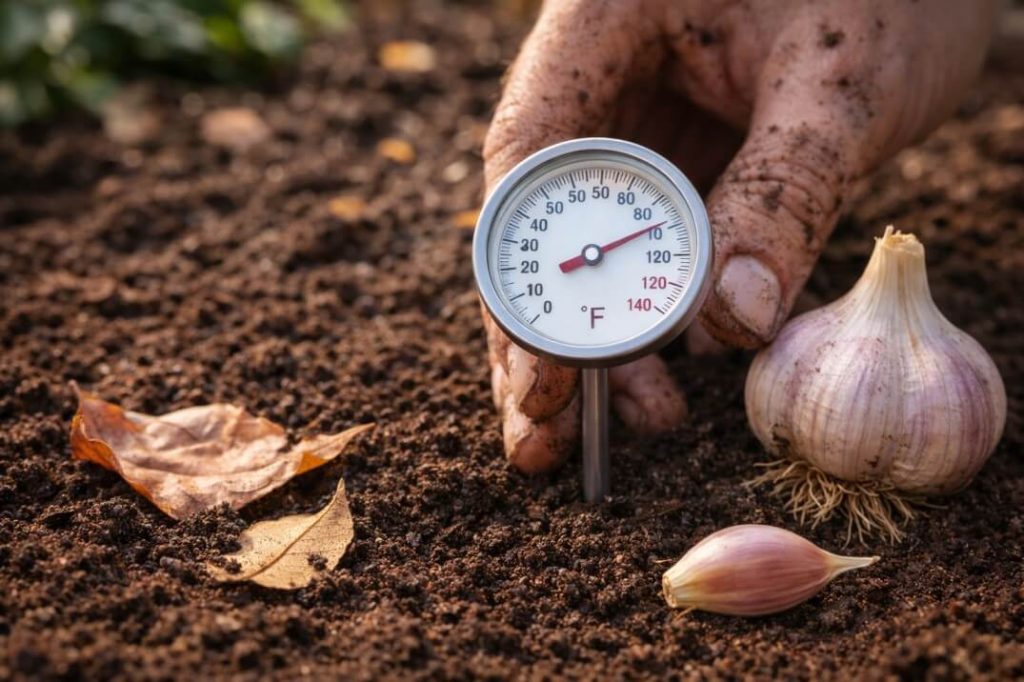
Colorado is not a typical gardening environment, and garlic growers quickly realize that timing isn’t just important—it’s everything.
Unlike regions with stable seasonal transitions, Colorado experiences dramatic temperature swings, early frosts, and unpredictable freeze-thaw cycles.
These conditions can either support strong garlic development or completely ruin a crop, depending on when you plant.
One of the biggest challenges in Colorado is elevation. A gardener in Denver (around 5,000 ft) will have a completely different planting window than someone in the mountains at 8,000 ft.
Higher elevations experience colder temperatures sooner, which shortens the planting window significantly. This is why generic advice like “plant in October” often fails here.
Another critical factor is soil temperature. Garlic needs cool soil to establish roots but not so cold that growth stops immediately.
If planted too early, warm soil can trigger premature top growth, leaving plants vulnerable to frost damage. If planted too late, roots won’t establish before the ground freezes, leading to smaller bulbs or crop failure.
Colorado’s dry climate adds another layer of complexity. Unlike humid regions, soil moisture levels fluctuate quickly, especially in the fall.
Without proper watering after planting, cloves may struggle to establish roots before winter dormancy.
Ultimately, understanding your local climate, elevation, and frost timing is what separates successful garlic growers from those who end up with small or failed harvests.
In Colorado, timing isn’t just a recommendation—it’s the foundation of success.
Colorado Garlic Planting Calendar (By Zone + Elevation)
Colorado’s planting calendar must account for both USDA zones and elevation, as they work together to define your true growing conditions.
While USDA zones give a general idea of winter temperatures, elevation determines how quickly those temperatures arrive in the fall.
In mountain regions (Zones 3–4), the growing season is short, and frost can arrive as early as September.
This means garlic must be planted earlier—often by late September—to allow enough time for root development. Delaying even a week on these can significantly reduce bulb size.
The Front Range (Zones 5–6), which includes cities like Denver and Boulder, offers a slightly longer planting window.
Here, early to mid-October is typically ideal, as it balances cool soil temperatures with sufficient time before the ground freezes.
However, sudden cold snaps can still occur, so monitoring weather patterns is critical.
The Western Slope (Zones 6–7) has a milder climate, allowing for later planting, often into late October.
This region benefits from warmer fall temperatures, which extend the root development period.
Using frost dates as a guide is helpful, but they should not be followed blindly. Microclimates—such as urban heat islands or sheltered areas—can shift planting windows by several days or even weeks.
Observing your local conditions year after year will refine your timing more accurately than any chart.
🗓️ Quick Planting Calendar
| Region | USDA Zone | Elevation | Planting Time |
| Mountain | 3–4 | 7,000–9,000 ft | Late Sept – Early Oct |
| Front Range (Denver, Boulder) | 5–6 | 5,000–6,000 ft | Early – Mid October |
| Western Slope | 6–7 | 4,000–5,500 ft | Mid – Late October |
🌡️ How to Use Frost Dates to Time Planting
Instead of guessing, use this simple formula:
👉 First frost date – 4 to 6 weeks = planting date
For example:
- Denver average first frost: ~October 7
- Ideal planting window: Early to mid-September through early October
However, frost dates are just estimates. Year-to-year variation is common in Colorado, so always observe weather patterns in your specific area.
🌱 Real Gardener Insight
Many Colorado gardeners report better results when planting slightly earlier than generic recommendations—especially at higher elevations. Early planting allows roots to establish before sudden temperature drops, which are common in mountain regions.
How to Know Exactly When to Plant (Decision Guide)
Knowing when to plant garlic becomes much easier when you focus on measurable indicators rather than fixed calendar dates.
The most reliable of these is soil temperature, which should be around 50°F (10°C) at planting time. This temperature allows roots to grow while preventing premature top growth.
Air temperature also provides useful signals. When daytime highs consistently drop below 70°F and nighttime temperatures fall into the 40s, conditions are typically ideal for planting.
These cooler temperatures indicate that summer heat has passed and winter is approaching.
Another practical method is observing your garden itself. When warm-season crops like tomatoes and peppers begin to decline or are removed, it’s often the perfect time to transition into garlic planting. This natural cue aligns closely with soil cooling trends.
If you’re unsure whether it’s too early or too late, consider this: garlic can tolerate slightly early planting better than late planting, especially in colder regions.
Early planting may produce some top growth, but this is usually manageable with mulch. Late planting, however, limits root development and often results in smaller bulbs.
Ultimately, the goal is to give garlic enough time to establish roots without encouraging excessive leaf growth before winter.
Once you understand this balance, timing becomes much more intuitive.
✅ The Soil Temperature Rule
The most reliable indicator is soil temperature:
👉 Plant garlic when the soil temperature is around 50°F (10°C)
This ensures:
- Roots develop properly
- Top growth doesn’t emerge too early
🧠 Simple Decision Checklist
Ask yourself:
- Has summer heat noticeably dropped?
- Are nighttime temperatures consistently cool?
- Is the first frost about a month away?
If YES → It’s time to plant.
⏳ “Is It Too Early or Too Late?” Scenarios
Too Early:
- Warm soil → early sprouting
- Frost damage risk
Too Late:
- Weak root development
- Small bulbs
🎯 Pro Tip
If you’re unsure, it’s generally better to plant slightly early than too late—especially in colder regions of Colorado.
Fall vs Spring Garlic Planting in Colorado
Fall planting is widely considered the gold standard for growing garlic in Colorado because it aligns with the plant’s natural growth cycle.
During fall, garlic focuses on root development, which allows it to establish a strong foundation before winter dormancy.
When spring arrives, these established roots support rapid growth and larger bulb formation.
The cold period during winter, known as vernalization, is essential for garlic to properly divide into multiple cloves.
Without this exposure, bulbs may remain small or fail to form correctly. This is why fall planting consistently produces better results than spring planting.
Spring planting, while possible, comes with limitations. Garlic planted in spring has less time to grow and often produces smaller bulbs.
It also requires artificial chilling (refrigeration) before planting to mimic winter conditions, which adds an extra step for gardeners.
However, spring planting can still be useful if you miss the fall window. In milder parts of Colorado, such as the Western Slope, it may produce acceptable results, especially for smaller-scale or experimental growing.
For most gardeners—especially those at higher elevations—fall planting is not just preferred but necessary for achieving full-sized bulbs and a successful harvest.
🍂 Why Fall Planting is Best
Fall planting allows garlic to:
- Develop strong roots before winter
- Undergo natural cold exposure (vernalization)
- Produce larger bulbs
This is the gold standard method across Colorado.
🌼 When Spring Planting Works
Spring planting is possible, but comes with limitations:
- Smaller bulbs
- Shorter growing period
- Less consistent results
It’s best used if you missed the fall window.
🧠 Decision Tip
If you live above 6,000 ft elevation, fall planting is almost always necessary for good results.
Best Garlic Varieties for Colorado Climate
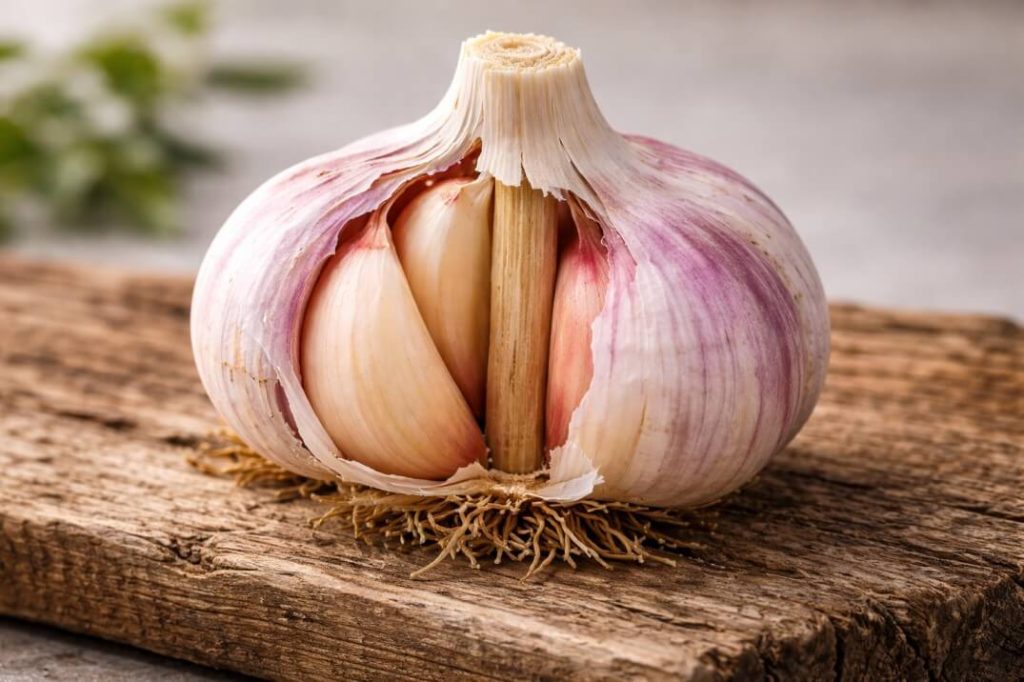
Choosing the right garlic variety is critical in Colorado because not all types can handle its harsh and variable conditions.
Hardneck garlic is the best choice for most of the state due to its superior cold tolerance and adaptability to shorter growing seasons.
Hardneck varieties naturally evolved in colder climates, making them well-suited to Colorado’s winters.
They also produce larger cloves, which are easier to plant and often result in bigger bulbs. Additionally, they generate scapes (flower stalks), which can be harvested and used in cooking.
Among the most reliable varieties are:
- Music – Known for large bulbs and consistent performance
- German Extra Hardy – Extremely resilient in cold مناطق
- Chesnok Red – Excellent flavor and adaptability
Softneck garlic, while popular in grocery stores, struggles in colder and at higher elevations.
It is better suited to warmer, more stable climates and may not produce consistent results in Colorado.
Selecting a variety that matches your local conditions significantly increases your chances of success and reduces the risk of crop failure.
🧄 Hardneck Garlic (Best Choice)
Hardneck garlic thrives in cold climates and is the top choice for most Colorado gardeners.
Benefits:
- Cold-hardy
- Larger cloves
- Better flavor
🌟 Recommended Varieties
- Music – Large bulbs, reliable
- German Extra Hardy – Excellent for cold climates
- Chesnok Red – Great flavor
Soil Preparation for Colorado Conditions
Soil quality is one of the most overlooked factors in garlic growing, yet it has a direct impact on bulb size and health.
Colorado soils are often challenging, ranging from heavy clay in the Front Range to rocky or sandy soils in the mountains.
Clay soil, in particular, poses a major problem because it retains water and restricts root expansion.
Garlic bulbs need loose, well-draining soil to grow properly, and compacted soil can lead to small, misshapen bulbs or rot.
Improving soil starts with adding organic matter such as compost or aged manure. This not only improves drainage but also enhances soil structure and nutrient availability.
Raised beds are especially effective in Colorado, as they allow for better control over soil composition and drainage.
Another important consideration is soil pH, which should ideally be between 6.0 and 7.0. Testing your soil before planting can help you make necessary adjustments and avoid nutrient deficiencies.
Ultimately, investing time in soil preparation pays off significantly, as it creates the foundation for healthy plants and large, high-quality bulbs.
🪨 Common Soil Problems
- Heavy clay (Front Range)
- Rocky soil (mountain مناطق)
- Poor organic matter
🌱 How to Fix It
- Add compost
- Improve drainage
- Use raised beds
💡 Why This Matters
Garlic bulbs need loose soil to expand. Compacted soil leads to small, misshapen bulbs.
How to Plant Garlic in Colorado (Step-by-Step)
Planting garlic correctly is straightforward, but small details make a big difference in Colorado’s climate.
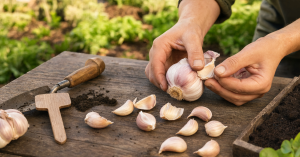
Start by selecting the largest, healthiest cloves, as these will produce the strongest plants and biggest bulbs. Avoid using small or damaged cloves, as they often result in weaker growth.
Plant cloves with the pointed end facing upward, about 2 inches deep. In colder regions or higher elevations, slightly deeper planting (up to 3 inches) can provide additional protection from freezing temperatures. Proper spacing—typically 4–6 inches apart—is essential to prevent competition and ensure adequate bulb development.
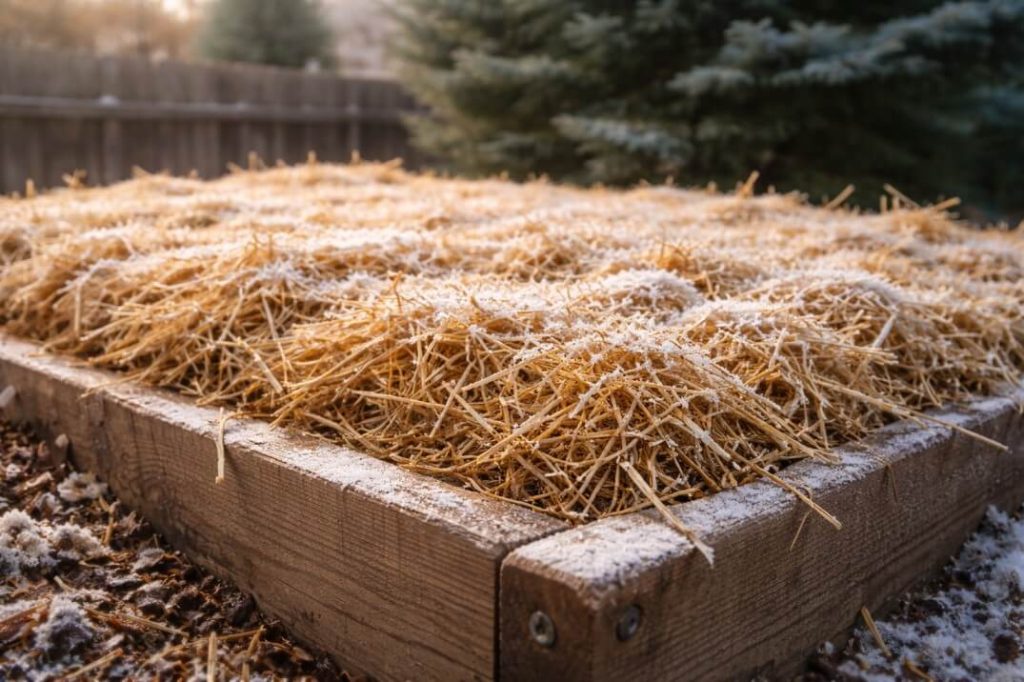
After planting, apply a thick layer of mulch, such as straw or leaves. This is especially important in Colorado, where mulch helps regulate soil temperature, retain moisture, and protect against freeze-thaw cycles.
Water the soil thoroughly after planting to encourage root development. Even though fall is relatively dry in Colorado, this initial watering is critical for establishing strong roots before winter.
By following these steps carefully, you create the ideal conditions for garlic to survive winter and thrive in spring.
Step-by-Step Guide
- Choose large, healthy cloves
- Plant 2 inches deep
- Space 4–6 inches apart
- Add thick mulch (very important in Colorado)
🌨️ Why Mulch is Critical
- Insulates soil
- Prevents freeze-thaw damage
- Retains moisture
Common Mistakes Colorado Gardeners Make
Garlic is often described as an easy crop, but in Colorado, small mistakes can have major consequences. One of the most common errors is planting too early, which leads to excessive top growth before winter. This growth is vulnerable to frost damage and can weaken the plant.
Planting too late is equally problematic, as it prevents roots from establishing before the ground freezes. This often results in smaller bulbs or complete crop failure. Timing, therefore, must be carefully balanced.
Another frequent mistake is neglecting mulch. Without it, garlic is exposed to extreme temperature fluctuations, which can damage roots and reduce yields. Mulch acts as insulation and is essential in Colorado’s climate.
Poor drainage is another major issue, particularly in clay-heavy soils. Waterlogged conditions during snowmelt can cause bulbs to rot, undoing months of growth.
Avoiding these mistakes is often the difference between a disappointing harvest and a highly productive one.
❌ Planting Too Early
Leads to premature growth and frost damage.
❌ Planting Too Late
Results in weak roots and small bulbs.
❌ Skipping Mulch
Exposes garlic to extreme temperature swings.
❌ Ignoring Drainage
Causes rot during snowmelt.
Growing Garlic at High Elevation (Special Tips)
High-elevation gardening presents unique challenges that require adjustments to standard garlic-growing practices. Short growing seasons mean there is less margin for error, making early planting even more critical.
Wind exposure is another factor, as strong winds can dry out soil and damage young plants. Using windbreaks or planting in sheltered areas can help mitigate this issue.
Cold protection is also essential. Thick mulching and, in some cases, additional coverings like row covers can help garlic survive harsh winters.
Choosing the right variety—particularly cold-hardy hardneck types—is crucial in these environments.
Despite these challenges, garlic can thrive at high elevations with the right approach. Many gardeners in the mountains successfully grow garlic by adapting to local conditions and prioritizing timing and protection.
Challenges:
- Short growing season
- Strong winds
- Early frost
Solutions:
- Plant earlier
- Use thick mulch
- Choose hardy varieties
Watering Garlic in Colorado’s Dry Climate
Colorado’s low humidity and dry conditions make watering a critical aspect of garlic growing. Unlike humid regions where natural rainfall may be sufficient, Colorado gardeners must actively manage soil moisture.
After planting, watering helps initiate root development, which is essential before winter dormancy. During fall, maintaining slightly moist soil ensures that cloves establish properly.
In spring, watering becomes more important as growth accelerates. However, overwatering must be avoided, especially during snowmelt, as excess moisture can lead to rot.
A balanced approach—keeping the soil consistently moist but not waterlogged—is key. Monitoring soil conditions regularly helps prevent both drought stress and overwatering.
Key Tips:
- Water after planting
- Maintain moisture in the fall
- Adjust based on snow
⚠️ Avoid Overwatering
Especially in spring when the snow melts.
Can You Grow Garlic in Containers in Colorado?
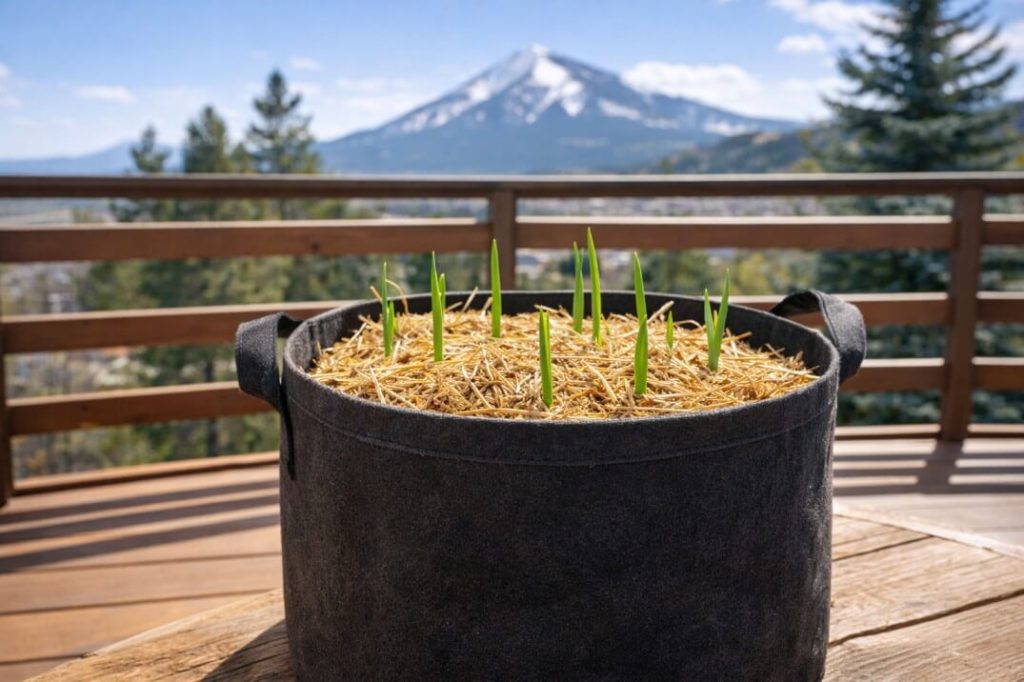
Container gardening is an excellent option for Colorado gardeners, particularly those dealing with poor soil or limited space. Containers allow for precise control over soil quality, drainage, and placement.
Using deep containers (at least 8–10 inches) ensures adequate space for root development. A high-quality potting mix combined with compost provides the loose, nutrient-rich environment garlic needs.
One advantage of containers is mobility. During extreme weather, containers can be moved to protected areas, reducing exposure to harsh conditions. This is especially useful at high elevations.
However, container-grown garlic requires more frequent watering, as the soil dries out faster. With proper care, containers can produce yields comparable to traditional beds.
Benefits:
- Better soil control
- Mobility
- Ideal for small spaces
Tips:
- Use deep containers
- Ensure drainage
- Place in full sun
Troubleshooting: Why Your Garlic Failed
Garlic problems are often symptoms of deeper issues related to timing, soil, or moisture. Small bulbs are typically caused by late planting or poor soil conditions, while rotting bulbs usually indicate drainage problems.
Lack of growth may result from planting at the wrong soil temperature or using unsuitable varieties for your climate.
Each problem has a clear cause, and identifying it is the first step toward improvement.
A diagnostic approach—analyzing symptoms and tracing them back to their source—helps you avoid repeating the same mistakes. Over time, this builds experience and leads to consistently better results.
Understanding these patterns transforms garlic growing from trial-and-error into a predictable and reliable process.
🟡 Small Bulbs
→ Planted too late or in poor soil
🟡 Rotting Garlic
→ Overwatering or poor drainage
🟡 No Growth
→ Soil too warm or too cold
🧠 Diagnostic Insight
Most failures in Colorado come down to:
👉 Timing + soil + moisture balance
FAQs: When to Plant Garlic in Colorado?
Can you plant garlic in November in Colorado?
Yes, but it’s risky. Late planting can result in smaller bulbs because roots don’t have enough time to establish before winter.
Can garlic survive Colorado winters?
Yes, especially hardneck varieties. With proper mulching, garlic can survive even harsh winter conditions.
What happens if you plant garlic too early?
Planting too early can cause premature growth, which may be damaged by frost, reducing yield.
Can you grow garlic in Denver?
Yes, Denver is an ideal location for garlic growing, especially with proper timing and soil preparation.
Final Tips for Success in Colorado
Growing garlic in Colorado is both challenging and rewarding, requiring attention to timing, soil, and climate conditions.
The most important factor is planting at the right time based on your specific elevation and frost patterns.
Healthy soil is the foundation of success, so investing in soil preparation yields long-term benefits. Mulching is essential and should never be skipped, as it protects against extreme temperature changes.
Choosing the right variety—especially hardneck types—gives you a significant advantage in colder. Consistent care, including proper watering and spacing, supports steady growth.
With the right approach, garlic becomes one of the most reliable and productive crops you can grow in Colorado, delivering both high yields and exceptional flavor.