Quick Explain
- Plant garlic in fall (September–November in the Northern Hemisphere) for the largest bulbs – fall-planted garlic produces significantly bigger yields than spring-planted garlic (Utah State University Extension).
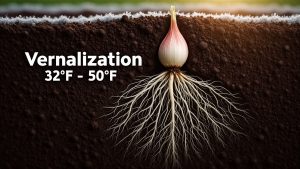
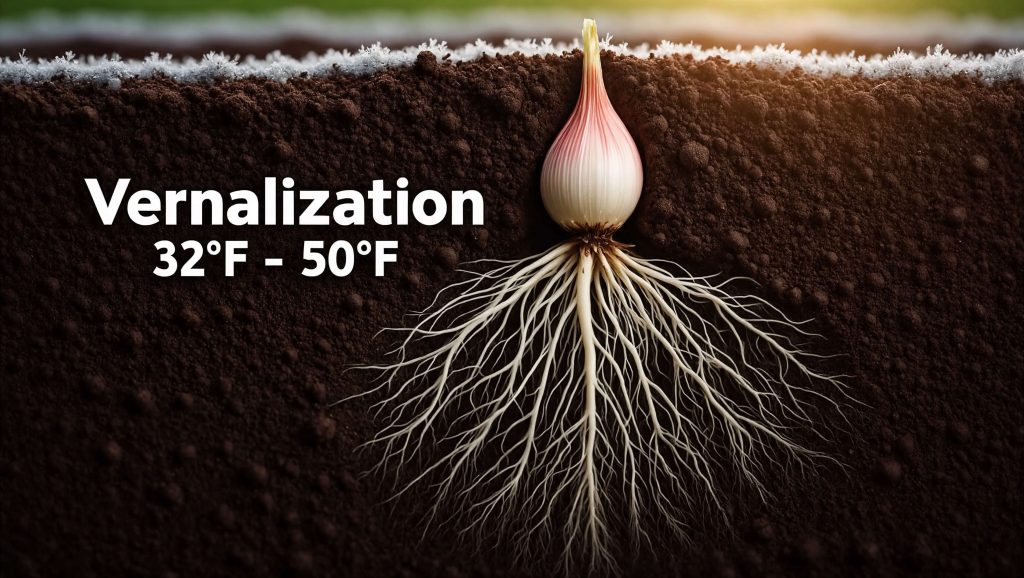
- Garlic needs 6–8 weeks of cold exposure between 32°F–50°F (0°C–10°C) — a process called vernalization — to form proper bulbs (Grow Organic, 2025).
- The exact planting window shifts by USDA Hardiness Zone: Zone 3 growers plant late September, Zone 8–9 growers plant November through January.
- If you missed the fall window, refrigerate cloves for 4–8 weeks then plant in early spring — you’ll get smaller bulbs but a real harvest.
- In warm climates (USDA Zones 9–12, tropical Asia, subtropical Australia), plant subtropical or softneck varieties only, after pre-chilling cloves in the refrigerator.
Table of Contents
What Is the Best Time to Grow Garlic?
The best time to grow garlic is 4–6 weeks before the ground freezes in your area typically September through November in the Northern Hemisphere.
Garlic planted in fall establishes its root system before winter, then sits dormant until spring warmth triggers bulb formation.
Garlic (Allium sativum) is a cool-season crop. It does NOT grow and multiply during winter.
Instead, cloves develop roots in autumn, go dormant through the coldest months, then start producing tops and bulbs when spring soil temperatures climb above freezing (Gardenary, 2026).
That 7–9 month growing cycle autumn through early summer is what produces full, multi-clove bulbs.
Plant too early and cloves sprout too much top growth before hard frost arrives, making them vulnerable to freeze damage. Plant too late and roots never establish, leading to poor bulb development the following spring. The timing window matters more with garlic than with almost any other garden crop.
Why Cold Is Non-Negotiable: The Science of Vernalization
Garlic’s need for cold is not just a preference it is a biological requirement. This cold exposure process is called vernalization.
Without vernalization, hardneck garlic does not produce multi-clove bulbs. Instead, it forms a single, undivided bulb about the size of a golf ball sometimes called a “round.”
This is still edible, but it is not what any gardener wants after months of waiting.
Here is what happens at a cellular level: cold temperatures between 32°F and 50°F (0°C–10°C) activate a gene called VERNALIZATION1 (VRN1) in the plant’s meristematic tissue (GroEat Garlic Farm).
This gene triggers the shift from vegetative leaf growth toward flowering and bulb formation. Without the VRN1 activation, the plant just keeps producing leaves.
Research confirms garlic needs 6–8 weeks of exposure to temperatures below 40–50°F (4–10°C) for proper bulb development (Grow Organic, 2025; Biology Insights, 2025).
Studies also show that 40 days of cold conditioning produces better vegetative growth than just 30 days, and that temperatures at 3.7°C and 5°C result in 96–100% clove emergence rates (Bridgemohan & Debisingh, Vernalization Study, 2017–2018).
In colder climates, winter naturally provides this chilling period when you plant in fall. In warm climates, you have to supply it artificially by refrigerating cloves before planting.
When to Grow Garlic by USDA Hardiness Zone
Timing depends almost entirely on your hardiness zone and local frost dates. The following guide covers the full US range.
| USDA Zone | Region Examples | Planting Window | Variety Recommendation |
| Zone 3 | Northern Minnesota, Montana | Late September–early October | Hardneck only; mulch 6 inches deep |
| Zone 4 | Vermont, Wisconsin, Dakotas | Late September–late October | Hardneck; plant by Halloween |
| Zone 5–6 | Ohio, Pennsylvania, Missouri | Late October–November | Hardneck or softneck; plant by Dec 1 |
| Zone 7 | Virginia, North Carolina, Tennessee | October–November | Hardneck or softneck; target Oct 15 |
| Zone 8 | Georgia, Pacific Northwest | October–December | Softneck preferred |
| Zone 9 | Southern California, Texas Gulf Coast | November–January | Softneck; pre-chill cloves 6–8 weeks |
| Zone 10–12 | South Florida, Hawaii, tropical regions | December–January | Softneck or subtropical only; full pre-chilling required |
Sources: HarvestToTable, 2025; GarlicGods, 2026; Utah State University Extension
Zones 3–4 (coldest regions): Plant by late September. The soil freezes hard by November, so cloves need several weeks to build a root system before dormancy.
Use hardneck varieties — they are cold-hardy and thrive on vernalization. Mulch with 4–6 inches of straw immediately after planting.
Zones 5–7 (most of the US): This is the sweet spot for garlic growing. Plant from late October through November.
A common mistake is planting in September or early October, which is too early for these zones cloves waste energy on top growth instead of roots (GroEat Garlic Farm). Target December 1 as your last planting day for zones 5–7.
Zones 8–9 (mild winters): Softneck varieties work best here because they tolerate warmer winters. Plant from October through January.
If you are growing hardneck in Zone 8, pre-chill the cloves in the refrigerator for 6–8 weeks before planting to simulate the cold the ground will not naturally provide.
Zones 10–12 (warm and tropical): Full refrigerator pre-chilling is mandatory. Store cloves in a paper bag (not plastic airflow prevents mold) at 35–40°F (2–4°C) for 6–8 weeks.
Plant in December or January during the coolest part of the year. Stick with softneck varieties; most hardneck types will not form proper bulbs in these zones.
When to Grow Garlic in the UK
In the UK, plant garlic from October through February, with November being the most reliable month across most regions.
UK gardeners have an advantage: milder winters in much of England mean the ground rarely freezes hard enough to prevent planting well into winter.
The RHS recommends planting individual cloves in well-drained soil or containers any time from late autumn through late winter.
Garlic planted in November in the south of England typically harvests in June or July.
In Scotland and northern England, where winters are harsher, plant earlier September or October so cloves establish roots before the hardest frosts arrive.
When to Grow Garlic in Australia
Australia’s planting calendar is the reverse of the Northern Hemisphere because the seasons are flipped.
The “plant on the shortest day, harvest on the longest” traditional rule still applies that means planting around June and harvesting around December in most of Australia.
Cool and mountain regions (Victoria, Tasmania, southern highlands): Plant March through May.
This gives garlic time to develop roots before the Australian winter and allows bulbs to form during the warming spring months (Natasha Morgan, 2025).
Temperate regions (coastal New South Wales, South Australia): Plant April through June, using the autumn equinox (around March 20–21) as a reference point.
Subtropical regions (Queensland, parts of New South Wales): Plant March or April. Choose subtropical garlic varieties Glen Large, Southern Glen, Italian Pink, or Italian Red which are day-length neutral and complete their growth cycle in just 5.5–6 months, compared to 7–9 months for temperate varieties (Tasmanian Gourmet Garlic).
Tropical regions (northern Queensland, Northern Territory): Full cold treatment is required. Store cloves at refrigerator temperatures for 6–8 weeks before planting in March–April.
When to Grow Garlic in Tropical Climates (South Asia, Southeast Asia)
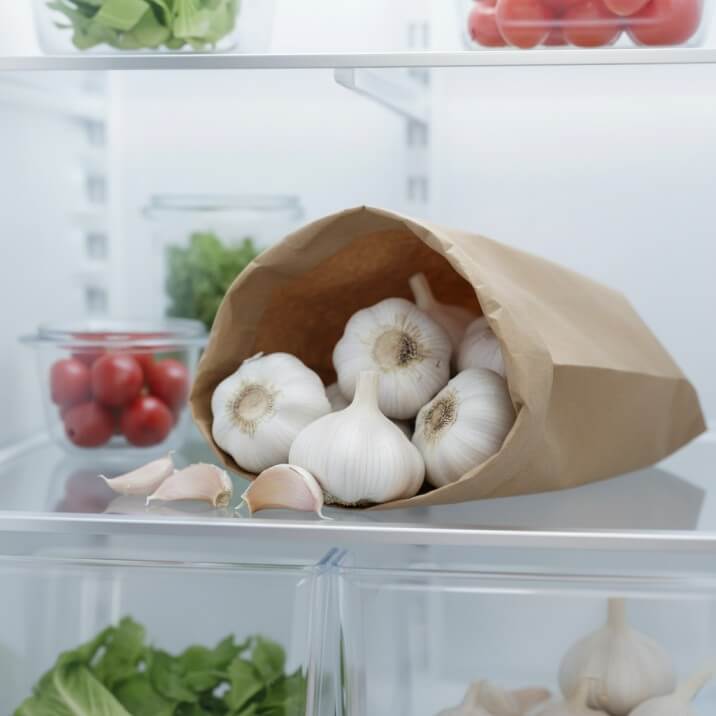
Garlic grown in tropical conditions faces the same core challenge as warm-zone growers anywhere: the ground never gets cold enough for natural vernalization.
Research conducted in tropical conditions confirms that garlic cloves need 2 months of cold exposure between 0°C and 10°C before planting for accelerated growth and proper bulb formation (Bridgemohan & Debisingh, 2017).
Without this, plants produce only leaves and a single undivided bulb.
Practical approach for Bangladesh, India, and similar tropical climates:
- Buy seed garlic from a regional supplier who grows varieties suited to warm conditions, not supermarket garlic which is often treated to prevent sprouting.
- Refrigerate cloves in a paper bag at 5°C–8°C for 6–8 weeks before your target planting date.
- Plant in November through January the coolest months in soil that receives at least 6 hours of direct sun daily.
- Choose shorter-cycle subtropical varieties when available, or softneck varieties grown locally.
Local seed suppliers and agricultural markets in your region are the best source for climate-adapted varieties. Grocery store garlic is often treated with sprout inhibitors and may not be suited to local day lengths.
Fall vs. Spring Planting: What You Actually Get
Most garlic guides say “fall is best, spring is second-best” without explaining the real difference. Here is what the data shows.
Fall-planted garlic establishes roots through autumn, sits dormant in winter, then pushes rapid top growth in spring.
Large tops are essential each leaf equates to one layer of wrapper around the bulb. More leaves in spring means a bigger, better-protected bulb at harvest (Utah State University Extension).
Spring-planted garlic starts without that root system and without natural vernalization.
Even with refrigerator pre-chilling, spring-planted bulbs typically harvest 3–4 weeks later than fall-planted garlic from the same zone, and produce noticeably smaller cloves.
If you are planting in spring:
- Buy bulbs specifically labeled “spring planting garlic” these have been pre-chilled by the supplier over winter.
- Plant as early as the soil is workable February or March in most Northern Hemisphere zones.
- Do not plant after April in most zones; the bulbs will not have enough growing time before summer heat slows development.
- Expect smaller bulbs. A spring harvest is still worth doing, especially if you plan to use the garlic fresh rather than for long-term storage.
How to Know When to Buy Seed Garlic (A Gap Most Guides Skip)
The best time to buy seed garlic is late summer to early autumn — August through September in the Northern Hemisphere.
Seed garlic sells out fast. Most specialty suppliers sell their best varieties by mid-September. If you wait until October to shop, you will likely be left with whatever varieties remain.
This matters because variety selection affects flavor, storage life, and suitability for your zone.
- In Australia, buy seed garlic between January and March, before the March–April planting season.
- Look for suppliers who list whether their garlic is disease-free and locally grown. Locally grown varieties are more likely to be adapted to your climate conditions.
- Avoid planting supermarket garlic in most cases it is often treated with sprout inhibitors and may carry diseases not visible to the naked eye.
The Allium Leafminer Timing Strategy (What Almost No Guide Mentions)
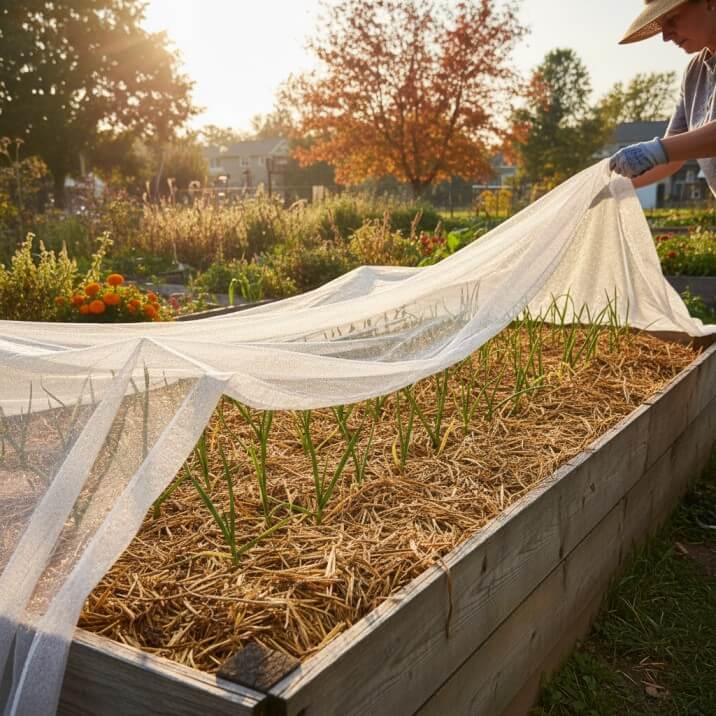
Allium Leafminer (Phytomyza gymnostoma) is an invasive pest that attacks garlic, onion, and leek. It is active in two windows per year: early spring (April–May) and late fall (October–November).
If you live in an affected US state (Pennsylvania, New York, and spreading), planting in the first week of November reduces the risk of fall egg-laying on your cloves significantly, compared to planting in October.
The pest completes its fall flight cycle by late October, so later planting puts young shoots in the ground after the main egg-laying period ends (Penn State Extension).
This is one timing consideration that most garlic guides miss entirely. If you see leaf mining damage on your garlic in the spring, covering your plants with row cover fabric immediately after shoots emerge will prevent the spring generation from attacking.
Month-by-Month Garlic Growing Timeline (Northern Hemisphere)
This is the full calendar that most articles leave out.
| Month | What Is Happening |
| August–September | Buy seed garlic from suppliers before stock runs out |
| September | Prepare beds: add compost, test soil pH (target 6.0–6.5) |
| Late September–November | Plant cloves (timing depends on your zone) |
| October–November | Roots establish underground; little or no visible top growth |
| November–December | Apply 4–6 inch straw mulch after ground cools |
| December–February | Garlic dormant underground; no action needed |
| March–April | Shoots emerge through mulch; apply nitrogen fertilizer |
| May | Stop watering as bulbs approach maturity; side-dress with nitrogen in early May if not already done |
| May–June | Hardneck scape removal: cut scapes when they curl once — this redirects plant energy to bulb formation |
| Late May–July | Harvest window: when bottom 3–5 leaves have turned brown (zone-dependent) |
| July–August | Cure harvested bulbs for 2–3 weeks in a well-ventilated, shaded space |
| August | Store cured garlic; set aside best cloves as seed garlic for fall planting |
When to Remove Garlic Scapes (and Why It Affects Your Timing)
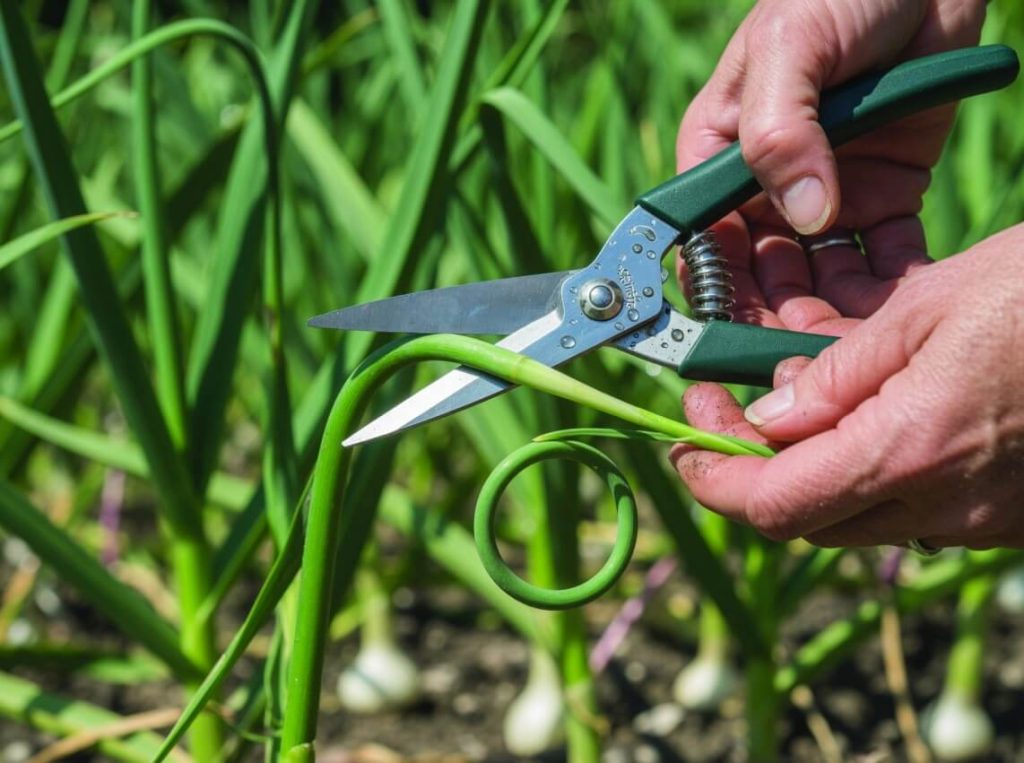
If you grow hardneck garlic, your plants will send up a scape a curling flower stalk about 3–4 weeks before bulbs are ready to harvest. This is a timing signal most new growers miss.
Cut the scape when it has curled into one full loop. Removing it redirects all the plant’s energy from seed production into bulb development, producing measurably larger heads (Epic Gardening; Country Living).
After scape removal, plan to harvest in 3–4 weeks. Watch the bottom leaves: when 3–5 lower leaves have turned brown and dried while the upper leaves stay green, your bulbs are ready.
Each brown leaf corresponds to one papery wrapper layer on the bulb you want at least 3–4 intact layers remaining at harvest.
Softneck garlic does not produce scapes. Watch for the tops to flop over and for lower leaves to yellow as your harvest signal instead.
Growing Garlic in Containers: Timing and Extra Considerations
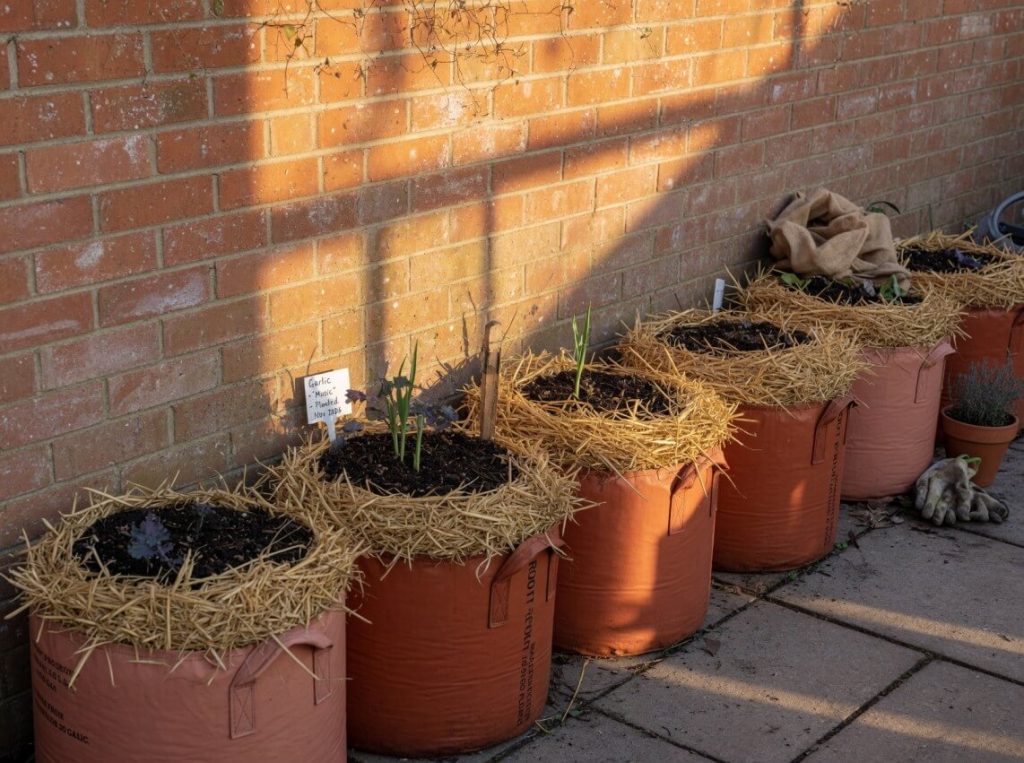
Container garlic follows the same planting calendar as in-ground garlic fall planting is still ideal but containers bring one major timing risk: freeze damage.
In-ground garlic is insulated by surrounding soil. A container above ground can freeze solid through and through, killing cloves entirely. If you are growing in pots in USDA Zones 4–6:
- Plant in fall using the same timing as your zone.
- After planting, move containers against a south-facing wall, into an unheated garage, or bury the container up to its rim in a garden bed to insulate it.
- Alternatively, plant in spring once all freeze risk has passed, accepting smaller bulbs in exchange for protection.
Use containers at least 12 inches deep garlic needs room to form a full bulb underground. Terracotta dries out faster than plastic; in containers, consistent moisture is more important than in the ground.
What Happens When You Plant at the Wrong Time
Most articles tell you when to plant but not what actually goes wrong if you miss the window.
Planted too early (warm soil above 60°F / 15°C): Cloves sprout above ground before frost. Those green shoots then face hard freezes and die back. The plant must recover from scratch in spring, reducing overall top growth and therefore final bulb size.
Planted too late (ground already frozen): Cloves cannot develop any root system before winter dormancy. Without established roots, they have a poor anchor point and reduced nutrient uptake capacity in spring. Result: small, poorly formed bulbs and significant variation in bulb size across your planting.
Planted in warm climates without pre-chilling: Cloves skip the bulbing process entirely. Plants grow only leaves and produce a single undivided bulb edible, but structurally a failure. This is the most common mistake in Zones 9 and above.
How Garlic Growing Compares to Other Cool-Season Crops
Most gardeners compare garlic timing to onions or shallots. Here is how they differ:
| Crop | Planting Time | Time to Harvest | Vernalization Required |
| Hardneck Garlic | Fall (Sept–Nov) | 7–9 months | Yes 6–8 weeks |
| Softneck Garlic | Fall or spring | 6–9 months | Partial/variety-dependent |
| Onions (from seed) | Late winter indoors | 4–5 months from transplant | No, but benefits from cool start |
| Shallots | Fall or spring | 4–5 months | No |
| Elephant Garlic | Fall | 9 months | Partial related to leek |
Elephant garlic behaves more like a leek than a true garlic. It tolerates warmer conditions better but stores poorly and has a much milder flavor.
Common Mistakes to Avoid When Timing Garlic Planting
- Planting grocery store garlic: Supermarket bulbs are often treated with sprout inhibitors and may not be suited to your day length or climate. Use certified disease-free seed garlic from a reputable supplier.
- Skipping mulch after planting: Mulch is not optional in Zones 3–6. A 4–6 inch layer of straw insulates cloves from freeze-thaw cycles that can heave them out of the soil and damage roots.
- Watering through late spring: Reduce watering in late spring as bulbs mature. Too much moisture at this stage encourages mold and fungal rot in the wrappers. Stop watering entirely 2 weeks before planned harvest.
- Pulling by the stalk: Never yank garlic directly from the ground. Use a garden fork to loosen the soil 6 inches around each plant before lifting, to avoid breaking the stalk and leaving the bulb underground.
- Harvesting too late: Leaving garlic in the ground after the leaves have fully dried causes the bulb’s outer wrapper to deteriorate and individual cloves to separate. Separated bulbs do not store well and spoil within weeks.
Frequently Asked Questions About When to Grow Garlic
When is the best time to plant garlic?
The best time is 4–6 weeks before the ground freezes in your area. For most of the Northern Hemisphere, that means September through November. Fall planting gives cloves time to establish roots before winter dormancy, which results in larger bulbs at harvest the following summer.
Can you plant garlic in spring?
Yes. Spring-planted garlic works, but you must pre-chill the cloves in the refrigerator for 4–8 weeks to simulate the vernalization they would naturally receive from winter. Plant as early as the soil is workable no later than March or April in most zones. Expect bulbs to be noticeably smaller than fall-planted garlic.
What happens if you plant garlic too early?
Cloves sprout above the soil before hard frost arrives. Those green shoots can die back in a hard freeze, forcing the plant to start regrowth in spring with reduced energy reserves. This typically produces smaller bulbs and irregular development across your planting.
What is vernalization and do all garlic varieties need it?
Vernalization is the biological process where cold temperatures (32–50°F / 0–10°C over 6–8 weeks) trigger garlic’s bulbing genes. Hardneck garlic requires it. Softneck garlic and subtropical varieties are more tolerant of skipped vernalization but still produce better bulbs with at least some cold exposure. Without vernalization, most garlic produces a single, undivided bulb instead of a multi-clove head.
When should I harvest garlic?
Harvest when the bottom 3–5 leaves have turned brown while the upper leaves remain green. For hardneck types, the scape (curling flower stalk) appears about 3–4 weeks before harvest cut it when it forms one full curl. This varies by zone: Zone 5 gardeners typically harvest in late June to early July; Zone 8 gardeners may harvest as early as May.
When is it too late to plant garlic in the fall?
Once the ground is frozen solid and cannot be worked with a trowel, it is too late for fall planting. In Zones 3–4, this usually means no later than early November. In Zones 6–7, you can often plant through November and into early December. If you miss the fall window, switch to the spring planting method with refrigerator pre-chilling.
How do I grow garlic in a tropical climate?
Refrigerate cloves in a paper bag at 5–8°C for 6–8 weeks before planting. Plant during the coolest months available November through January in most tropical regions. Choose softneck or subtropical varieties specifically bred for short-cycle, warm-climate growing. Full tropical success is possible but requires this cold treatment step (Bridgemohan & Debisingh, 2017).
What variety of garlic should I plant?
Hardneck varieties (Rocambole, Porcelain, Purple Stripe) are best for Zones 3–7 they need cold, produce fewer but larger cloves, and have richer flavor. Softneck varieties (Artichoke, Silverskin) suit Zones 7–9 and warmer climates, store for up to 12 months, and are the type used for braiding. Subtropical varieties suit Zones 10+ and tropical climates.
Key Takeaways
- Fall is the right time to plant garlic in most climates target 4–6 weeks before your ground freezes, which translates to September through November for most Northern Hemisphere growers.
- Zone matters: Zone 3 growers plant by October 1; Zone 7 growers plant through November; Zones 9 and above need refrigerator pre-chilling before any planting.
- Vernalization 6–8 weeks of cold exposure between 32–50°F (0–10°C) is the biological trigger that turns a single clove into a multi-clove bulb. Skip it and you get a golf ball, not a head of garlic.
- Buy seed garlic in August or September before the best varieties sell out; do not use supermarket garlic as planting stock.
- If you missed fall, spring planting with pre-chilled cloves still produces a harvest just plan for smaller bulbs and a later harvest date.