If you’ve ever tried growing blueberries in pots and ended up with weak plants or yellowing leaves, the culprit was likely your soil.
Blueberries are famously picky — not about sunlight or watering, but about what’s beneath their roots. The right soil makes all the difference between a struggling bush and a heavy crop of sweet, plump berries.
By the end of this guide, you’ll know exactly what soil mix to use, how to test and adjust pH, and how to keep your potted blueberries thriving year after year — whether you prefer peat-based or sustainable peat-free mixes.
🌱 Why Soil Quality Is Critical for Potted Blueberries
Blueberries (genus Vaccinium) are acid-loving, shallow-rooted plants that evolved in naturally acidic, organic-rich forest soils.
In containers, this delicate balance gets tricky — roots can’t spread far, and soil conditions can change quickly.
Soil is the foundation of blueberry health. These plants are acid-loving, with shallow roots, meaning they rely heavily on nutrient-rich, well-draining, acidic soil.
In containers, soil conditions change faster than in the ground, making proper selection crucial.
In this section, we’ll explore why blueberry roots are sensitive, how container conditions affect growth, and what makes an ideal blueberry soil for pots.
Understanding these basics will help you prevent problems before they start.
Good blueberry soil must:
- Stay consistently moist but never waterlogged
- Be acidic (pH 4.5–5.5)
- Offer excellent drainage and aeration
- Be nutrient-rich yet light
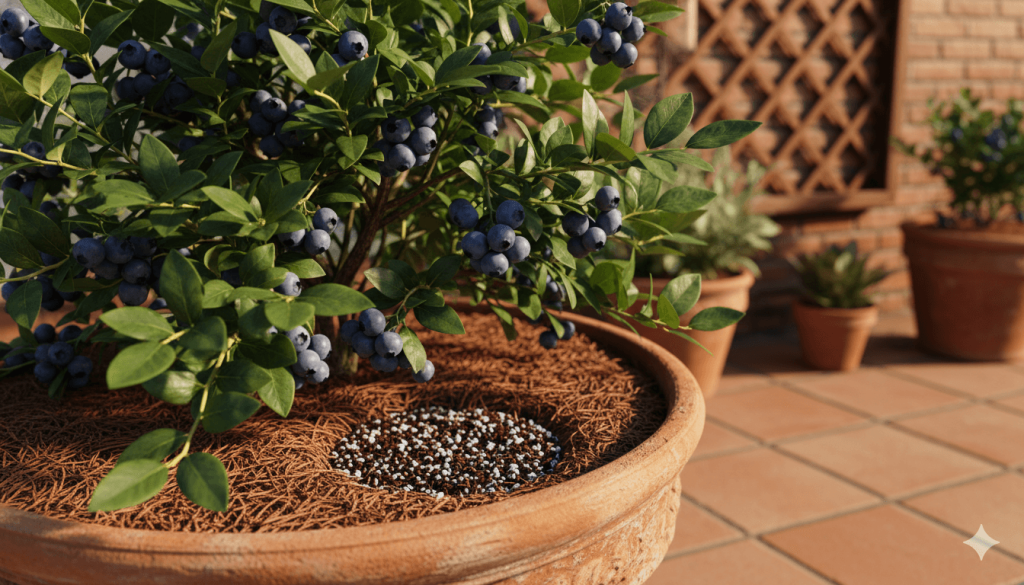
The best soil for blueberries in pots is a light, acidic mix (pH 4.5–5.5) made from peat moss or coco coir, pine bark fines, and perlite — rich in organic matter and free-draining.
⚠️ Common Mistake: Using regular garden soil or standard potting compost. These are usually too alkaline, dense, and poorly drained for blueberries.
🧭 Ideal Soil Specifications for Blueberries in Containers
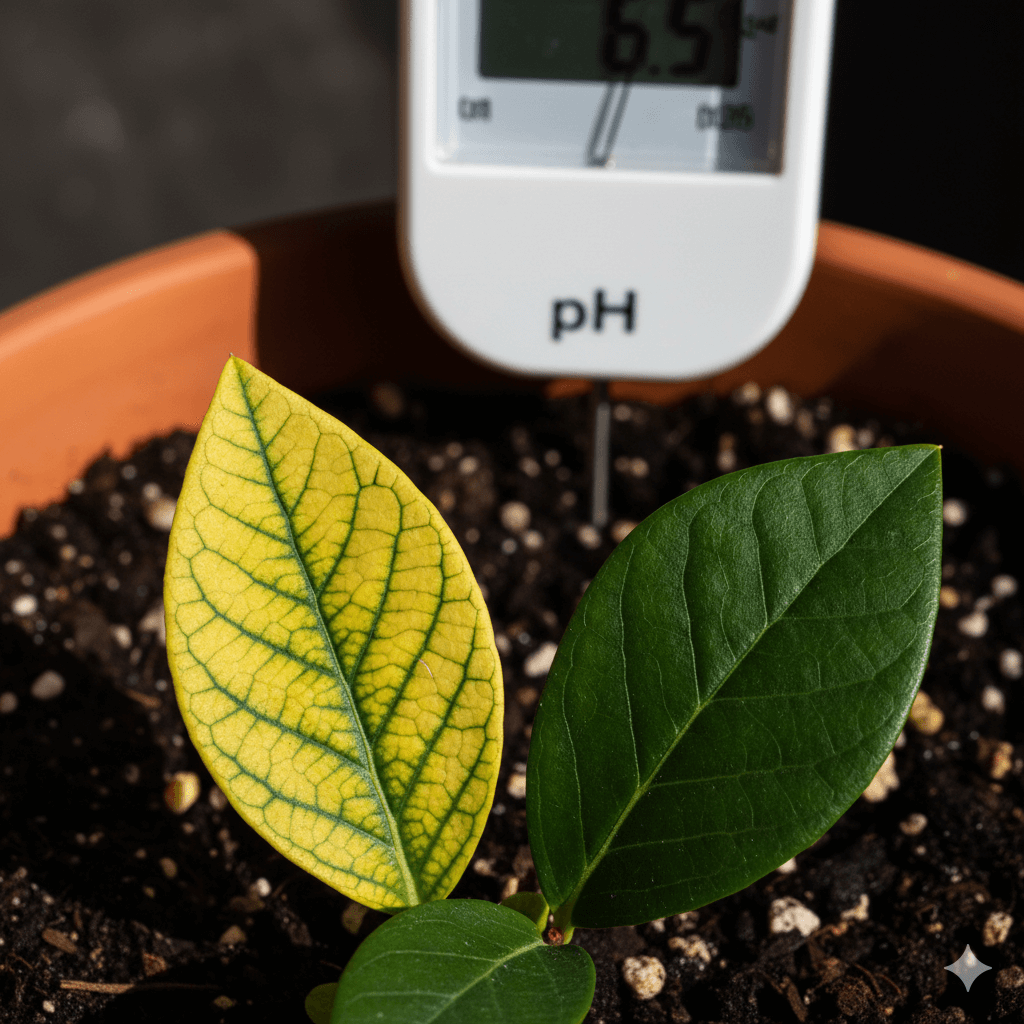
Selecting the right soil for container blueberries isn’t just about ingredients — it’s about pH, texture, drainage, and nutrient content. Each of these factors affects plant growth and fruit production.
In this section, we’ll break down the critical specifications for potting blueberry soil and explain why each element is important.
1. Soil pH: The Heart of Blueberry Health
Blueberries demand acidity — ideally between pH 4.5 and 5.5. At higher pH levels, the roots can’t absorb iron and other nutrients, causing chlorosis (yellow leaves).
🧪 How to Test:
Use a digital soil pH meter like the Sonkir Soil pH Meter (available on Amazon US/UK). Insert the probe into moist soil and wait for a stable reading.
For more accuracy, use Luster Leaf Rapitest Soil Test Kit — it’s color-based and affordable.
💡 Tip: If your tap water is alkaline (common in cities), switch to rainwater or distilled water to avoid raising the soil pH over time.
2. Texture and Structure
Blueberries thrive in airy, moisture-retaining soil — think sponge-like, not compacted.
Your mix should drain freely when watered but hold enough moisture that roots never dry out.
Ideal ingredients:
- Peat moss or coco coir: main base for acidity & moisture
- Pine bark fines: improve structure and microbial health
- Perlite: boosts drainage and oxygen flow
- Compost or leaf mold: adds organic nutrition and beneficial microbes
🌱 Pro Insight:
Avoid using vermiculite — it retains too much water and can suffocate roots in humid climates.
3. Container Size & Depth
- Minimum size: 12–16 inches deep and wide for one blueberry bush
- Best material: breathable fabric pots or wooden planters (help prevent overheating)
- Drainage holes: mandatory — add a 1–2 inch gravel layer at the bottom if using solid pots
💡 Quick Facts:
Smaller pots dry faster, which can cause pH swings. Larger containers buffer pH better and keep roots cooler in hot weather.
🌍 Peat vs Peat-Free Soil Mixes — Pros, Cons & Sustainability
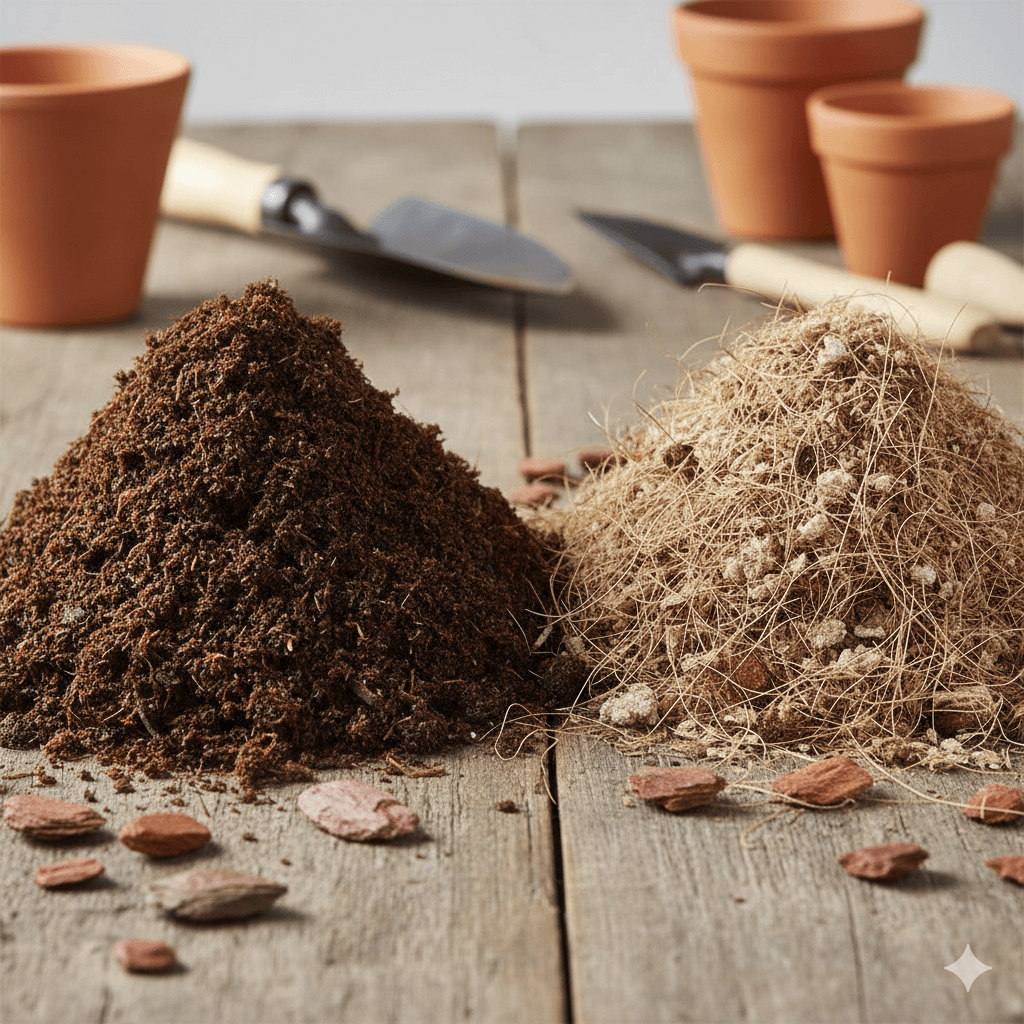
Peat moss is a classic choice for blueberries because it’s naturally acidic, lightweight, and easy to work with. However, environmental concerns and sustainability have led many gardeners to explore peat-free alternatives.
In this section, we’ll compare peat and peat-free mixes, including advantages, disadvantages, and sustainability considerations.
Peat-Based Mixes
✅ Pros:
- Naturally acidic (pH 3.5–4.5)
- Excellent water retention and texture
❌ Cons:
- Unsustainable (peatlands take centuries to form)
- Limited availability in some countries
Top Product Example:
- Miracle-Gro Performance Organics All Purpose Compost — available in the US & UK; partly peat-based with organic nutrients.
Peat-Free Alternatives
The new generation of peat-free blueberry soils performs just as well — when balanced right.
✅ Great Peat-Free Components:
- Coco coir: sustainable, holds water beautifully
- Composted bark / pine fines: adds structure
- Wood fiber / composted sawdust: improves aeration
- Acidic compost / sulfur additive: maintains low pH
🌱 Pro Insight:
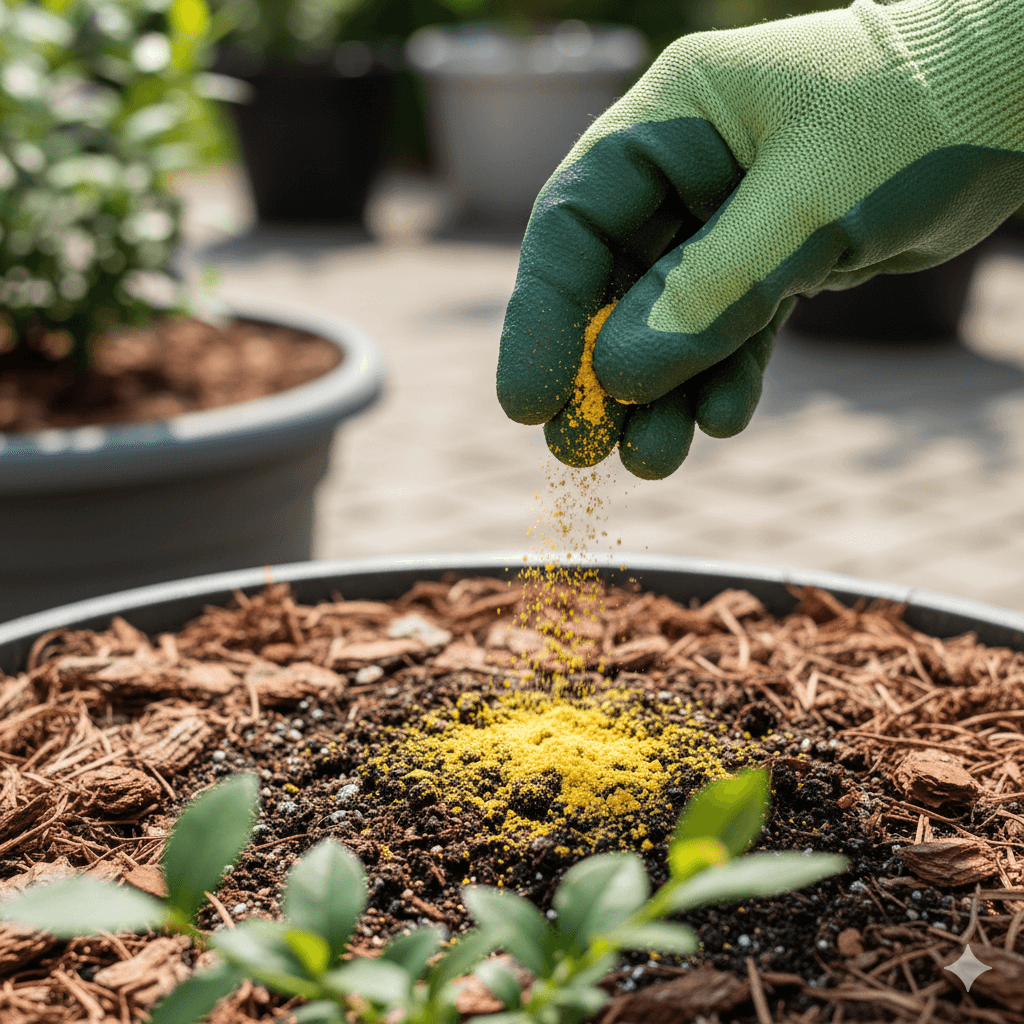
Mix in elemental sulfur granules (like Espoma Organic Soil Acidifier, available US/UK) at planting time to maintain long-term acidity.
🛒 The Best Ready-Made Potting Mixes for Blueberries
If you prefer not to mix your own soil, here are top-rated, pre-formulated options that work perfectly for potted blueberries:
1. FoxFarm Ocean Forest Potting Soil
- pH adjusted (6.3–6.8) but easily acidified with sulfur
- Rich in compost, seaweed and worm castings
- Great drainage for containers
🌍 Available: US (Amazon, Growers Supply)
💡 Best for growers who want nutrient-rich organic soil straight out of the bag.
2. Espoma Organic Acid Lover’s Potting Mix
- Specifically designed for acid-loving plants
- pH around 5.0
- Contains peat, perlite, and Myco-tone® beneficial microbes
🌍 Available: US / limited UK import
🌱 Ideal for those who want a balanced, pre-acidified mix — perfect for blueberries, azaleas, and camellias.
3. Miracle-Gro Peat-Free Premium Planter Mix
- Sustainably sourced coir blend
- Infused with slow-release fertilizer
- Great for balcony or patio blueberries
🌍 Available: UK, EU, and selected US retailers
💰 Best eco-friendly pick for gardeners avoiding peat.
🧪 DIY Blueberry Soil Mix Recipes for Every Climate
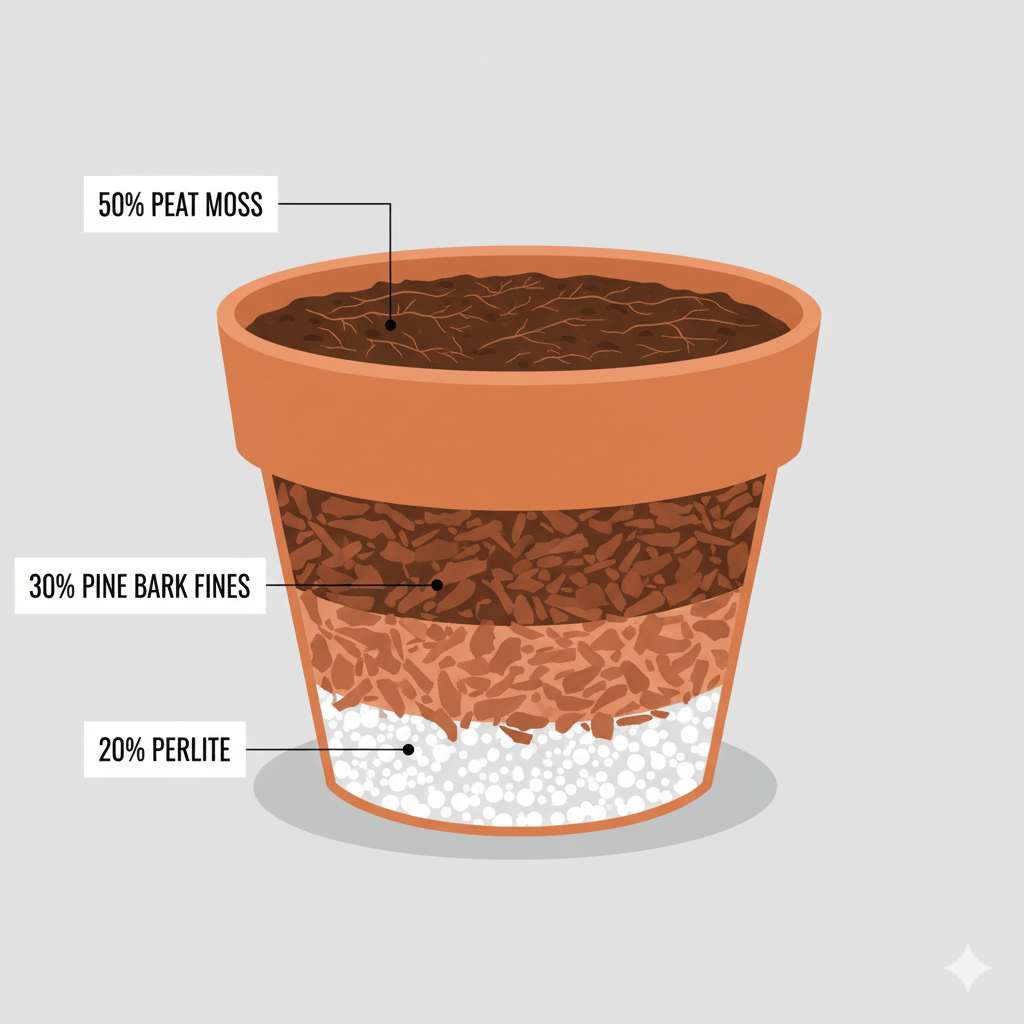
If you prefer total control (and savings), you can easily make a custom mix at home.
Below are proven recipes tested by blueberry growers in different climates:
1. Standard All-Purpose Mix (Beginners)
- 40% peat moss or coco coir
- 30% pine bark fines
- 20% perlite
- 10% compost or leaf mold
➡️ pH: 4.8–5.2
🧪 Mix thoroughly and pre-moisten before filling your pot.
2. Peat-Free Eco Mix
- 50% coco coir
- 30% composted bark
- 15% perlite
- 5% sulfur granules or acidic compost
🌱 Pro Insight: Let this mix rest for 2–3 weeks before planting to stabilize pH.
3. Hot & Dry Climate Mix
- 50% peat/coir
- 20% pine bark
- 15% perlite
- 15% vermicompost
💡 Keeps moisture longer and prevents soil crusting.
4. Humid Climate Mix
- 40% coir
- 40% pine bark fines
- 15% perlite
- 5% compost
⚠️ Avoid vermiculite — excess humidity + vermiculite = root rot risk.
🌦 Managing Soil pH, Nutrients & Watering Over Time
Even perfect soil changes over time — fertilizers, irrigation, and root activity all shift the balance.
Your job: monitor, acidify, and feed your blueberries consistently.
1. Monitoring pH
Check pH every 2–3 months using a test kit.
If pH rises above 5.5, mix in:
- 1–2 tbsp elemental sulfur per gallon of soil (Espoma or Bonide brands)
- Or water monthly with 1 tbsp vinegar per gallon of rainwater (temporary fix)
🧪 Do not add sulfur to dry soil — always water afterward to activate microbes.
2. Feeding & Fertilizing
Blueberries prefer acidic, slow-release fertilizers high in nitrogen but low in phosphorus.
Best options:
- Miracle-Gro Water Soluble Miracid — designed for acid-loving plants (US/UK)
- Holly-tone Organic Fertilizer by Espoma — gentle organic option
💡 Apply in early spring and midsummer only — stop feeding before dormancy.
3. Watering Wisely
- Use rainwater whenever possible.
- Keep the soil evenly moist, but never soggy.
- In summer, mulch the surface with pine needles or bark chips to reduce evaporation and stabilize pH.
🌱 Pro Insight:
If your leaves turn yellow but veins stay green → iron deficiency → soil likely too alkaline. Lower pH gently.
4. Refreshing & Top-Dressing Soil
Every 2 years:
- Remove top 2 inches of old soil
- Replace with fresh mix (acidic compost + pine bark)
- Add a pinch of sulfur granules for pH stability
This prevents compaction and keeps roots healthy.
❄️ Seasonal & Climate-Specific Advice
Hot & Dry Climates
- Use light-colored pots to reduce heat absorption
- Add mulch and place containers in partial afternoon shade
- Mix in more coir and compost to retain moisture
Humid Climates
- Prioritize drainage — add extra perlite or pine bark
- Keep pots elevated off the ground
- Avoid water trays under pots
Winter & Overwintering
- Move pots to sheltered spots or bury them halfway in soil
- Use burlap or straw mulch to insulate roots
- Avoid fertilizing after midsummer (plants need dormancy)
💡 Quick Fact: Blueberries in pots are more vulnerable to frost damage because roots can freeze faster than in-ground plants.
🚨 Common Soil Problems & How to Fix Them
| Symptom | Likely Cause | Fix |
| Yellow leaves, green veins | pH too high (>6.0) | Add sulfur or use acidified water |
| Droopy or dull leaves | Soil exhausted/compacted | Repot or top-dress with a fresh mix |
| Brown leaf tips | Salt buildup from fertilizer | Flush with rainwater |
| Stunted growth | Add perlite or repot in a looser mix | Moss/mold on the surface |
| Moss/mold on surface | Overwatering, poor air flow | Scrape off, improve drainage |
⚠️ Myth Bust: Coffee grounds alone do not acidify soil enough. Use them sparingly as organic matter, not as your main acidifier.
❓ FAQs Best Soil for Blueberries in Pots
What is the best pH for blueberries in pots?
between 4.5 and 5.5 for optimal nutrient absorption.
Can I grow blueberries in regular potting soil?
No, most general potting mixes are too alkaline and compact for blueberry roots.
How often should I change the soil?
Every 2–3 years, or when growth slows and the soil loses structure.
Do blueberries need peat?
No — peat helps but isn’t essential. Peat-free blends using coir and pine bark can perform equally well.
Can I use coffee grounds to acidify the soil?
Only as a mild organic additive — not as a substitute for sulfur or proper acidifiers.
✅ Conclusion + Free Checklist
Growing blueberries in pots is incredibly rewarding — but success starts with soil. An acidic, free-draining, organic-rich mix mimics their native forest floor and ensures vigorous growth, dark green leaves, and juicy harvests.
This specific soil chemistry is highly endorsed by leading agricultural university extension programs for guaranteeing bumper crops from container-grown bushes.
Blueberry Soil & Care Checklist
✅ Ideal pH: 4.5–5.5
✅ Soil Base: Peat moss or coco coir
✅ Structure: Pine bark + perlite
✅ Fertilizer: Acid-loving formula (Espoma / Miracid)
✅ Water: Rainwater preferred
✅ Refresh Soil: Every 2 years
✅ Mulch: Pine needles or bark chips
🌿 Final Word: Blueberries don’t need luck — they need the right chemistry. Whether you use a premium mix or a homemade blend, maintaining that acidic, airy environment is the secret to container-grown blueberry success — from first blossom to your sweetest harvest.