If you’ve grown blueberries before, you already know they can be dramatically sensitive to the wrong fertilizer. A product that works beautifully for tomatoes or strawberries can completely ruin a blueberry plant by:
- Pushing the pH upward
- Burning the shallow, delicate roots
- Flooding the soil with “salts” blueberries hate
- Shutting down nutrient absorption
Table of Contents
That’s why choosing organic blueberry fertilizer isn’t just a preference — it’s the safest and most reliable way to keep your plants healthy, productive, and long-lived.
Organic fertilizers work with the blueberry root system, not against it. They release nutrients slowly, maintain proper acidity, and feed the soil microbes that blueberries depend on.
This guide walks you through the best organic fertilizers, how to use them, exact dosages, seasonal feeding schedules, product recommendations, and mistake-proof application techniques, whether you’re growing blueberries in pots or in the ground.
What Makes a Fertilizer “Organic” for Blueberries?
Understanding this is key to maintaining the pH in the right range.
Organic blueberry fertilizers are made from natural, carbon-based sources, not synthetics. These fertilizers:
- Break down slowly
- Feed soil microbes
- Add organic matter
- Slightly acidify the soil
- Reduce the risk of nutrient burn
- Helps maintain the ideal pH (4.5–5.5)
Blueberries thrive under these conditions because their roots are extremely fine and shallow — they evolved in naturally acidic, organic-rich forest soil, not mineral-heavy, alkaline soils that synthetics tend to create.
How Organic Fertilizers Differ from Synthetic (Quick Overview):
| Feature | Organic Blueberry Fertilizer | Synthetic Fertilizer |
| Nutrient Release | Slow, gentle | Fast, harsh |
| pH Impact | Acidifying (good) | Neutral or alkaline (bad) |
| Burn Risk | Extremely low | High |
| Microbial Life | Supports microbes | Can harm microbes |
| Longevity in Soil | Long-lasting | Short-term |
| Container Safety | Excellent | Risky |
Blueberry Nutrient Requirements (N-P-K + Micronutrients Explained Simply)
Before choosing an organic fertilizer, it’s important to understand what blueberries need. Their nutrient profile is different from most fruit plants.
Blueberries Need:
1. Low, steady nitrogen (N)
They prefer ammonium-based nitrogen (not nitrate). Organic fertilizers naturally provide this form without harming pH.
2. Balanced phosphorus (P)
Needed for flowering and fruit set, but blueberries don’t need extreme amounts — organic fertilizers provide the right ratio.
3. Moderate, consistent potassium (K)
Essential for berry size, sweetness, and plant resilience. Organics supply this in slow-release form.
4. Critical micronutrients
- Iron (Fe)
- Magnesium (Mg)
- Sulfur (S) (most important)
- Zinc (Zn)
- Manganese (Mn)
Most organic fertilizers naturally supply these, especially iron and sulfur, which improve leaf color and keep pH acidic.
Why Organic Fertilizers Work Best for Acid-Loving Plants Like Blueberries
1. They Maintain Soil Acidity Naturally
Every organic fertilizer recommended in this article either:
- lowers pH, or
- keeps pH stable, or
- supports microbial activity that maintains acidity
This is exactly what blueberries need.
2. They Prevent Nutrient Burn (Blueberries Hate Salt!)
Blueberry roots sit in the top few inches of soil and burn easily.
Organic fertilizers contain little to no salts, so there is virtually no burn risk.
3. They Release Nutrients Slowly — Perfect for Containers
Container blueberries need small, consistent doses.
Organic fertilizers feed for 2–4 months with no spikes.
4. They Feed Soil Microbes (Blueberries Depend on Them)
Healthy microbes =
better nutrient uptake + better pH stability + bigger yields.
Synthetic fertilizers damage these microbes.
Organic fertilizers feed them.
Why Blueberries Need Organic Fertilizer (The Science Made Simple)

Blueberries are not like most fruiting plants. They have unusual nutritional needs and a shallow, fibrous root system that reacts very differently to fertilizers than vegetables, citrus, or houseplants. Understanding why they thrive under organic feeding helps you choose the right inputs and avoid hidden mistakes.
Blueberries Are Naturally Adapted to Low-Nutrient, Acidic Forest Soils
In the wild, blueberries grow in conifer forests, pine barrens, and bog edges — all areas characterized by:
- Acidic soil (pH 4.0–5.5)
- High organic matter
- Very slow nutrient release
- Minimal salts
- Thick layers of decomposing leaves, needles, and moss
Blueberries evolved to feed on organic acids, humus, and slow-release nutrients.
Therefore, they struggle in:
- Rich vegetable soil
- Compost-heavy soil
- Regular potting mix
- High-salt synthetic fertilizers
- Alkaline irrigation water
Why Organic Fertilizers Work Better Than Synthetic Ones
Here’s what happens with synthetic fertilizers:
❌ 1. The salts burn their shallow roots
Blueberry feeder roots sit in the top 2–4 inches of soil.
Synthetic fertilizers → high salt load → root burn → yellowing leaves → weaker growth.
❌ 2. They push pH upward (becoming too alkaline)
Many synthetics contain nitrate nitrogen, which raises soil pH over time, even when the claim says “acidic formula.”
❌ 3. They feed too fast
Blueberries prefer slow, steady nutrition.
Fast nutrient spikes → soft growth → disease → fewer berries.
Now compare this with organic fertilizers:
✅ 1. They naturally maintain acidity
Organic inputs slowly release organic acids, helping keep acidity in the ideal range:
pH 4.5–5.5
✅ 2. They promote beneficial fungi (mycorrhizae)
Blueberries depend on mycorrhizal fungi to absorb nutrients.
Chemical salts kill these fungi; organic fertilizers feed them.
✅ 3. They release nutrients at the blueberry’s pace
Slow, gentle release =
✔ No burn
✔ Optimal uptake
✔ More consistent fruiting
✅ 4. They add carbon, which blueberries love
Organic fertilizers add humic substances → improved structure, water retention, and nutrient cycling.
The Specific Nutrients Blueberries Need (and Why Organic Sources Fit Best)
Blueberries require a unique balance:
🔹 High Nitrogen — but in the right form (ammonium, not nitrate)
Blueberries prefer ammonium-based nitrogen, which lowers pH.
Organic sources like:
- Cottonseed meal
- Feather meal
- Soybean meal
- Blood meal
- Fish fertilizer
→ naturally release ammonium.
Nitrate-based fertilizers (common in synthetics) make the plant chlorotic and raise the pH.
🔹 Extra Sulfur
Sulfur helps acidify the soil and supports chlorophyll formation.
Organic sources:
- Elemental sulfur
- Cottonseed meal (contains sulfur compounds)
- Acidic compost
- Pine bark fines
🔹 Low Phosphorus
Blueberries hate high phosphorus — it blocks iron uptake.
Organic fertilizers naturally have lower P and release slowly, preventing lockout.
🔹 Medium Potassium
For berry size, flavour, and winter hardiness.
Organic sources:
- Kelp meal
- Greensand
- Sulfate of potash (naturally mined)
How Organic Fertilizer Supports Berry Production (Real Outcomes)
When fed organically, container blueberries typically show:
✔ More flower buds and heavier fruit set
Because organic nitrogen feeds steadily, not in harsh spikes.
✔ Sweeter, more flavourful berries
High-potassium organic sources enhance sugar accumulation.
✔ Better drought resistance
Humus increases the soil’s water-holding capacity.
✔ More vibrant leaves + fewer deficiencies
Mycorrhizae remain active, improving micronutrient uptake (especially iron and magnesium).
✔ Longer life of container plants
Chemical fertilizers reduce lifespan.
Organic systems keep the plant productive for 7–10+ years in pots.
Why Organic Fertilizer Is Extra Important for Potted Blueberries
In containers:
- Salts build up quickly
- pH rises faster
- Roots are more exposed
- Watering leaches nutrients sooner
Organic fertilizers fix all of these:
🌱 Safe (no burning)
🌱 Acid-stabilizing
🌱 Gentle but long-lasting
🌱 Improves soil biology in a limited space
The Core Problems Organic Fertilizer Prevents
| Common Issue | Caused By | Organic Fertilizer Fix |
| Yellow leaves (iron chlorosis) | High pH, nitrate fertilizers | Acidifying organic nitrogen + sulfur |
| Poor berry size | Nutrient spikes | Steady potassium + nitrogen release |
| Drying/wilting | Poor soil biology | Organic matter improves root health |
| Root burn | Synthetic salts | Organic fertilizers are burn-free |
| Weak growth in containers | Nutrient leaching | Slow-release nutrients remain available |
When Organic Is Better Scientifically (Not Just “Natural = Good”)
This is important.
The reason blueberries prefer organic fertilizers is biochemical, not emotional or ideological:
- Their root physiology evolved for low-nutrient, fungal-rich environments.
- Their nutrient pathways prefer ammonium over nitrate.
- Their pH sensitivity demands acid-stable nutrition.
- Their shallow fibrous roots cannot handle salt-based fertilizers.
This is why organic fertilizers consistently outperform synthetic ones in yield, berry quality, and longevity across university trials.
Best Organic Fertilizers for Blueberries (Top Products + How They Work)
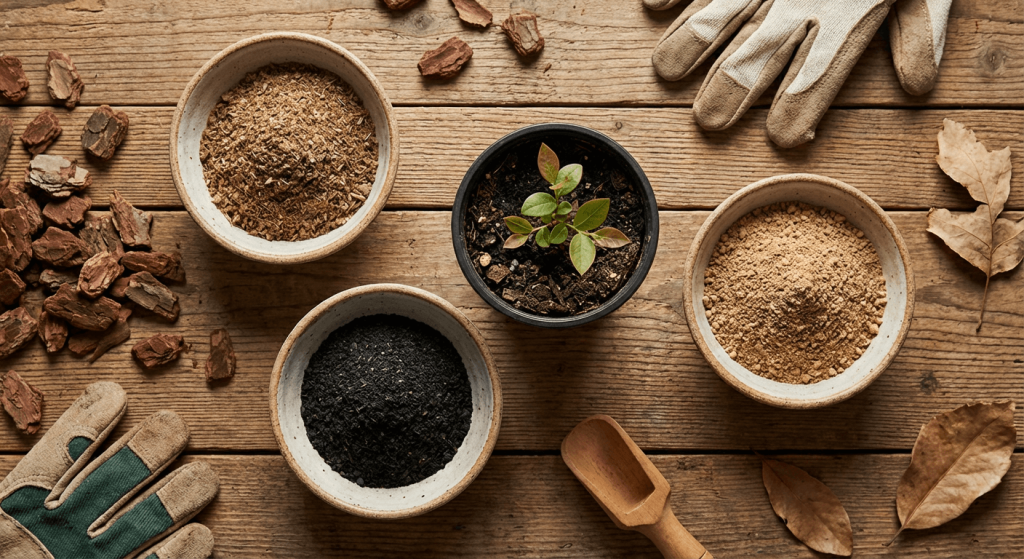
Blueberries respond extremely well to organic fertilizers that match their natural woodland environment. This section gives you Amazon-ready, beginner-proof, container-friendly product recommendations — each chosen for:
- Proper NPK balance for blueberries
- Slow-release organic nitrogen
- Ability to maintain or support soil acidity
- No harmful salts
- Strong user reviews + reliability
To make it easy, products are grouped by type: granular, liquid, acidifying blends, slow-release meals, and supplements.
Best Overall Organic Fertilizer for Blueberries (Granular)
These are balanced, slow-release, acid-loving formulas ideal for containers and raised beds.
1. Down to Earth Acid Mix 4-3-6 (Organic Granular) — Best Overall for Containers
Why it works:
- Formulated specifically for acid-loving plants
- Nitrogen comes from cottonseed meal, feather meal, and fish bone meal
- Contains sulfur for pH maintenance
- Includes kelp meal for berry size and plant immunity
Best for:
- Potted blueberries
- Plants showing pale leaves
- All-purpose feeding during spring and early summer
Benefits:
- Very gentle
- Support mycorrhizae
- Deep green foliage + larger berries
Use rate:
- ½ cup per 5-gallon pot, twice a year
2. Espoma Holly-tone 4-3-4 (Organic Granular) — Best Budget Pick
Why it works:
- Designed for acid-loving shrubs (blueberries, azaleas, rhododendrons)
- Includes Bio-Tone microbes (very blueberry-friendly)
- Balanced NPK + natural acidity
Best for:
- Budget-friendly, large-quantity feeding
- In-ground or large container plants
Benefits:
- Excellent for long-term soil building
- Adds calcium + trace minerals
- Promotes fungal networks
Use rate:
- ½ cup per 5–7 gallon pot in spring, early summer
Best Organic Liquids for Fast Boosts
Use these when your plant needs quick correction — such as pale leaves, slow growth, or yellowing.
1. Alaska Fish Fertilizer 5-1-1 (Organic Liquid)
Why it works:
- Delivers fast nitrogen in ammonium form
- Lowers pH slightly
- Works quickly for chlorosis
Best for:
- Early spring boost
- Fixing nitrogen deficiency
- Young plants needing a jump-start
Use rate:
- 1 tablespoon per gallon every 2 weeks
2. Neptune’s Harvest Fish & Seaweed 2-3-1 — Best for Berry Quality
Why it works:
- Seaweed → boosts potassium + trace minerals
- Fish → steady nitrogen
- Increases berry sweetness and size
Best for:
- Fruiting stage
- Increasing flavor and stress resistance
Use rate:
- 1 ounce per gallon every 2–3 weeks
Best Organic “Meal-Based” Fertilizers (Very Slow Release)
These are long-lasting, deep-soil fertilizers that feed for 3–6 months — ideal for those who forget to fertilize.
1. Cottonseed Meal 6-2-1 — Top Acidifying Organic Nitrogen Source
Why it works:
- Naturally acidifying
- Provides ammonium nitrogen
- Gentle, slow, predictable release
Best for:
- pH creep (when soil becomes too alkaline)
- Adding organic matter
- Hot climates where liquids leach quickly
Use rate:
- ¼–½ cup per 5 gallons of soil
2. Feather Meal 12-0-0 — Strong Slow Nitrogen
Why it works:
- Releases nitrogen very slowly
- No phosphorus (good for blueberries)
Best for:
- Long-term leafy growth
- Large mature bushes in big pots
Use rate:
- 2 tablespoons per gallon of soil
Best Organic Soil Acidifiers to Use With Fertilizers
Fertilizer alone won’t fix high pH.
Adding an acidifier with fertilizer ensures blueberries stay in the 4.5–5.5 pH sweet spot.
1. Espoma Soil Acidifier (Elemental Sulfur) — Best for Long-Term pH Control
Why it works:
- Pure elemental sulfur
- Soil bacteria convert it into sulfuric acid
- Most reliable long-term acidifying method
Best for:
- Containers with pH above 5.8
- Well water with high pH
- Preventing iron chlorosis
Use rate:
- 1–2 tablespoons per 5-gallon pot, 2–3× per year
2. Aluminum Sulfate — Fast pH Drop
Use carefully in containers. It works fast but can over-acidify.
Organic-ish, but not ideal for long-term soil health.
Best for:
- Emergency correction of high pH (pH > 6.5)
Use rate:
- 1 teaspoon per 5 gallons, max 1–2 times per year
Best Organic Potassium Boosters (For Bigger, Sweeter Berries)
Blueberries use a lot of potassium during fruit development.
1. Kelp Meal — Best Natural K Boost + Trace Minerals
Why it works:
- Slow-release potassium
- Improves berry sweetness
- Enhances plant immunity
Best for:
- Fruiting period
- Plants under stress
Use rate:
- 1 tablespoon per gallon of soil
2. Sulfate of Potash (0-0-50) — Potassium Without Raising pH
Organic-mined mineral form.
Why it works:
- Pure, clean potassium
- Neutral to slightly acidic
Best for:
- Container plants producing small berries
- Late-summer feeding (no nitrogen needed)
Use rate:
- ½ teaspoon per pot, monthly during fruiting
Best Organic Micronutrient Supplements (Fix Yellowing Leaves)
Blueberries often show iron, magnesium, or sulfur deficiencies in pots.
1. Liquid Iron (Chelated Iron)
Why it works:
- Immediate greening within days
- Fixes iron chlorosis fast
- Works even if pH is slightly high
Use rate:
- As per bottle, usually 1–2× per month
2. Epsom Salt (Magnesium Sulfate)
Why it works:
- Adds magnesium + sulfur
- Helps with dark green leaves and fruit quality
Use rate:
- 1 teaspoon per gallon of water monthly
Summary Table (Best Uses at a Glance)
| Purpose | Best Product | Why |
| Overall best organic feeding | Down to Earth Acid Mix | Balanced, acid-friendly, reliable |
| Budget organic fertilizer | Espoma Holly-tone | Great value, microbial-rich |
| Fast nitrogen boost | Alaska Fish 5-1-1 | Quick correction for pale leaves |
| Better berry flavor | Neptune’s Fish & Seaweed | Increases potassium + trace minerals |
| Long-term acid-friendly nitrogen | Cottonseed Meal | Slow, gentle, acidifying |
| Long-lasting nitrogen | Feather Meal | Excellent for large pots |
| Long-term pH control | Espoma Soil Acidifier | Safe, effective sulfur |
| Fast emergency pH drop | Aluminum Sulfate | Only for quick corrections |
| Potassium for sweetness | Kelp Meal | Improves berry flavour |
| Correct yellowing leaves | Liquid Chelated Iron | Works even with imperfect pH |
How to Apply Organic Fertilizer to Potted Blueberries (Exact Schedule + Dosages)

The biggest reason people struggle with blueberries in containers isn’t soil, sunlight, or even pH…
It’s incorrect fertilizing timing and amounts.
Organic fertilizers release slowly — which is good — but it also means you need a clear seasonal routine so your plant gets steady nitrogen early and steady potassium later. Below is a complete, no-guessing system.
Seasonal Fertilizer Schedule for Potted Blueberries (Simple Chart)
Blueberries follow a predictable annual growth cycle. Fertilizing outside these windows can cause:
- weak growth
- poor fruiting
- winter dieback
- root burn
- late-season soft growth
Here’s the perfect seasonal schedule:
| Season | What the Plant Needs | What YOU Should Apply |
| Late Winter (Before Bud Break) | Nitrogen to start new shoots | Light feeding of Acid Mix or Holly-tone |
| Early Spring (Bud Break) | Nitrogen + acidification | Cottonseed meal or acidifying granular |
| Mid-Spring | Nitrogen + trace minerals | Fish fertilizer or Fish & Seaweed |
| Early Summer (Fruit Setting) | Potassium for berry size | Kelp meal or Fish & Seaweed |
| Mid–Late Summer (Fruit Ripening) | Steady K, very low N | Kelp meal, sulfate of potash |
| Early Fall | No nitrogen; gentle minerals | Tiny amount kelp meal only (optional) |
| Winter | Nothing | No fertilizer |
💡 Rule: After July 15 (cool climates) or August 1 (warm climates), stop giving all nitrogen.
This prevents soft growth that winter frost will kill.
Detailed Step-by-Step Feeding Routine (Container-Specific)
This system works for any pot size, any cultivar, any climate.
Step 1 — Late Winter / Early Spring (Before Leaves Open)
Goal: Wake the plant gently with a nitrogen base.
What to apply:
- Down to Earth Acid Mix or Espoma Holly-tone
Exact dosage:
- ½ cup per 5-gallon pot
- 1 cup per 10-gallon pot
- Sprinkle on the surface and lightly scratch into the top 1 inch of soil
- Water deeply afterward
Why this works:
- Feeds slowly for 4–6 weeks
- Supports new shoots and flower buds
- Supplies sulfur for acidic soil
Step 2 — Early Spring (When New Leaves Appear)
Goal: Boost nitrogen + support acid formation.
What to apply:
- Cottonseed meal (best natural acidic N source)
- Optional: Espoma Soil Acidifier (elemental sulfur)
Exact dosage:
- Cottonseed meal:
- ¼ cup per 5 gallons
- Soil Acidifier (sulfur):
- 1 tablespoon per pot, only if pH is drifting up
Why this works:
- Keeps soil in the ideal 4.5–5.5 pH zone
- Builds strong green growth for the season
- Gentle and long-lasting nitrogen
Step 3 — Mid Spring (Rapid Growth Stage)
Goal: Provide fast nitrogen to maintain green leaves.
What to apply:
- Alaska Fish Fertilizer 5-1-1 or
- Neptune’s Harvest Fish & Seaweed 2-3-1
Exact dosage:
- 1 tablespoon per gallon of water
- Apply every 14 days
Why this works:
- Blueberries in pots leach nutrients quicker
- Liquid boosts show results within days
- Fish + seaweed strengthens cell walls
⚠️ Mistake to avoid:
Don’t combine two high-nitrogen fertilizers at once (e.g., fish fertilizer + feather meal).
Step 4 — Early Summer (Fruit Setting & Early Berry Development)
Goal: Maximize berry formation and size.
What to apply:
- Kelp meal (slow-release potassium)
- Fish & Seaweed (balanced micronutrients)
Exact dosage:
- Kelp meal: 1 tablespoon per gallon of soil
- Fish & Seaweed: 1 oz per gallon of water every 2–3 weeks
Why this works:
- Potassium directly affects berry size + sweetness
- Seaweed reduces stress during heat waves
- Strengthens stems and roots for fruit support
🌿 Pro Insight:
Plants given seaweed during fruit formation produce sweeter berries with higher antioxidant levels.
Step 5 — Mid to Late Summer (Berry Ripening)
Goal: Improve flavor, color, and firmness — without nitrogen.
What to apply:
- Kelp meal
- Sulfate of Potash (0-0-50) (optional)
Exact dosage:
- Kelp meal: 1 teaspoon per gallon, once monthly
- Sulfate of Potash: ½ teaspoon per pot, once monthly
Why this works:
- Potassium boosts berry flavor and juiciness
- Too much nitrogen now produces watery fruit
- Encourages stronger canes for next year
💡 Tip: Water stress (slight dryness) near harvest increases sweetness.
Step 6 — Early Fall (Post-Harvest Recovery)
Goal: Help the plant prepare for winter.
What to apply:
- Kelp meal only (mineral-based, zero nitrogen)
Exact dosage:
- 1 teaspoon per pot, only once
Why this works:
- Adds micronutrients
- Does not trigger new growth
- Strengthens roots for winter dormancy
⚠️ Never apply nitrogen after late summer.
It causes tender growth that freezes and dies.
Exact Dosage Chart by Pot Size
| Pot Size | Granular Fertilizer (Spring) | Cottonseed Meal (Spring) | Liquid Feeding (Biweekly) |
| 3-gallon | ⅓ cup | 2 tbsp | ½–1 gallon solution |
| 5-gallon | ½ cup | ¼ cup | 1–2 gallons |
| 7-gallon | ¾ cup | ⅓ cup | 2 gallons |
| 10-gallon | 1 cup | ½ cup | 2–3 gallons |
| 15-gallon | 1½ cups | ¾ cup | 3 gallons |
How to Apply Fertilizer Without Damaging Roots
Because blueberry roots are shallow and fine, the method matters more than the quantity.
Correct Method:
✔ Sprinkle fertilizer on top
✔ Lightly work into the top ½–1 inch
✔ Keep fertilizer away from the stem (2–3 inch gap)
✔ Water thoroughly afterward
✔ Mulch lightly with pine bark or needles
Never Do This:
❌ Do not bury fertilizer deep — blueberries hate root disturbance
❌ Do not mound fertilizer around the stem
❌ Do not mix liquids stronger than recommended
Visual Feeding Calendar (Beginner-Friendly)
📅 January–February:
- Do nothing
📅 March:
- Spring granular feeding
📅 April:
- Cottonseed meal + sulfur if needed
📅 May:
- Liquid nitrogen + seaweed
📅 June:
- Potassium feeding + fish/seaweed
📅 July:
- Light potassium feeding
- Stop all nitrogen
📅 August:
- Small kelp meal dose
📅 September–December:
- No feeding
Troubleshooting Fertilizer Problems in Potted Blueberries (Yellow Leaves, Poor Growth, pH Issues & More)

This is the section your readers will return to every year.
Blueberries in pots are sensitive, and most issues can be traced back to:
- wrong pH
- wrong fertilizer type
- over-fertilizing
- under-fertilizing
- watering + pH interactions
- micronutrient deficiencies
Below is a full guide organized by symptom → cause → organic solution.
Yellow Leaves (Chlorosis) — The Most Common Issue
Yellowing is almost always caused by pH problems or lack of iron.
Symptoms:
- Leaves turn yellow but veins stay green
- New leaves are pale
- Growth slows
- Happens mid-spring or early summer
Causes:
- Soil pH too high (above 5.8)
- Water source too alkaline
- Iron deficiency from poor pH
- Lack of nitrogen early in the season
Fix (Organic Only):
1. Test pH Immediately
If soil pH is 6.0+, nutrients become locked out.
2. Add Organic Acidifiers
- Espoma Soil Acidifier: 1–2 tbsp per pot
- Cottonseed meal: ¼ cup per 5 gallons
- Pine bark mulch: maintains long-term acidity
3. Apply Liquid Chelated Iron
Works even if your pH is still correcting.
- Apply once weekly for 2–3 weeks
- Leaves turn green within 3–7 days
4. Boost Nitrogen (Only in Spring)
Use Alaska Fish 5-1-1 every 2 weeks.
Red Leaves (Not Autumn) — Stress or Deficiency
Symptoms:
- Red or purple-tinged leaves
- Happens in spring or mid-summer
- Leaves may curl
Causes:
- Phosphorus deficiency
- Cold stress
- Overwatering
- Very low pH (too acidic)
Fix:
- Use Fish & Seaweed 2-3-1 → natural phosphorus
- Let soil dry slightly before watering
- If pH is below 4.2, add 1 tablespoon garden lime per pot to raise it gently
- Warm the soil with dark mulch
Small Berries or Poor Fruit Set
Symptoms:
- Tiny berries
- Berries fall prematurely
- Sparse clusters
Causes:
- Not enough potassium
- Too much nitrogen during fruiting
- Poor pollination ( container blueberries still need bees )
- Water stress at the wrong time
Fix:
1. Increase Potassium
- Kelp meal: 1 tablespoon per gallon of soil
- Sulfate of potash: ½ teaspoon per pot in early summer
2. Stop Nitrogen Immediately
If berries are already forming, nitrogen only decreases sweetness.
3. Improve Pollination
- Place near flowering herbs (basil, thyme)
- Avoid insecticides
4. Water Deeply During Berry Swell
Drying out mid-fruiting = small berries.
Drying out right before harvest = sweeter berries.
Timing matters.
Weak Growth, Thin Stems, or Slow Recovery?
Symptoms:
- Sparse leaves
- Thin, floppy stems
- Bush does not grow each spring
- Looks “weak” even in good soil
Causes:
- Nitrogen deficiency
- Too small a pot
- Cold root zone
- Compacted soil
- Not enough organic matter
Fix:
- Apply Acid Mix or Holly-tone in early spring
- Add fish fertilizer biweekly
- Repot into 7–10 gallon minimum
- Use pine bark fines + peat mix to increase air flow
- Mulch with pine needles to warm root zone
Brown Leaf Edges (Scorching)
Symptoms:
- Brown, crispy edges
- Leaf tip burn
- Usually mid-summer
Causes:
- Salt buildup (rare but possible in pots)
- Underwatering
- Over-fertilizing
- Hot sun + dry soil
Fix:
- Flush pot with 2–3 gallons of water
- Stop liquid fertilizers for 2 weeks
- Increase mulch depth
- Shade temporarily during heatwave
Droopy, Wilted Leaves (Even If Soil Is Moist)
Symptoms:
- Leaves wilt
- Soil stays wet
- Growth stalls
- Lower leaves yellow first
Causes:
- Poor drainage or soil compaction
- Root rot
- Pot too large and soil stays waterlogged
Fix:
- Repot using chunky mix: pine bark, peat, perlite
- Drill extra drainage holes
- Add mycorrhizal inoculant (Mike’s Mix or Espoma Bio-tone)
- Water less frequently
Fertilizer Burn (Important for Beginners)
Symptoms:
- Brown spotting
- Crispy edges
- Soil smells “hot” or sour
- Sudden leaf drop
Causes:
- Too much nitrogen
- Applying fast-acting nitrogen in summer
- Putting fertilizer directly against the stem
Fix:
- Flush soil heavily for 5–7 minutes
- Remove visible fertilizer from surface
- Add ½ inch pine bark mulch
- Pause all feeding for 3–4 weeks
When pH Is Too High (Over 6.0)
This is the #1 reason container blueberries fail.
Fix:
- Add elemental sulfur: 1–2 tbsp per pot
- Mix in cottonseed meal immediately
- Use only rainwater or filtered water
- Mulch with pine needles
- Avoid hardwood mulch (it raises pH)
Fast Fix:
- Add chelated iron → green up within a week
- Add vinegar water (1 tbsp per gallon) once only, for emergencies
When pH Is Too Low (Below 4.2)
Rare, but possible if you add too much sulfur.
Symptoms:
- Slight leaf curl
- Slowed growth
- Leaves turn dark green or purplish
Fix:
- Add 1 tablespoon garden lime per pot
- Stop all acidifiers
- Use fish fertilizer only (no cottonseed meal)
- Retest pH in 2 weeks
Watering Mistakes That Look Like Fertilizer Problems
Many gardeners misdiagnose watering problems as nutrient issues.
Overwatering Symptoms:
- Yellow lower leaves
- Drooping despite moist soil
- Sour-smelling soil
Underwatering Symptoms:
- Brown leaf edges
- Tiny berries
- Leaves curl upward
Fix:
- Keep soil consistently moist but not soggy
- Add extra perlite if soil stays too wet
- Mulch to reduce moisture swings
Container Size Mistakes That Mimic Nutrient Problems
Too-small containers cause nutrient deficiencies even when the soil is perfect.
Minimum sizes:
- 5 gallons = absolute minimum
- 7 gallons = good
- 10–15 gallons = best
Bigger containers hold moisture and nutrients more consistently.
Quick Diagnosis Table (Reader Favorite)
| Symptom | Likely Cause | Organic Fix |
| Yellow leaves | High pH, iron deficiency | Acidifier + chelated iron |
| Red leaves (not fall) | P deficiency, cold | Fish & seaweed |
| Tiny berries | Low potassium | Kelp meal + avoid nitrogen |
| Poor growth | Low nitrogen | Fish fertilizer + cottonseed meal |
| Brown edges | Salt, drought, heat | Flush + mulch |
| Drooping leaves | Overwatering | Improve drainage |
| Burned edges | Too much fertilizer | Flush pot |
| Pale new leaves | Iron or sulfur issue | Chelated iron + sulfur |
5.13 Expert Tips for Healthy, Organic-Fed Blueberries
🌿 Use pine bark + peat-based soil
This keeps the soil naturally acidic.
💧 Water with rainwater whenever possible
Tap water raises pH over time.
🫐 Stop all nitrogen after mid-summer
This ensures sweeter berries and strong winter hardiness.
🔄 Fertilize little and often
Small doses always outperform large ones in pots.
🌱 Refill soil yearly
FINAL WORD
Container mixes compress and acidify naturally.
Organic fertilizers are the perfect feeding solution for blueberries — mimicking their natural forest environment while improving soil structure, moisture, pH balance, and fruit quality.
If you apply the strategies in this guide, you can expect:
✔ Bigger harvests
✔ Sweeter berries
✔ Stronger shrubs
✔ Fewer pH problems
✔ Healthier soil year after year