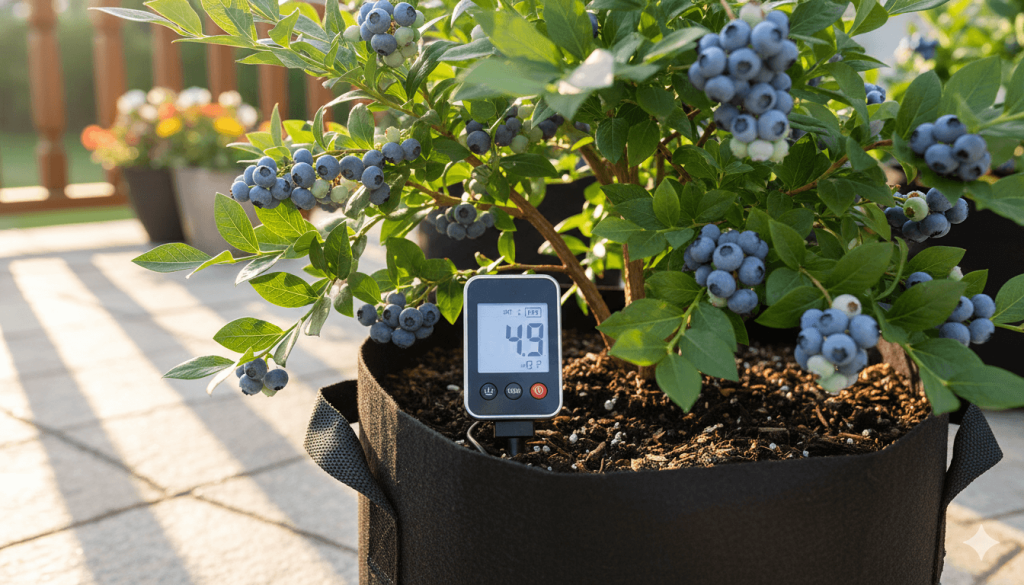
Growing blueberries in pots is incredibly rewarding — but if your plants are yellowing, struggling to fruit, or showing slow growth, the culprit is almost always soil pH.
Blueberries are among the pickiest fruit crops when it comes to soil acidity. Understanding and maintaining the right pH in containers isn’t just important — it’s the difference between a bumper harvest and a dying shrub.
In this guide, you’ll learn exactly what “acidic soil” means, how to test it accurately, what happens when it drifts out of range, and how to fix it with simple, science-backed methods and a few reliable products available on Amazon.
Blueberry Soil pH for Containers: It Matters a Lot
Blueberries thrive in acidic soil — it’s in their DNA. These shrubs evolved on forest floors covered with pine needles, decomposing leaves, and moss, where the soil naturally had a low pH (around 4.0–5.5).
When you grow them in pots, the story changes. Container soil isn’t a self-balancing ecosystem — minerals, water, and fertilizers all influence acidity far more dramatically. That’s why understanding why pH matters is the key to keeping your blueberries alive and productive.
🔬 Science Insight: How Soil pH Affects Nutrients
Soil pH isn’t just a number — it’s the gatekeeper of nutrient availability.
- At low pH (4.5–5.5), blueberries can easily absorb iron, manganese, and zinc, essential for healthy green foliage.
- As the pH climbs above 6.0, these nutrients become “locked” in the soil — they’re there, but the plant can’t use them.
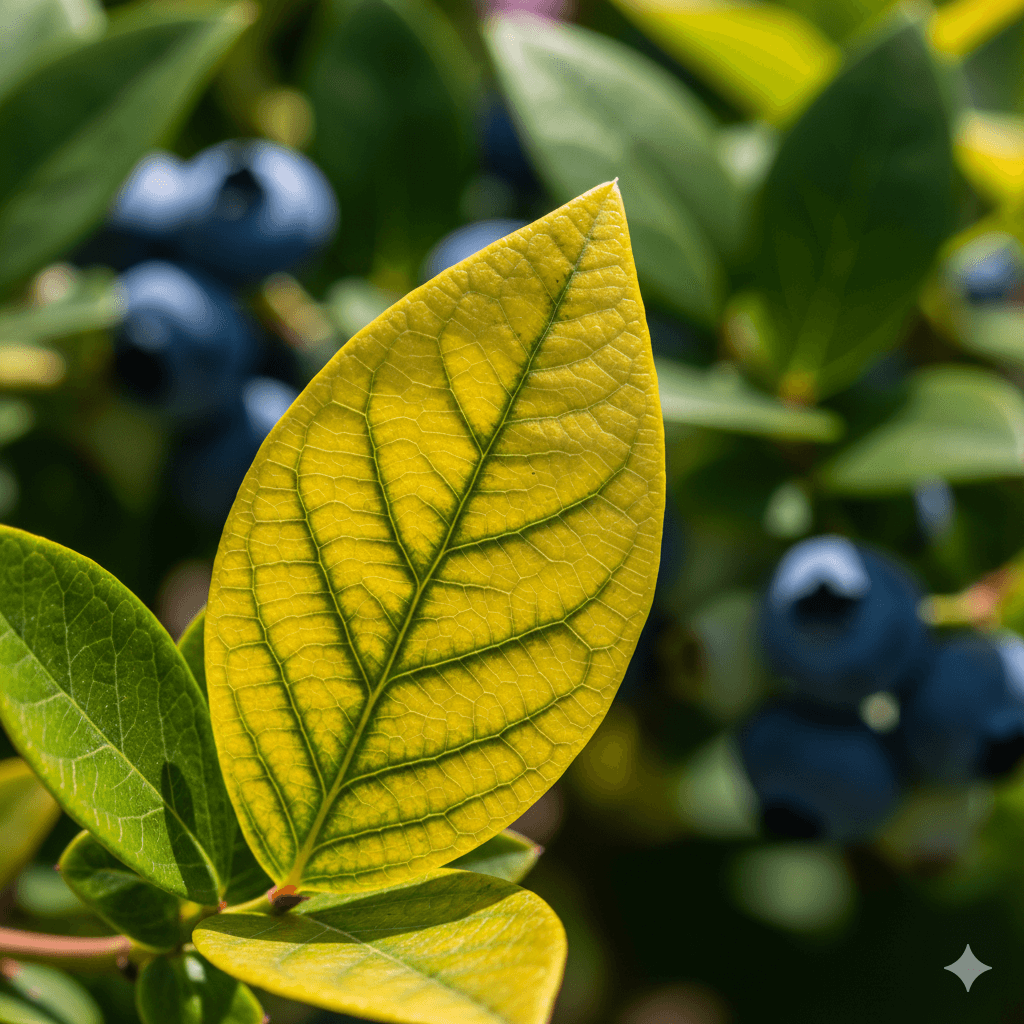
- This leads to iron chlorosis, seen as yellowing leaves with dark green veins.
💡 Think of it like this:
When your soil is too alkaline, your blueberries are sitting at a buffet full of nutrients — but they can’t reach the food.
🌿 Pro Insight: Containers Make pH More Volatile
Unlike garden beds, container soil doesn’t have deep organic buffering. Each watering slightly alters the soil chemistry. If your tap water is alkaline (contains calcium carbonate), your pH will slowly creep up over time — even if you started perfectly.
That’s why container-grown blueberries need more frequent monitoring and gentler pH adjustments than in-ground ones.
Ideal Soil pH for Blueberries in Containers
The best soil for blueberries in pots is 4.5 to 5.5 — slightly acidic but not extreme.
Within this range, your plants will have optimal nutrient uptake, lush green foliage, and vibrant berries.
Here’s a quick guide to what happens at each range:
| pH Range | Effect on Blueberries |
| 3.5–4.0 | Too acidic — root damage, poor growth |
| 4.5–5.5 | ✅ Ideal — perfect nutrient balance |
| 5.6–6.0 | Slightly alkaline — slower growth, mild chlorosis |
| 6.1–7.0 | Too alkaline — yellow leaves, stunted fruiting |
💡 Tip: If you’re growing in organic or peat-heavy mixes, aim for the lower end (around 4.5), since organic matter naturally drifts upward over time.
⚠️ Common Mistake: Confusing Neutral Soil with “Good” Soil
Many gardeners think that a neutral pH of (7.0) means “healthy soil.” For blueberries, that’s a disaster.
They’re one of the few crops that need a consistently acidic environment. Even a small drift above 6.0 can cause stress, reduced flowering, and nutrient deficiencies.
🌿 Pro Tip: Why Container Soil pH Rises Faster
Container soils tend to lose acidity faster than ground soil because:
- Watering leaches out acidic ions like hydrogen and sulfur.
- Tap water contains alkaline minerals.
- Fertilizers (especially nitrate-based) raise the pH.
To maintain stable acidity, test the soil every 2–3 months during the growing season — not just once a year.
How to Test Blueberries’ Soil pH in Containers
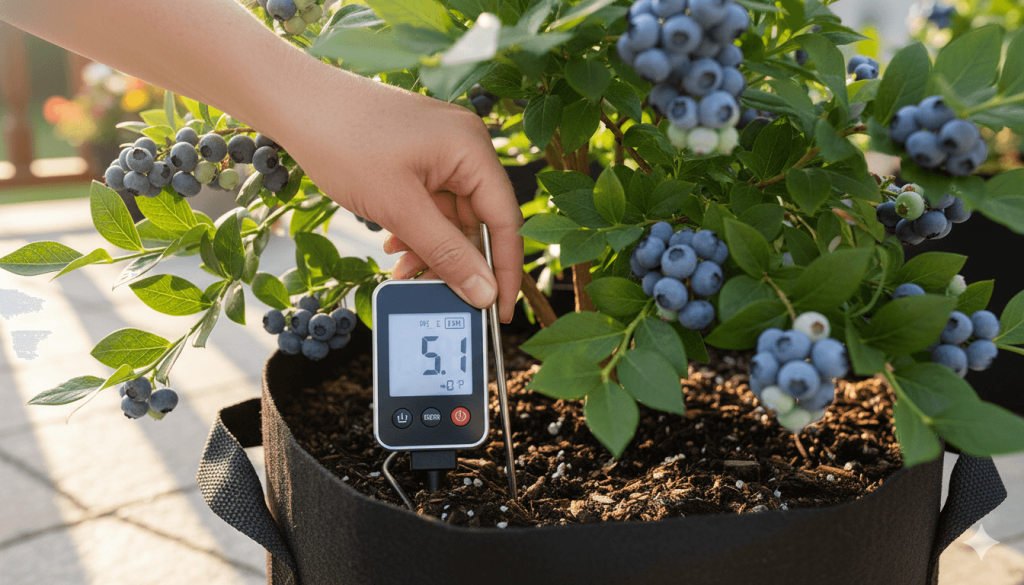
You can’t manage what you don’t measure — and when it comes to blueberries, accurate pH testing is essential.
There are three primary methods for testing your soil pH, depending on your budget and the level of precision you require.
1. Use a Digital pH Meter (Most Accurate)
A digital soil pH meter provides the fastest and most reliable reading.
It’s worth investing in one if you grow multiple acid-loving plants (like azaleas, hydrangeas, or rhododendrons).
💡 Recommended Product:
- Apera Instruments PH60 — available on Amazon
- Waterproof and lab-grade accurate (±0.01 pH)
- Perfect for both soil and water testing
- Comes with calibration fluids and storage solution
How to Use It:
- Mix soil and distilled water in a 1:1 ratio (½ cup each).
- Stir well and let it rest for 15–30 minutes.
- Insert the probe and wait until the reading stabilizes.
🌿 Pro Tip: Always rinse the probe with distilled water after use to avoid contamination.
2. Use a Soil Test Kit (Affordable & Easy)
For most home gardeners, test kits offer a reliable balance between accuracy and convenience.
💡 Recommended Product:
- Luster Leaf 1601 Rapitest Soil Test Kit — available on Amazon
- Includes 40 tests for pH, nitrogen, phosphorus, and potassium
- Easy color chart for quick readings
- Ideal for container or raised-bed gardeners
How to Use It:
- Collect soil from 2–3 spots in the pot, and mix them.
- Add soil and the provided test solution into the chamber.
- Wait for the color to develop and compare it with the chart.
⚠️ Common Mistake: Don’t test immediately after fertilizing — it gives false high readings due to residual nutrients.
3. The Vinegar & Baking Soda Test (Quick Home Hack)
If you don’t have the tools, here’s a fun way to estimate acidity at home.
You’ll need: Vinegar, baking soda, two bowls, and your soil.
Steps:
- Place 2 tablespoons of soil in one bowl. Add vinegar.
- Fizzes? Soil is alkaline (pH above 7).
- In another bowl, add water to the soil, then sprinkle baking soda.
- Fizzes? Soil is acidic (pH below 7).
- No reaction? pH is near neutral (~6.5–7).
💡 Tip: This test won’t give exact numbers, but it’s useful for quick checks before adjusting.
🌿 Pro Insight: Where to Sample Soil in a Container
Always take samples from the root level, not the surface. The top inch of potting mix is often misleading because it dries faster and interacts more with the air.
For accurate readings, go 3–5 inches deep, where roots are actively feeding.
How to Lower Soil pH for Blueberries in Containers
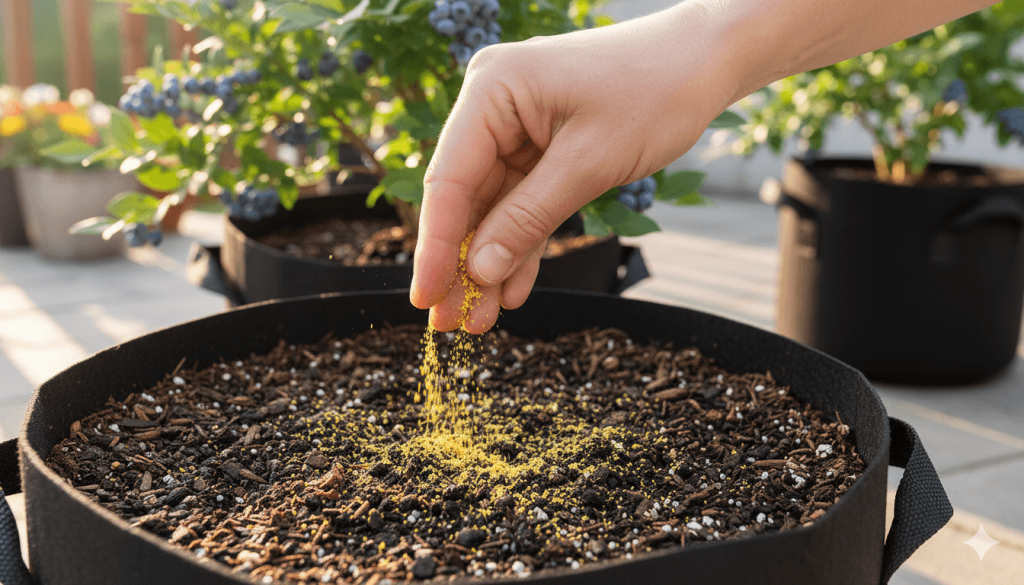
Once you know your soil pH, the next step is adjusting it to that blueberry-friendly range (4.5–5.5).
The good news? It’s easier than you think — especially when you use the right materials and go slow.
The key rule: make small, gradual changes, test again, and adjust over time.
1. Use Natural Acidifiers (Safe & Slow-Acting)
If your soil pH is above 6.0, the most reliable way to bring it down is with elemental sulfur or sulfur-based acidifiers.
They work slowly, transforming through bacterial activity to release sulfuric acid — the most natural and stable way to acidify soil.
💡 Recommended Products (Amazon):
- Espoma Organic Soil Acidifier (Sulfur-based) — made from natural sulfur; slow and safe for long-term pH control.
- Jobe’s Organics Soil Acidifier — slightly faster-acting, excellent for container gardens.
How to Apply:
- For a 10–12 inch pot, mix 1–2 tablespoons of acidifier evenly into the top 2 inches of soil.
- Water thoroughly to activate the sulfur.
- Wait at least 2 weeks before retesting.
- Repeat only if pH remains above 5.5.
🌿 Pro Tip: Apply sulfur when temperatures are warm (above 60°F / 15°C). Soil bacteria that activate it are dormant in cold weather, so nothing happens until spring.
2. Add Organic Materials That Naturally Lower pH
Organic matter feeds soil microbes, which slowly acidify the mix. It’s a gentle, natural way to keep pH stable — and improve texture and moisture retention too.
Best Organic Additives:
- Peat Moss: Naturally acidic (pH 3.5–4.5); perfect for base mixes.
- Pine Needles: Slightly acidic mulch that helps maintain a low pH when watered in.
- Coffee Grounds: Add in moderation (too much can over-acidify or clump).
- Composted Oak Leaves: Add gentle acidity and aeration.
💡 Tip: Mix 20–30% peat moss or composted pine bark into your potting mix when repotting blueberries.
⚠️ Common Mistake: Don’t dump raw coffee grounds directly onto the soil — they compact and form a water-repelling crust.
3. Try Quick-Acting Adjustments (Short-Term Fixes)
Sometimes, your soil pH might be far off (like 6.5–7.0) and you need a faster correction. For this, liquid or soluble acidifiers are helpful.
💡 Recommended Products:
- Bonide Liquid Sulfur Plant Food — fast, water-soluble sulfur that works within days.
- Down To Earth Elemental Sulfur — powdered form for fast but stable acidification.
How to Use Liquid Acidifiers:
- Dilute according to label instructions (usually 1–2 teaspoons per gallon of water).
- Apply as a soil drench — avoid foliage contact.
- Retest the soil pH after 7–10 days.
⚠️ Warning: Avoid aluminum sulfate unless you’re experienced. It lowers pH quickly but can cause aluminum toxicity in confined pots.
0
🌿 Pro Insight: The Microbiology Behind Sulfur
When you add elemental sulfur, soil bacteria called Thiobacillus convert it into sulfuric acid, which lowers pH gradually.
This process requires warmth, moisture, and oxygen — meaning it works best in spring or early summer.
Adding sulfur in winter? You’ll see no effect until soil temperatures rise.
How to Maintain Acidic pH Over Time
Getting the pH right is only half the battle — keeping it there is where most gardeners struggle.
Container soil pH tends to drift upward over time, mainly due to watering habits and fertilizer choices.
Here’s how to keep your pH stable season after season.
1. Watch Your Water Source
If you use tap water, check its alkalinity — many municipal water systems have a pH of 7.5 or higher, which neutralizes your soil’s acidity over time.
💡 Solutions:
- Collect rainwater: Naturally acidic (pH 5.0–5.5) — best for blueberries.
- Use Distilled Water: Perfectly neutral, avoids mineral buildup.
- Filter Tap Water: Use carbon filters or reverse osmosis to remove bicarbonates.
🌿 Pro Tip: If your local water report lists “hardness” or “lime content,” your water is alkaline — always use rainwater if possible.
2. Use the Right Fertilizer
Some fertilizers raise pH; others help keep it low. Choose products designed for acid-loving plants.
💡 Recommended Products (Amazon):
- FoxFarm Happy Frog Acid-Loving Plant Fertilizer — organic, contains sulfur and beneficial microbes.
- Miracle-Gro Water Soluble Azalea, Camellia & Rhododendron Food — safe, fast-acting, and ideal for container blueberries.
⚠️ Avoid:
- Lime-containing or nitrate-based fertilizers — they raise pH quickly.
- Manure-heavy compost — they’re alkaline.
🌿 Pro Tip: Fertilize lightly every 4–6 weeks during the growing season; consistent, low doses prevent sudden pH spikes.
3. Mulch with Acidic Materials
Mulching isn’t just for moisture retention — it’s one of the easiest ways to maintain soil acidity.
Best Mulch Options:
- Pine needles
- Shredded bark (especially pine or fir)
- Sawdust (aged, not fresh)
💡 Tip: Apply a 2-inch layer and refresh every 3–4 months. As these materials decompose, they slowly release organic acids into the soil.
4. Refresh Potting Mix Every 2–3 Years
Even with perfect care, potting soil loses structure and acidity over time. Minerals build up, and pH rises naturally.
Every 2–3 years, remove the top 1–2 inches of soil and replace with fresh acidic potting mix.
💡 Recommended Mixes (Amazon):
- Espoma Organic Potting Mix for Acid-Loving Plants
- FoxFarm Ocean Forest Potting Soil — slightly acidic and nutrient-rich
- Miracle-Gro Performance Organics Raised Bed Mix — good for large containers
🌿 Pro Tip: Blend in 20% perlite or pine bark for aeration — oxygen keeps beneficial bacteria thriving and acidity stable.
Common Soil pH Mistakes (and How to Fix Them)
Even experienced gardeners make errors when balancing pH in pots. Here’s how to avoid the most common ones:
⚠️ Mistake #1: Overcorrecting with Acidifiers
Adding too much sulfur, vinegar, or acid mix too fast can burn roots and send your pH crashing.
Always go slow and retest before adding more.
💡 Fix: If the pH drops below 4.0, flush the soil thoroughly with distilled water to neutralize the excess acidity.
⚠️ Mistake #2: Ignoring pH Drift from Tap Water
Even mildly alkaline water adds up over time — especially in small pots.
💡 Fix: Switch to rainwater or install a simple water filter attachment for your hose (like Boogie Blue Plus Filter on Amazon).
⚠️ Mistake #3: Testing Right After Fertilizing
Fertilizers, especially liquids, can temporarily skew pH readings.
💡 Fix: Wait 5–7 days after feeding before testing again.
⚠️ Mistake #4: Compact Soil with Poor Aeration
Acid-loving roots need oxygen. Compact, soggy soil traps CO₂ and raises pH.
💡 Fix: Add perlite or pine bark fines for aeration when repotting.
🌿 Pro Insight: Don’t Chase Perfection
Your goal isn’t to keep the pH exactly at 4.8 — it’s to maintain a stable acidic range between 4.5–5.5.
Fluctuations of 0.2–0.3 are completely normal and won’t harm your plants.
🧩 Troubleshooting Common pH Problems in Container Blueberries
Even the most attentive gardeners run into soil pH problems. Luckily, container gardening makes them much easier to fix — you’re in total control of the soil mix and inputs. Let’s go through the most common pH issues, how to spot them, and how to fix them fast.
⚠️ Problem #1: Leaves Turning Yellow (Chlorosis)
Symptoms:
- Young leaves turn yellow, veins remain green.
- Slow growth and smaller berries.
Cause:
If the pH is too high (alkaline) — iron and manganese become unavailable to the roots.
Fix:
- Test pH — confirm it’s above 5.5.
- Apply Espoma Soil Acidifier or Elemental Sulfur to gradually lower it.
- Use rainwater or distilled water (tap water often raises the pH).
- Add a chelated iron drench like Miracle-Gro Iron Supplement (EDDHA-based) for quick results.
💡 Pro Tip:
If you need immediate greening, foliar feeding with an iron solution works within 24–48 hours. But don’t skip fixing the root-level pH!
⚠️ Problem #2: pH Drops Too Low (< 4.0)
Symptoms:
- Burned-looking leaf edges.
- Stunted or distorted new growth.
- Reduced fruit production.
Cause:
Over-acidification due to repeated sulfur or vinegar use, or prolonged rain leaching nutrients.
Fix:
- Mix 1 tablespoon of garden lime per gallon of soil and water it in.
- Recheck pH after 7 days.
- Switch to a balanced organic fertilizer (5-5-5) like Dr. Earth Acid Lovers to maintain a steady pH.
🌿 Scientific Note:
Blueberries tolerate acidic soils, but going too low interferes with calcium and magnesium uptake — both crucial for healthy cell structure and fruit development.
⚠️ Problem #3: Hard Water Damage (Alkaline Water Source)
Symptoms:
- White crust on the soil surface.
- pH test reads higher every few weeks despite the acid feeding.
Fix:
- Collect rainwater — nature’s free pH 5.6 solution.
- Or use a Reverse Osmosis (RO) Filter for your watering setup.
- If unavoidable, add 1 teaspoon of citric acid per gallon of water when watering.
💧 Pro Tip:
Hard water can raise container pH by 0.3–0.6 units in just a month. Keeping an eye on water quality is one of the easiest long-term pH hacks.
🌿 Seasonal Soil pH Maintenance Plan for Potted Blueberries
To keep your pH stable all year, follow this simple four-season maintenance cycle:
🌸 Spring (Growth Starts)
- Test pH.
- Apply slow-release sulfur if pH > 5.5.
- Top-dress with composted pine bark or peat.
☀️ Summer (Active Fruit Set)
- Maintain pH 4.8–5.2.
- Add acid-based liquid feed every 2–3 weeks.
- Water deeply to prevent salt buildup.
🍂 Autumn (Post-Harvest)
- Retest pH.
- If below 4.5, mix in dolomite lime lightly.
- Prune out dead or weak canes and mulch with pine needles.
❄️ Winter (Dormant Phase)
- Keep containers slightly moist.
- No sulfur or fertilizer additions.
- Protect pots from freezing with a mulch wrap.
✅ Visual Cue:
Think of pH maintenance like tuning an instrument — small, frequent checks keep it in perfect harmony year-round.
🧠 Expert Tips to Keep Soil pH Perfect in the Long Run
- Refresh your potting mix every 2–3 years. Old soil loses structure and buffering ability.
- Avoid tap water whenever possible — most is too alkaline.
- Skip the wood ash, lime, or eggshells — they’ll push the pH up instantly.
- Mix organic matter with natural acidity, like pine bark fines or peat moss, when re-potting.
- Test your pH quarterly — spring, mid-summer, fall, and mid-winter.
🌿 Pro Insight:
Blueberry health is 70% dependent on the root environment. If your pH and moisture are dialed in, even small shrubs can outperform mature plants in poor soil.
💬 FAQs: Blueberry Soil pH in Containers
❓ What’s the best pH range for potted blueberries?
4.5 to 5.2 — slightly lower than in-ground berries because pots dry faster and nutrients concentrate more.
❓ Can I use coffee grounds to lower the pH?
Yes — used coffee grounds are mildly acidic and add organic matter. But they’re weak acidifiers, so use them to maintain, not correct, pH.
❓ How often should I test the pH in containers?
Every 4–6 weeks during the growing season or after any soil amendment.
❓ Can I reuse the soil from last year’s pot?
Yes, if you flush it thoroughly and mix in 20–30% fresh peat or pine bark to restore acidity and aeration.
❓ Does organic fertilizer affect soil pH?
Most acid-loving fertilizers (like Dr. Earth or Espoma Holly-tone) have a slightly lower pH while feeding — perfect for blueberries.
🧾 Summary: The Perfect pH Strategy for Container Blueberries
Ideal pH: 4.5–5.2
Best Testing Tools: Apera PH20, Luster Leaf 1840, or Bluelab Pen
To Lower pH: Espoma Soil Acidifier, Elemental Sulfur, or Ammonium Sulfate
To Raise pH: Dolomite Lime or Pelletized Garden Lime
To Maintain pH: Pine bark mulch + acid-forming fertilizers
🌟 Final Takeaway: Balance Chemistry with Care
Perfect pH isn’t about chasing numbers — it’s about understanding the living chemistry of your blueberry’s micro-world.
Every irrigation, fertilizer, and season slightly shifts the soil environment. But if you know how to test, interpret, and gently guide it, your potted blueberries will reward you with bigger, sweeter, and bluer fruit every single year.
💡 Remember: Consistency beats intensity — check, tweak, and enjoy the process.