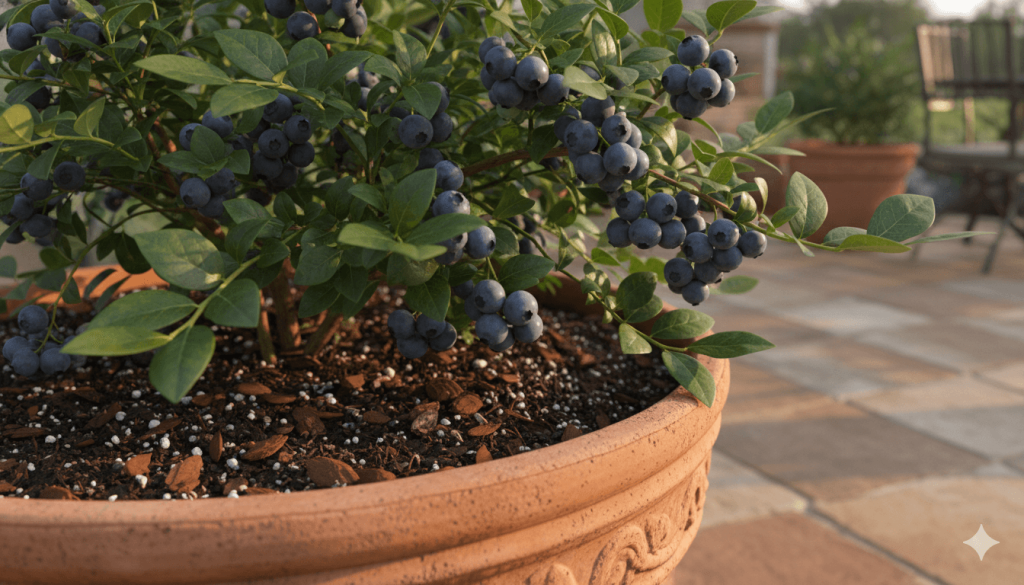
Growing blueberries in pots or containers is incredibly rewarding, but there’s one secret to success: soil acidity. Blueberries are acid-loving plants, and their roots thrive only in well-draining, nutrient-rich soil with the right pH.
Using the wrong soil can lead to yellowing leaves, stunted growth, or poor fruit production — even if the plant is otherwise healthy.
In this guide, you’ll learn exactly how to make a DIY acidic soil mix, understand the science behind acidity, discover peat-free alternatives, and see how to maintain the perfect environment for your blueberries year-round.
Whether you’re a beginner gardener or an experienced container grower, this article gives you the full roadmap.
In This Article:
🌱 Why Blueberries Need Acidic Soil
Blueberries naturally grow in acidic forest soils with a pH of 4.5–5.5. In the wild, they thrive in soil rich in organic matter, such as pine needles, leaf litter, and decaying wood. When growing in pots, replicating these conditions is crucial.
- Ideal pH: 4.5–5.5
- Consequences of alkaline soil: Nutrient lockout, iron deficiency (yellowing leaves), poor root growth, and lower fruit yield
- Container note: Soil pH drifts faster in pots than in garden beds due to watering, fertilization, and limited root volume
🌿 Pro Tip: Acidic soil not only ensures nutrient uptake but also promotes beneficial microbial activity in the root zone, keeping plants healthy and productive.
⚠️ Signs Your Soil Isn’t Acidic Enough
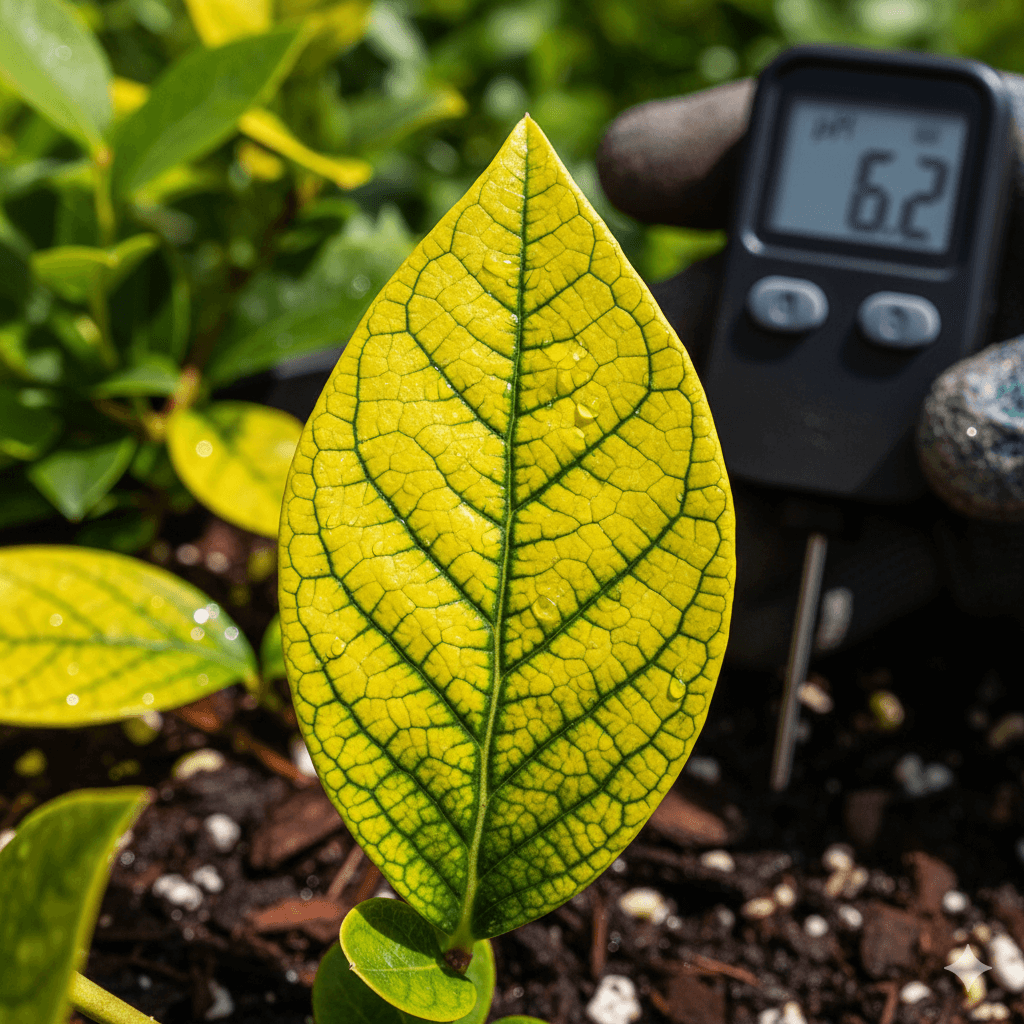
Even a beginner can notice when the soil pH is off. Look for these indicators in your blueberry plants:
- Yellow leaves with green veins: Classic sign of iron deficiency caused by alkaline soil
- Stunted growth or poor shoot development
- Slow or no fruiting
- Soil tests: A quick pH check using vinegar or a digital pH meter can confirm acidity problems.
💡 Tip: For a quick home test, sprinkle 1 tsp of baking soda on moistened soil. If it fizzes, the soil is likely too alkaline.
🧪 DIY Acidic Soil Mix for Blueberries (Exact Recipe)
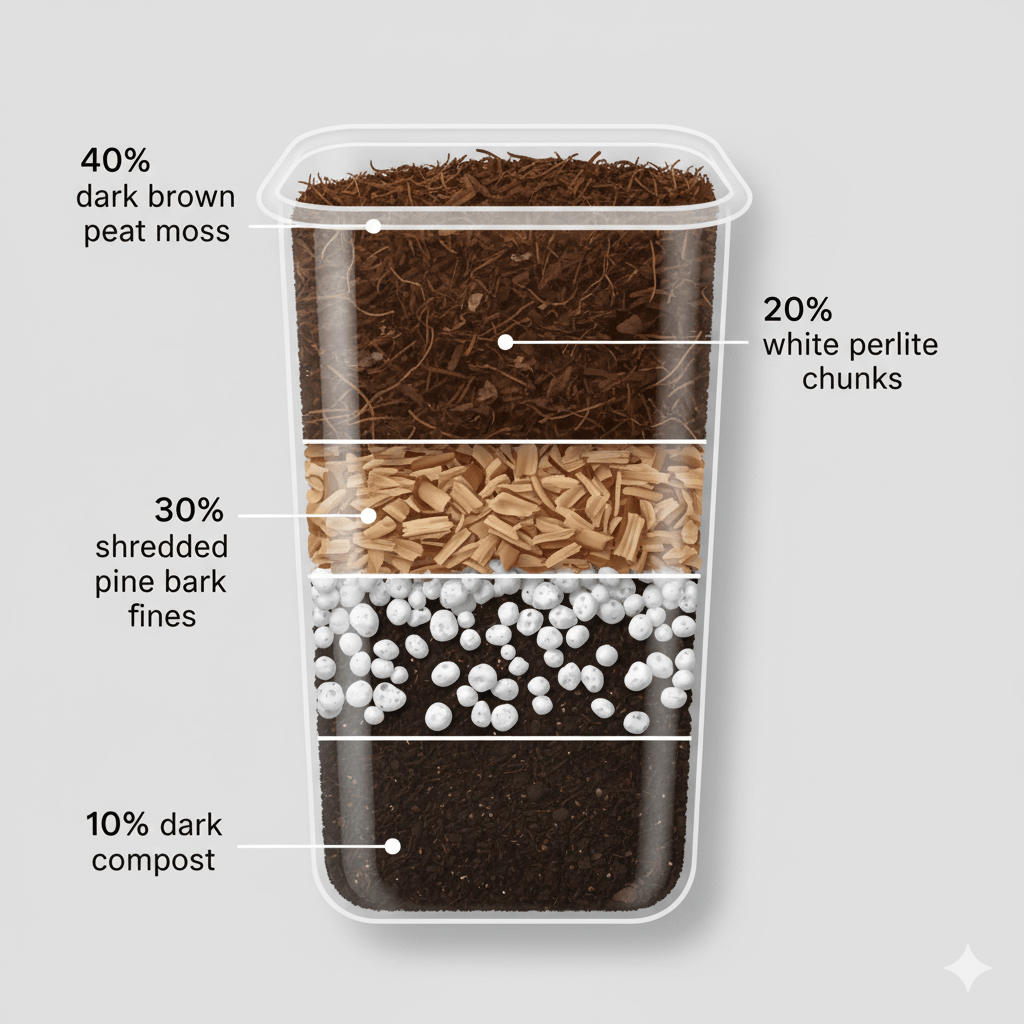
Here are two proven recipes you can mix today: one peat-based and one peat-free. Each ingredient is explained, and ratios are given to make it beginner-friendly.
1. Peat-Based Acidic Soil Mix
Ingredients (by volume):
- 40% peat moss
- 30% pine bark fines
- 20% perlite
- 10% compost
Instructions:
- Mix all ingredients thoroughly in a large container or wheelbarrow.
- Pre-moisten the soil slightly to make handling easier.
- Fill your pot, leaving 1–2 inches at the top for watering.
- Plant your blueberries and water gently to settle the mix.
Why it works:
- Peat moss retains moisture while maintaining acidity
- Pine bark improves aeration and prevents root compaction
- Perlite enhances drainage
- Compost adds nutrients and beneficial microbes
2. Peat-Free Acidic Soil Mix (Sustainable Option)
Ingredients (by volume):
- 50% coco coir
- 30% compost pine bark
- 15% perlite
- 5% elemental sulfur (pre-acidifier)
Instructions:
- Thoroughly hydrate the coco coir before mixing.
- Combine the pine bark, perlite, and sulfur in a large container.
- Moisten slightly and fill pots, leaving room for watering.
- Plant blueberries and water with rainwater or acidified water.
Why it works:
- Coco coir is a sustainable alternative to peat moss, retaining moisture without compacting
- Pine bark provides structure and aeration
- Elemental sulfur lowers the pH naturally over time
🌦 Climate Adjustments for Your Mix
- Hot/Dry Areas: Increase perlite to improve drainage and prevent water stress.
- Humid Regions: Increase pine bark to improve aeration and reduce root rot
- Winter Care: Use larger pots or mulch the soil surface to protect roots in cold climates
This concludes Part 1, covering the intro, why acidity matters, identifying pH issues, and the two core DIY soil mixes with Amazon-ready product recommendations and climate tips.
💧 How to Keep the Soil Acidic Over Time
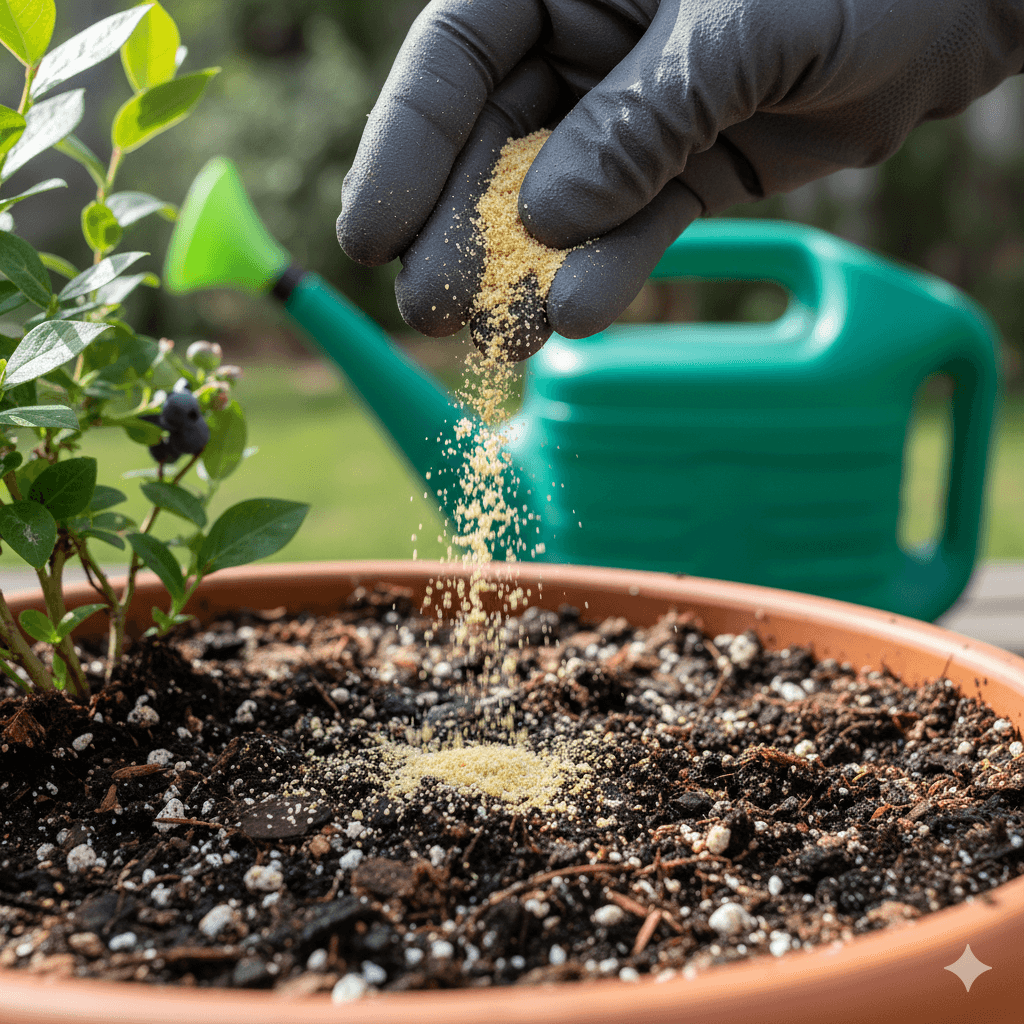
Even the best soil mix can drift out of the ideal pH range over time, especially in containers. Blueberries in pots are particularly vulnerable because:
- Limited soil volume causes nutrients and pH to change faster
- Regular watering and fertilization can alter acidity
- Root activity gradually changes soil chemistry
Here’s how to maintain your soil:
1. Water Wisely
- Use rainwater or filtered water when possible; tap water often has alkaline minerals that raise the pH.
- Avoid overwatering, which can leach nutrients but also reduce the acidic balance.
2. Add Acidifying Amendments
- Elemental sulfur: Slowly lowers pH over 2–3 months
- Coffee grounds: Slightly acidic, adds organic matter (do not overuse)
- Pine needles or shredded oak leaves: Natural mulch that gradually acidifies soil
- Acid-loving fertilizers: Examples:
- Espoma Organic Holly-Tone Fertilizer — available on Amazon
- Jobe’s Azalea, Camellia & Rhododendron Fertilizer — available on Amazon
3. Monitor Regularly
- Test the soil every 2–3 months using a digital pH meter or home test kit.
- Keep notes of adjustments to track how your soil responds over time.
💡 Tip: Container-grown blueberries are more sensitive than in-ground plants — small pH deviations can lead to nutrient lockout. Frequent monitoring is essential.
Internal link suggestion: → “Blueberry Soil pH for Containers”
🌿 Peat-Free Acidic Soil Mix (Sustainable Option)
For gardeners seeking eco-friendly alternatives, peat-free mixes reduce the environmental impact while still providing the ideal acidity.
Recommended Ingredients:
- 50% coco coir (hydrated)
- 30% compost pine bark
- 15% perlite or pumice
- 5% elemental sulfur (pre-acidified)
Why it works:
- Coco coir retains moisture without compacting
- Pine bark improves aeration
- Sulfur slowly lowers pH to the ideal range
💡 Pro Tip: Let the mix stabilize for 2–3 weeks before planting to allow microbes to colonize and pH to settle.
⚠️ Common Mistakes When Making Acidic Soil Mix
Avoiding these pitfalls will save time and prevent plant stress:
- Use garden soil or standard potting mix — often too alkaline for blueberries
- Overcompacting soil — reduces aeration and promotes root rot
- Neglecting water quality — tap water can neutralize acidity over time
- Not re-testing pH after a few months — pH drift is common in pots
- Over-reliance on additives — too much coffee grounds or sulfur can harm roots
🌿 Pro Tip: Always keep a small batch of your original soil mix for reference when testing pH and making adjustments.
❓ FAQs About Acidic Soil Mix for Blueberries
Can I use coffee grounds for blueberries?
Yes, in moderation. Coffee grounds are slightly acidic and enrich organic matter, but do not rely solely on them to adjust pH.
Is peat moss necessary?
No, peat helps retain moisture and acidity, but sustainable alternatives like coco coir work just as well when amended with sulfur or acidifying fertilizers.
How often should I change container soil?
Every 2–3 years, or if soil structure degrades and pH drifts out of 4.5–5.5.
What if my soil pH is already 6.0?
Add sulfur or acidifying fertilizers gradually, test monthly, and monitor plant response.
Do blueberries in-ground vs pots require different mixes?
Yes, container soil needs better drainage, aeration, and more frequent pH monitoring due to limited root volume.
📌 Key Takeaways + What to Read Next
- Blueberries thrive in acidic soil (pH 4.5–5.5); monitor regularly
- Use DIY recipes: peat-based or peat-free mixes
- Maintain acidity with water quality, acidifying amendments, and monitoring
- Avoid common mistakes: garden soil, overcompaction, and ignoring water quality
🌿 Pro Tip: Combining a well-formulated soil mix with proper monitoring and fertilization ensures healthy roots, abundant fruit, and happy blueberry plants year after year.