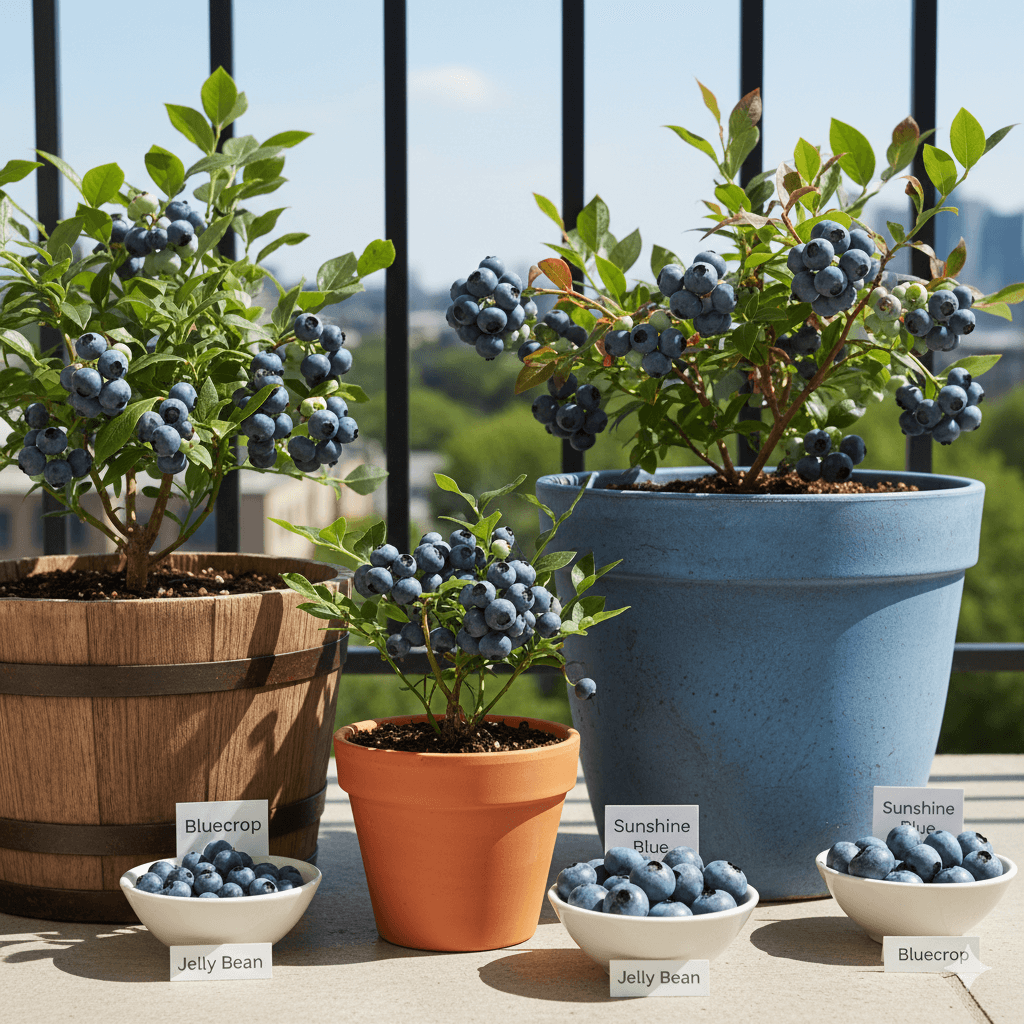
Blueberries are a favorite of home gardeners — not just for their delicious, antioxidant-rich fruit, but also because they can thrive in pots and small spaces.
However, your success depends largely on choosing the right blueberry variety for container growth.
This comprehensive guide explores which blueberry types perform best in containers, how to match them to your climate, and which specific cultivars experts and home gardeners trust most.
Whether you’re growing blueberries in a pot, balcony, patio, or rooftop garden, this guide ensures your plants deliver high yields and long life.
In This Article:
🌿 Why Variety Selection Is Key for Container Gardening
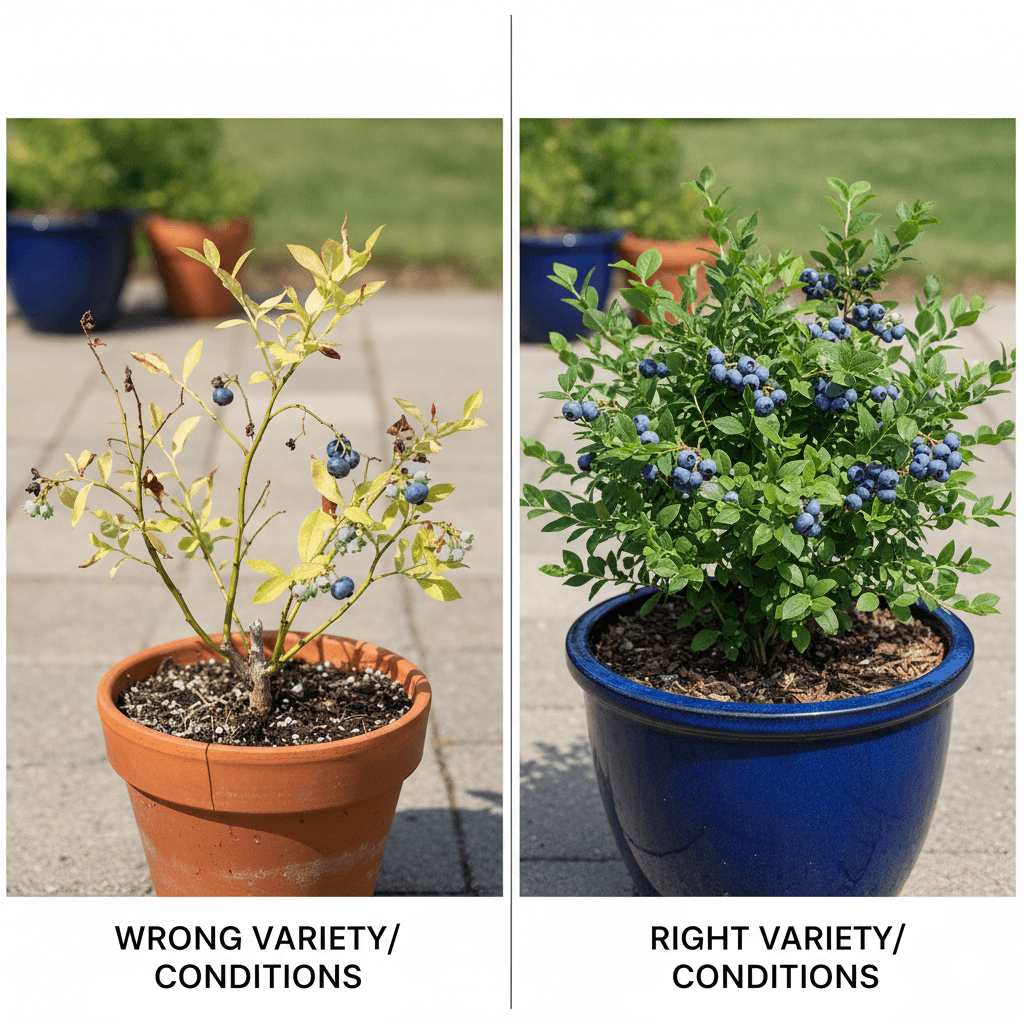
Not all blueberries are created equal — especially when it comes to containers. Some varieties naturally adapt to limited root zones, while others require deep, sprawling root systems unsuitable for pots.
Container-friendly blueberries generally have:
- Compact or dwarf growth habits
- Shallow but fibrous roots
- Self-pollinating tendencies
- Adaptability to variable climates
Choosing the wrong variety can lead to poor fruiting, nutrient stress, and even root-bound failure.
In container setups, the root-to-canopy ratio matters more than in open soil. Smaller varieties maintain a balance between root confinement and canopy density, resulting in better oxygenation and moisture control.
💡 Example: A gardener in Seattle tested ‘Bluecrop’ (a full-sized Northern Highbush) and ‘Top Hat’ (a dwarf variety) in identical 18-inch pots.
After one season, ‘Top Hat’ produced nearly double the fruit per cubic foot of soil — purely due to better container adaptation.
By starting with the right cultivar, you minimize maintenance and maximize yield over the years of productive life.
Comparison Table: Best Blueberry Varieties for Containers
| Variety | Type | Height | Chill Hours | Flavor Profile | Best For Container | Real-World Example |
|---|---|---|---|---|---|---|
| Top Hat | Dwarf Northern Highbush | 18–24 in | ~1,000 | Sweet, mild | Small balconies | Susan, California, 16-inch pot, 3 lbs/season |
| Sunshine Blue | Southern Highbush | 3–4 ft | 150–200 | Medium, firm, sweet-tart | Warm climates | Orlando, FL, 20-inch container, April–July fruiting |
| Jelly Bean | Dwarf Northern Highbush | 12–24 in | ~800 | Sweet, aromatic | Decorative pots | Michigan, window ledge, 200 berries/plant |
| Patriot | Northern Highbush | 3–5 ft | 800–1,000 | Large, tangy-sweet | Cold climates | Toronto, 24-inch resin container, 4–6 lbs/season |
| Peach Sorbet | Dwarf Southern Highbush | 1.5–2 ft | 150–200 | Sweet, medium-sized | Ornamental & edible | Austin, TX, patio, colorful foliage |
| Northsky | Half-High Hybrid | 12–18 in | 800–900 | Small, intensely flavored | Cold climates | Minnesota, insulated grow bags, survives -30°F |
🪴 How to Choose the Right Blueberry Variety for Pots
Choosing a blueberry variety isn’t just about size — it’s about matching the plant’s genetic needs to your environment and container conditions.
Here’s what to consider before you buy:
1. Climate Compatibility
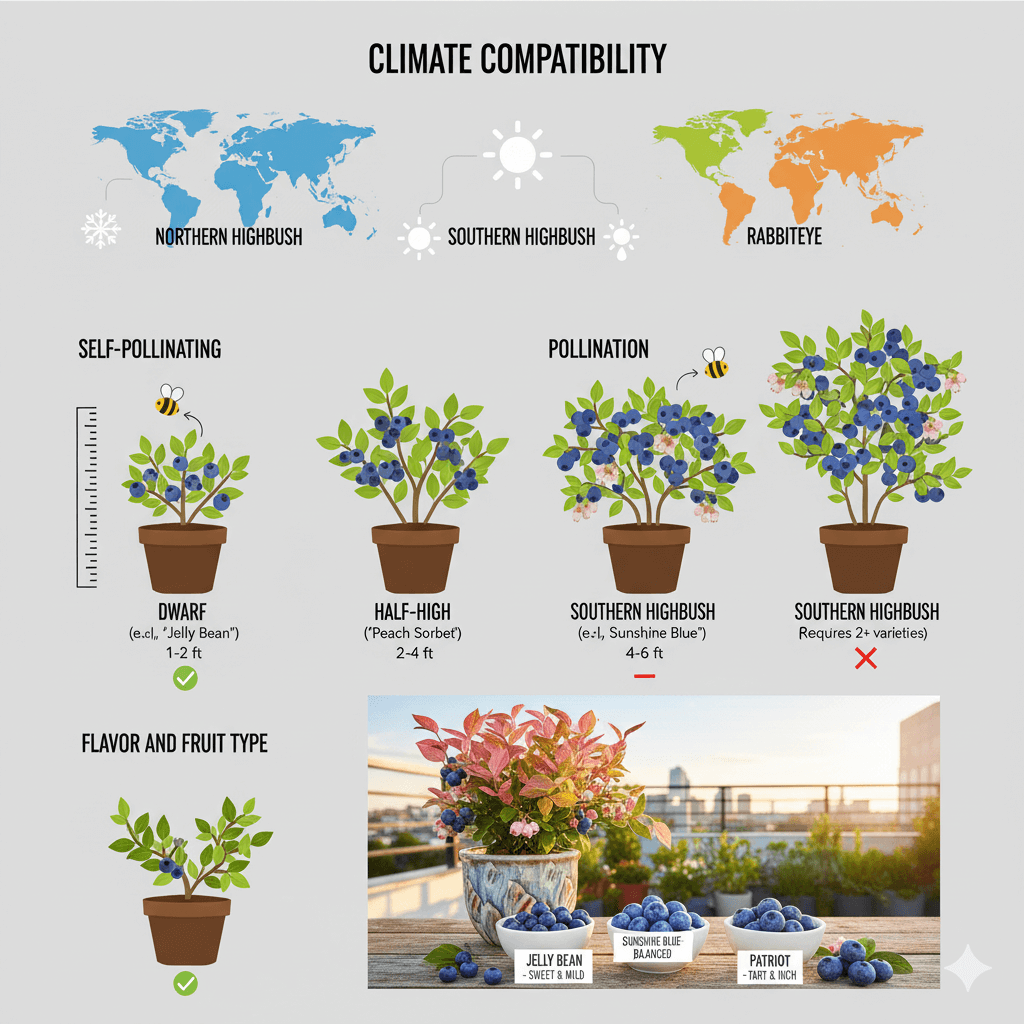
Blueberries fall into three main categories:
- Northern Highbush – Thrive in cooler zones (USDA 3–7). Require 800–1,000 chill hours.
- Southern Highbush – Ideal for warmer climates (zones 7–10). Require only 150–500 chill hours.
- Rabbiteye – Best for hot, humid regions; need cross-pollination but tolerate poor soil.
- Half-High Hybrids – Cross between Highbush and Lowbush, designed for cold regions and small containers.
💡 Example: A gardener in Portland, Oregon (Zone 8) grows ‘Sunshine Blue’ successfully in containers because it tolerates mild winters and moderate heat — whereas ‘Bluecrop’ struggles in the same setup due to insufficient chill time.
2. Plant Size and Growth Habit
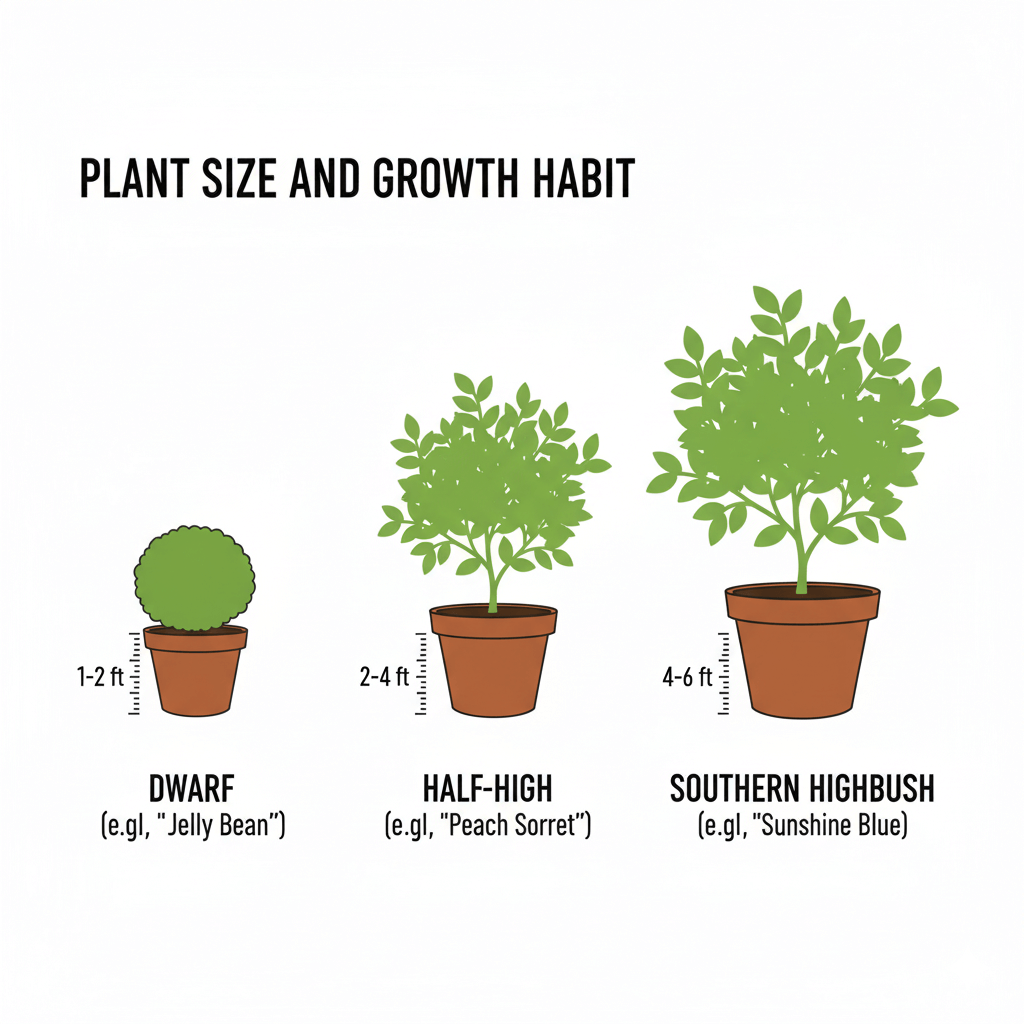
For pots under 20 inches, pick dwarf or compact types (under 3 ft). For large decorative containers or raised beds, half-high or Southern Highbush varieties can work well.
Blueberries like root restriction, but still need space for moisture retention. Overly large plants in small pots lead to nutrient stress.
3. Self-Pollination
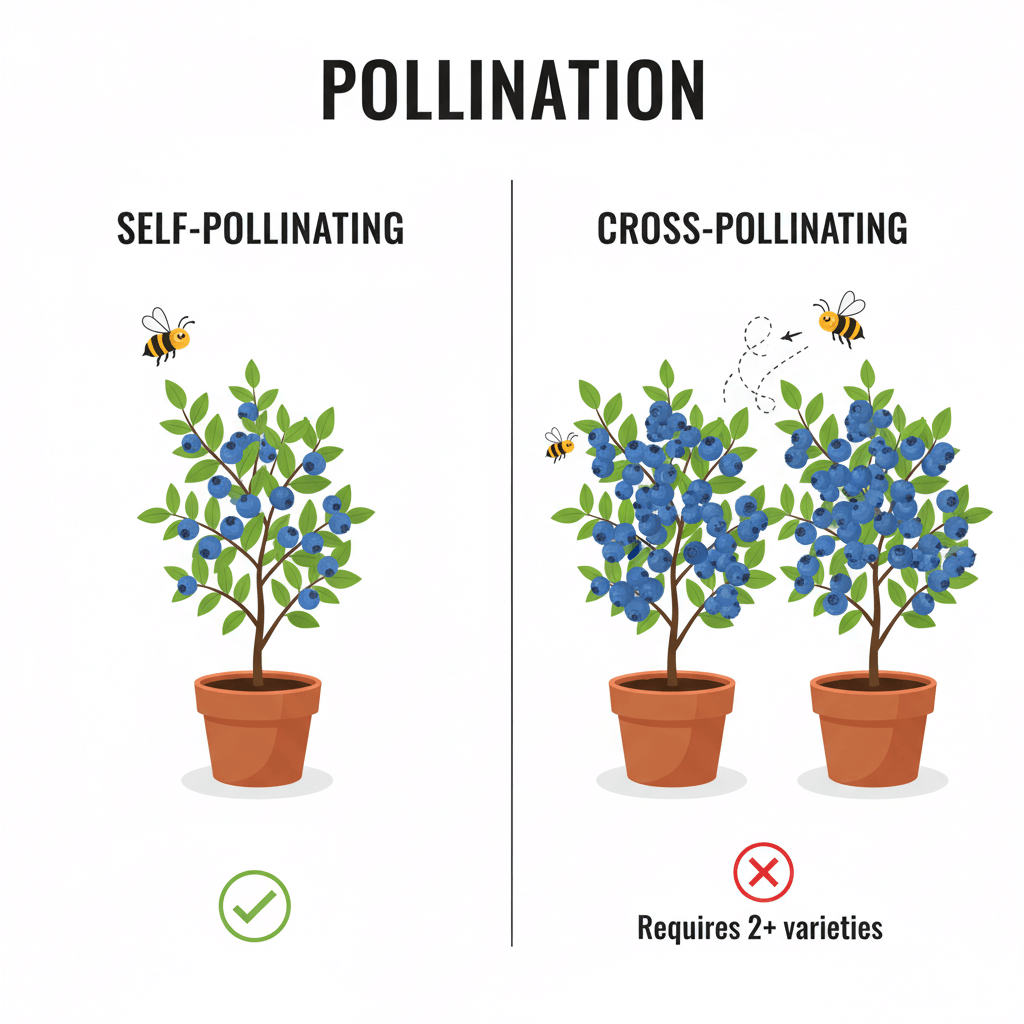
If you’re growing just one plant, choose a self-pollinating variety like ‘Sunshine Blue’ or ‘Top Hat’. However, cross-pollinating pairs (like ‘Jelly Bean’ + ‘Peach Sorbet’) often boost yields by up to 40%.
4. Flavor and Fruit Type
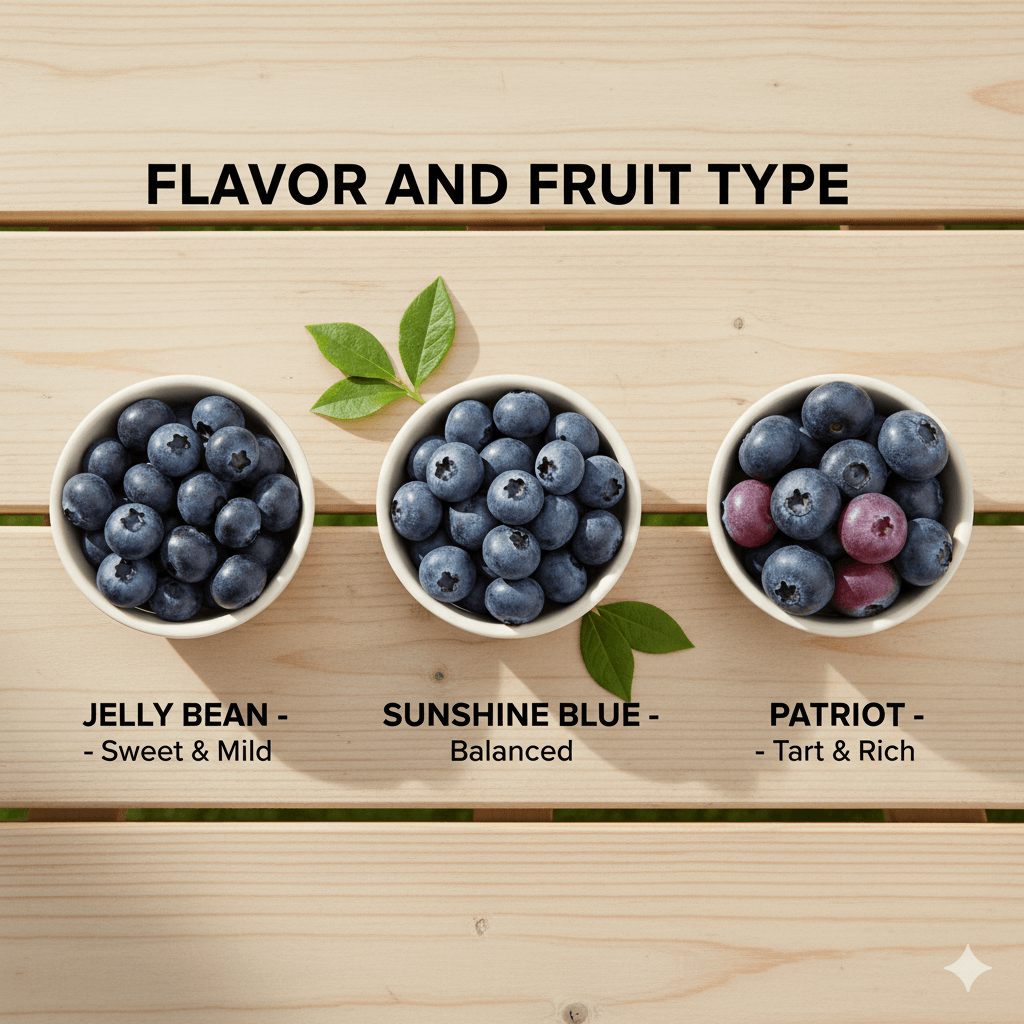
Different cultivars produce distinct fruit profiles — from sweet and mild to tart and aromatic. This can influence your container setup if you plan to grow multiple varieties for extended harvests.
| Flavor Type | Ideal Varieties | Notes |
| Sweet & Mild | ‘Jelly Bean’, ‘Peach Sorbet’ | Great for fresh eating |
| Balanced | ‘Sunshine Blue’, ‘Top Hat’ | All-purpose berries |
| Tart & Rich | ‘Patriot’, ‘Northsky’ | Ideal for baking or freezing |
5. Aesthetics and Purpose
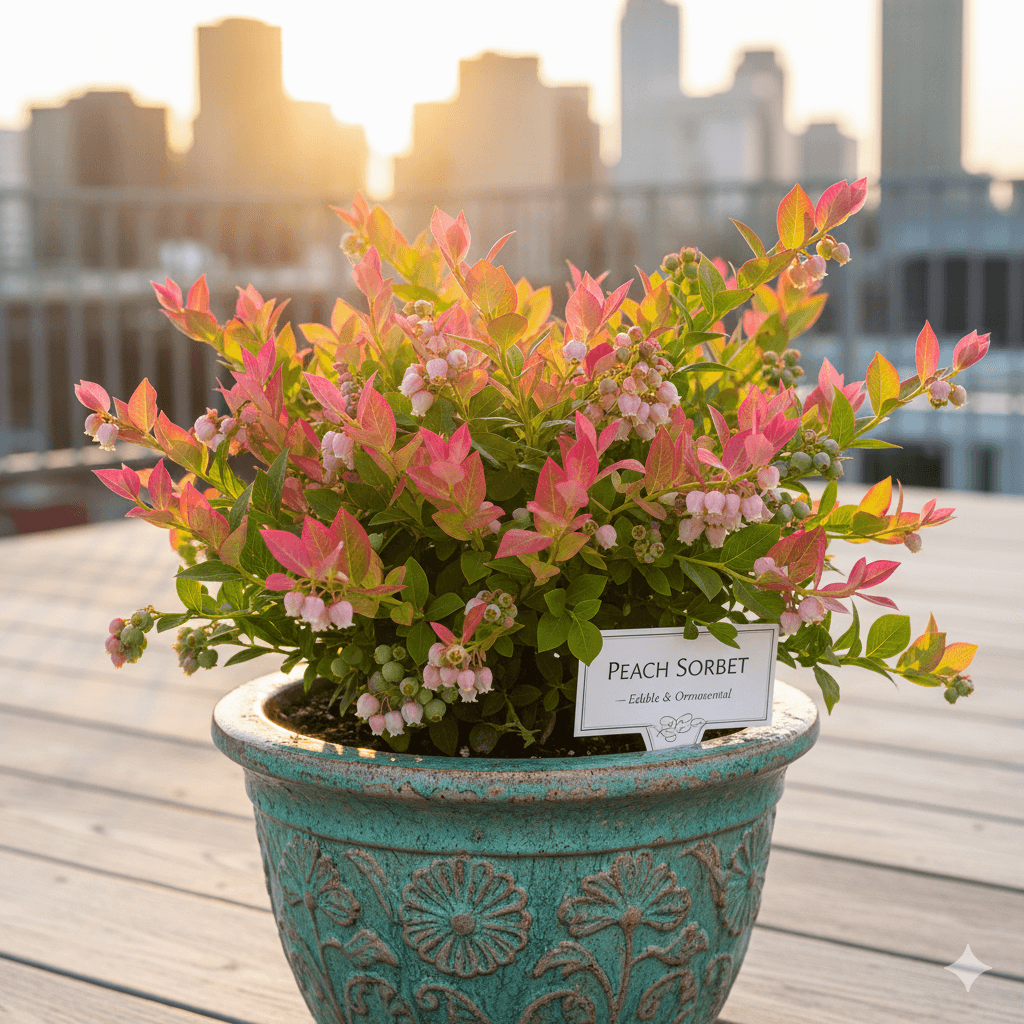
Some varieties double as ornamental plants, producing vibrant foliage and pink blossoms. This makes them excellent for patios and balconies where visual appeal matters as much as yield.
🫐 Top Blueberry Varieties for Containers (With Real-World Examples)
Here’s the ultimate list of the best-performing blueberry varieties for container growing — organized by plant type and climate suitability.
1. ‘Top Hat’ – The Ultimate Dwarf Blueberry
Type: Dwarf Northern Highbush
Height: 18–24 inches
Chill Hours: ~1,000
Fruit: Small to medium, sweet
“Top Hat” is a favorite for small spaces. Its compact root system and self-pollinating nature make it a perfect container variety. The plant produces dense clusters of sweet berries and stunning red fall foliage.
💡 Real Example: Susan from California grows ‘Top Hat’ in 16-inch ceramic pots on her balcony and harvests around 3 lbs of berries per season.
Best Container Mix: 40% peat moss, 30% pine bark, 20% perlite, 10% compost.
2. ‘Sunshine Blue’ – The Warm Climate Performer
Type: Southern Highbush
Height: 3–4 ft
Chill Hours: 150–200
Fruit: Medium, firm, sweet-tart
‘Sunshine Blue’ thrives in zones 5–10, tolerating both heat and mild frost. It’s semi-evergreen, meaning it holds foliage year-round in warm climates. Its pink spring blooms make it a decorative highlight.
💡 Example: A gardener in Orlando grows two ‘Sunshine Blue’ plants in 20-inch containers and reports fruiting from April to July — much earlier than typical highbush types.
Why It Works: It’s partially self-pollinating but produces larger yields when paired with another Southern Highbush like ‘Misty’.
3. ‘Jelly Bean’ – Sweet, Compact, and Ornamental
Type: Dwarf Northern Highbush
Height: 12–24 inches
Fruit: Small, sweet, and aromatic
‘Jelly Bean’ is perfect for decorative pots, balconies, and garden edges. It offers bright green leaves with red tinges, making it both functional and ornamental.
💡 Example: A Michigan gardener reports using ‘Jelly Bean’ along a window ledge in 10-inch planters, achieving over 200 berries per plant annually.
It’s low-maintenance and thrives in acidic soil with consistent watering. Pair with ‘Peach Sorbet’ for extended fruiting.
4. ‘Patriot’ – Cold Hardy and Reliable
Type: Northern Highbush
Height: 3–5 ft
Chill Hours: 800–1,000
Fruit: Large, tangy-sweet
‘Patriot’ is famous for its cold resistance and strong root structure, making it suitable for northern climates and large pots.
💡 Example: Gardeners in Toronto use 24-inch resin containers with mulch and still achieve 4–6 lbs per plant, even after snowy winters.
It’s also highly disease-resistant — ideal for beginners.
5. ‘Peach Sorbet’ – Year-Round Beauty
Type: Dwarf Southern Highbush
Height: 1.5–2 ft
Fruit: Sweet, medium-sized
‘Peach Sorbet’ stands out for its multi-season appeal — orange-tinted new leaves, white blossoms, and green-to-red foliage shifts.
💡 Example: In Austin, Texas, patio growers love ‘Peach Sorbet’ for its vibrant look and adaptability to heat.
It’s also self-pollinating, though it performs even better with ‘Jelly Bean’ or ‘Sunshine Blue’.
6. ‘Northsky’ – The Low-Growing Powerhouse
Type: Half-High Hybrid
Height: 12–18 inches
Chill Hours: 800–900
Fruit: Small, intensely flavored
This semi-dwarf hybrid is ideal for cold climates and small containers. Its roots stay compact, and its berries are known for their wild, rich flavor.
💡 Example: In Minnesota, gardeners use ‘Northsky’ in insulated grow bags to withstand -30°F winters without plant loss.
🌤️ Climate-Specific Variety Recommendations
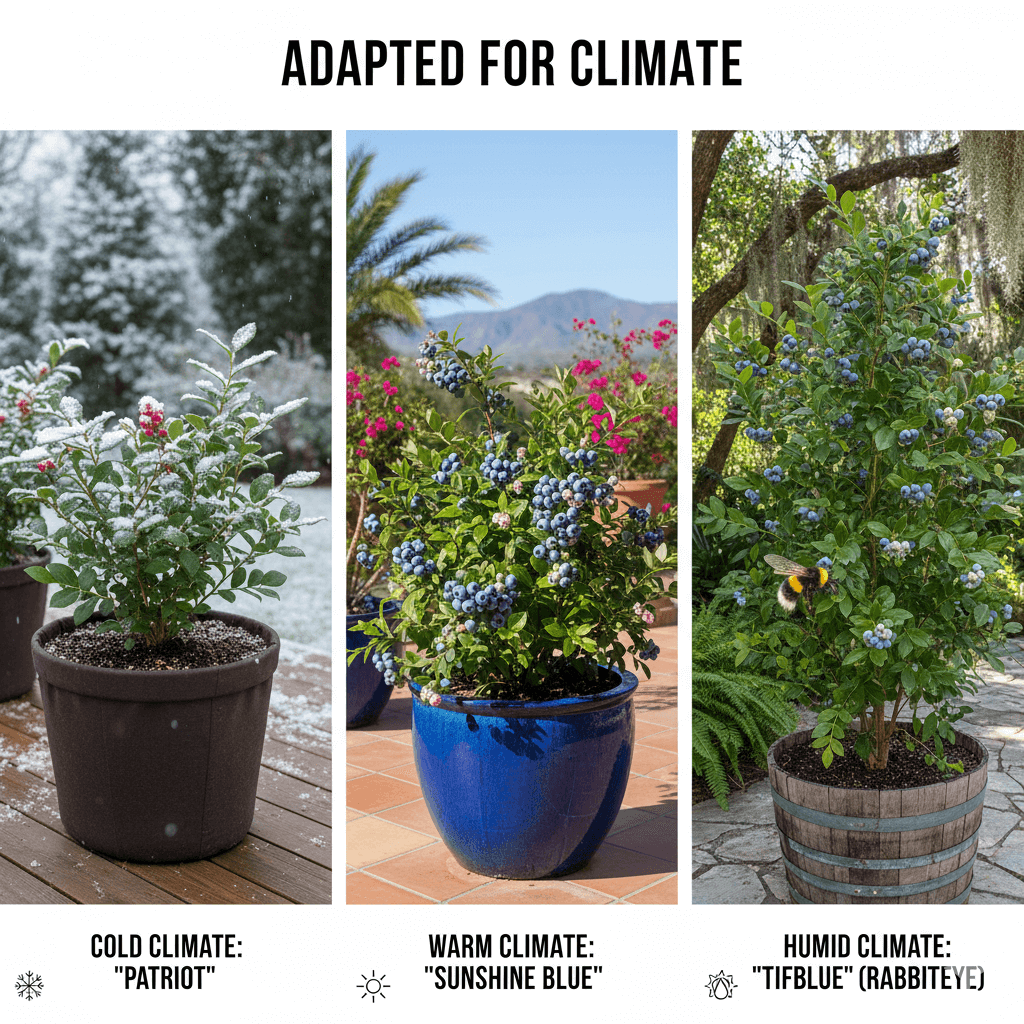
Cold Climates (Zones 3–6)
Choose Northern Highbush or Half-High types like ‘Patriot’, ‘Northsky’, or ‘Northblue’. Insulate pots and use pine needle mulch to protect roots.
Warm or Mild Climates (Zones 7–10)
Go with Southern Highbush like ‘Sunshine Blue’, ‘Misty’, or ‘Peach Sorbet’. Provide afternoon shade and consistent watering.
Humid or Tropical Regions
Rabbiteye varieties such as ‘Brightwell’ or ‘Tifblue’ adapt well to humidity but need at least two plants for pollination.
💡 Example: Gardeners in South Florida often pair ‘Brightwell’ with ‘Climax’ for extended harvest seasons.
🧑🌾 How to Grow Blueberries in Containers Successfully
Once you’ve selected the right blueberry variety, your next goal is to provide the optimal growing environment. Container-grown blueberries require careful attention to soil acidity, watering, and root aeration.
1. Choose the Right Container Size and Material
Blueberries prefer deep, wide containers that allow root spread while maintaining drainage.
Container Recommendations:
- Minimum: 16–20 inches wide, 18–24 inches deep
- Material: Fabric grow bags, resin planters, or glazed ceramic pots
- Drainage: Must have 3–5 holes at the base; consider adding gravel or pine bark for airflow
💡 Real Example: A balcony gardener in Denver grows two ‘Top Hat’ plants in 7-gallon fabric grow bags — and notes stronger root health compared to ceramic pots due to superior aeration.
2. Create the Perfect Soil Mix
Blueberries need acidic soil (pH 4.5–5.5) with high organic content. Regular garden soil is too alkaline and causes nutrient lockout.
Ideal Mix (for 5-gallon pot):
- 40% peat moss
- 30% pine bark fines
- 20% perlite
- 10% compost leaf mold
To maintain acidity, use sulfur pellets or acid-loving plant fertilizers.
💡 Pro Tip: Check your pH monthly using a digital soil pH meter. If levels rise, flush the pot with rainwater and reapply acidifier.
3. Watering Container Blueberries
Unlike in-ground plants, potted blueberries dry out quickly. They prefer moist but not soggy soil.
Watering Rule of Thumb:
- Check soil 1–2 inches below surface — if dry, water deeply until it drains.
- Use rainwater or distilled water (tap water often raises pH).
- In hot summers, water daily or install drip irrigation for consistency.
💡 Example: A gardener in Phoenix uses an automatic drip system delivering 0.5 gallons daily during summer, maintaining stable yields even in 100°F heat.
4. Fertilizing for Optimal Fruit Size
Blueberries require light but consistent feeding. Overfertilizing burns roots; underfeeding leads to pale leaves and small fruit.
Fertilizer Schedule:
- Early Spring: Apply a balanced acidic fertilizer (10-10-10).
- After Flowering: Apply a high-potassium fertilizer to boost fruit size.
- Mid-Summer: Top-dress with composted pine bark or worm castings.
💡 Pro Tip: Avoid nitrate-based fertilizers — use ammonium sulfate or organic blends made for azaleas and rhododendrons.
5. Pruning and Maintenance
Regular pruning prevents overcrowding, improves air circulation, and encourages new fruiting wood.
When to Prune:
- Late winter or early spring before new buds emerge.
- Remove: Weak, dead, or crossing branches.
- Every 2–3 years, cut back oldest canes to rejuvenate.
💡 Example: A gardener in Vermont prunes ‘Patriot’ annually, removing 25% of old canes — resulting in larger berries and more uniform ripening.
6. Overwintering and Protection
If you live in cold zones, overwintering is crucial. Blueberry roots in containers are more exposed to freezing temperatures.
Protection Tips:
- Move pots to unheated garages or covered porches during heavy frost.
- Wrap pots with burlap or bubble insulation.
- Apply 2–3 inches of pine needle mulch to regulate soil temperature.
💡 Example: In Minnesota, gardeners use insulated pot sleeves, reducing root freeze damage by 80%.
🍇 Extending Your Harvest (Advanced Grower Tips)
To keep blueberries fruiting longer and healthier, use these expert layering strategies:
1. Growing Mixed Varieties for Continuous Harvest
Pair early-season, mid-season, and late-season types.
- Early: ‘Patriot’, ‘Misty’
- Mid: ‘Sunshine Blue’, ‘Jelly Bean’
- Late: ‘Northsky’, ‘Tifblue’
This gives you fresh blueberries from April through August in most climates.
2. Use Mycorrhizal Inoculants
Blueberries form a natural symbiotic relationship with mycorrhizal fungi, improving root absorption and soil health.
3. Encourage Pollination
Even self-pollinating varieties benefit from extra pollinator activity.
Add bee-attracting plants nearby: lavender, thyme, or chives.
💡 Pro Tip: Set small bee hotels near your containers to increase pollination and yield.
FAQ – Best Blueberry Varieties for Containers
Can all blueberries grow in containers?
Not all blueberries are suited for containers. Dwarf and compact varieties, such as Top Hat, Jelly Bean, and Sunshine Blue, perform best because they thrive in limited soil, self-pollinate, and produce high yields even in small pots.
What size pot do blueberries need?
Start with a 16–20 inch wide pot and upgrade to 24 inches or larger as the plant matures. Ensure the pot has good drainage and is made of ceramic, resin, or fabric grow bags.
Do potted blueberries need winter protection?
Yes. Blueberry roots are sensitive to freezing, especially in containers. In cold zones (USDA 3–6), move pots indoors or wrap them with burlap, mulch with pine needles, and cluster them against a south-facing wall.
How often should I water blueberries in pots?
Container blueberries dry out faster than garden-planted bushes. Water deeply 2–3 times per week in warm weather and check the top 1–2 inches of soil before watering to avoid overwatering.
What is the best soil pH for container blueberries?
Blueberries require acidic soil with a pH between 4.5–5.5. Use a mix of peat moss, pine bark, perlite, and composted pine needles. Test soil regularly and adjust with sulfur pellets or acidic fertilizers.
Which varieties produce the sweetest fruit in containers?
‘Jelly Bean’, ‘Top Hat’, and ‘Peach Sorbet’ are known for producing sweet, aromatic berries, making them ideal for containers focused on fresh eating.
🌱 Final Thoughts: The Right Variety Changes Everything
Whether you’re an urban gardener growing on a balcony or a backyard grower wanting low-maintenance fruit, the right variety transforms your results.
Compact, hardy types like ‘Top Hat’, ‘Sunshine Blue’, and ‘Peach Sorbet’ deliver both beauty and productivity year after year.
As you gain experience, try pairing multiple cultivars to enjoy continuous harvests, stronger plants, and the joy of homegrown blueberries every season.