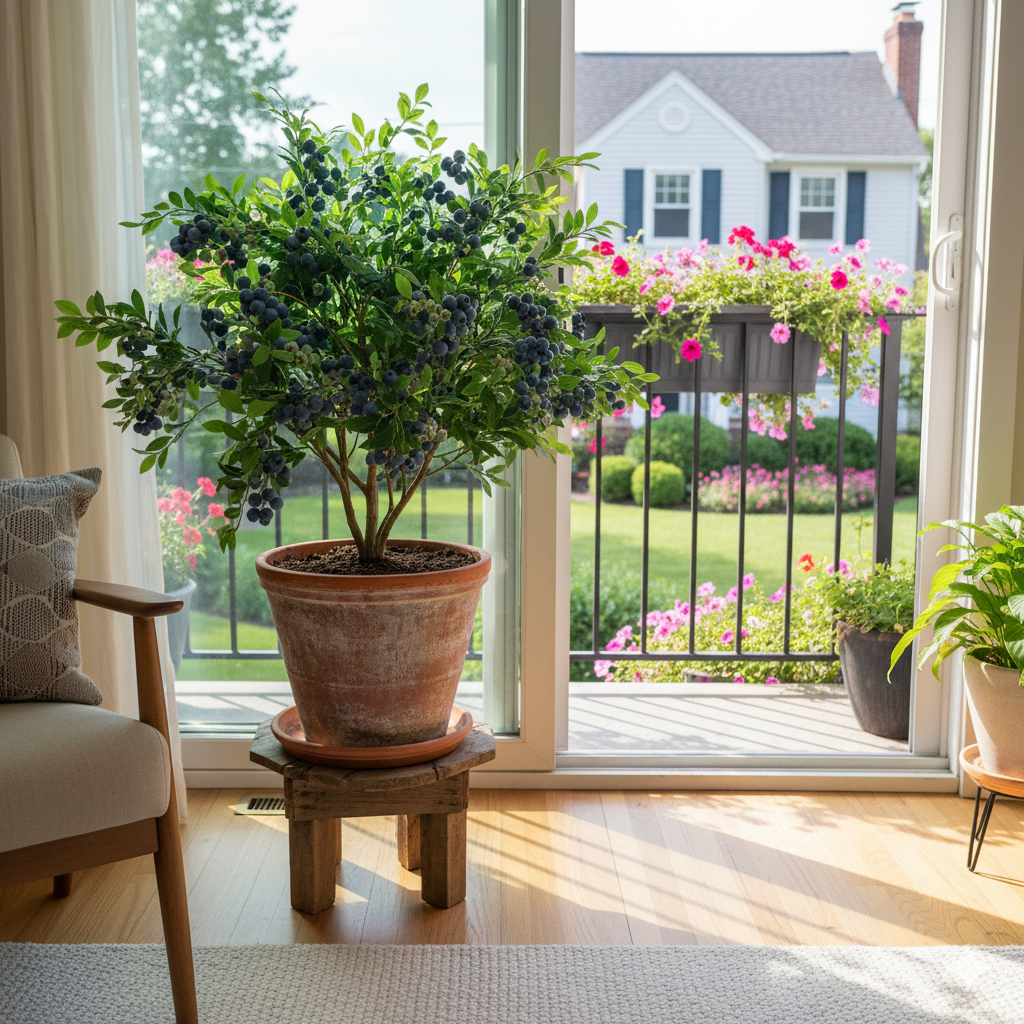
Yes, its very easy to growing blueberries indoors, but it requires careful control of light, chill period, soil acidity, and pollination. When managed properly, indoor blueberries can yield fruit for years.
This guide will show you exactly how, including real data, best practices, and tips that few gardening guides include.
Quick Starter: What You’ll Need
- Choose a compact or dwarf variety (see below).
- Select a container — at least 10–15 gallons with good drainage.
- Use an acidic, well-aerated soil mix (peat + bark + perlite).
- Provide sufficient light — natural + supplemental grow lights (e.g., 12–16 hr/day).
- Simulate dormancy (chill period) when needed.
- Hand pollinate or cross-pollinate inside.
- Maintain humidity, temperature, watering, and feeding.
Why Grow Blueberries Indoors?
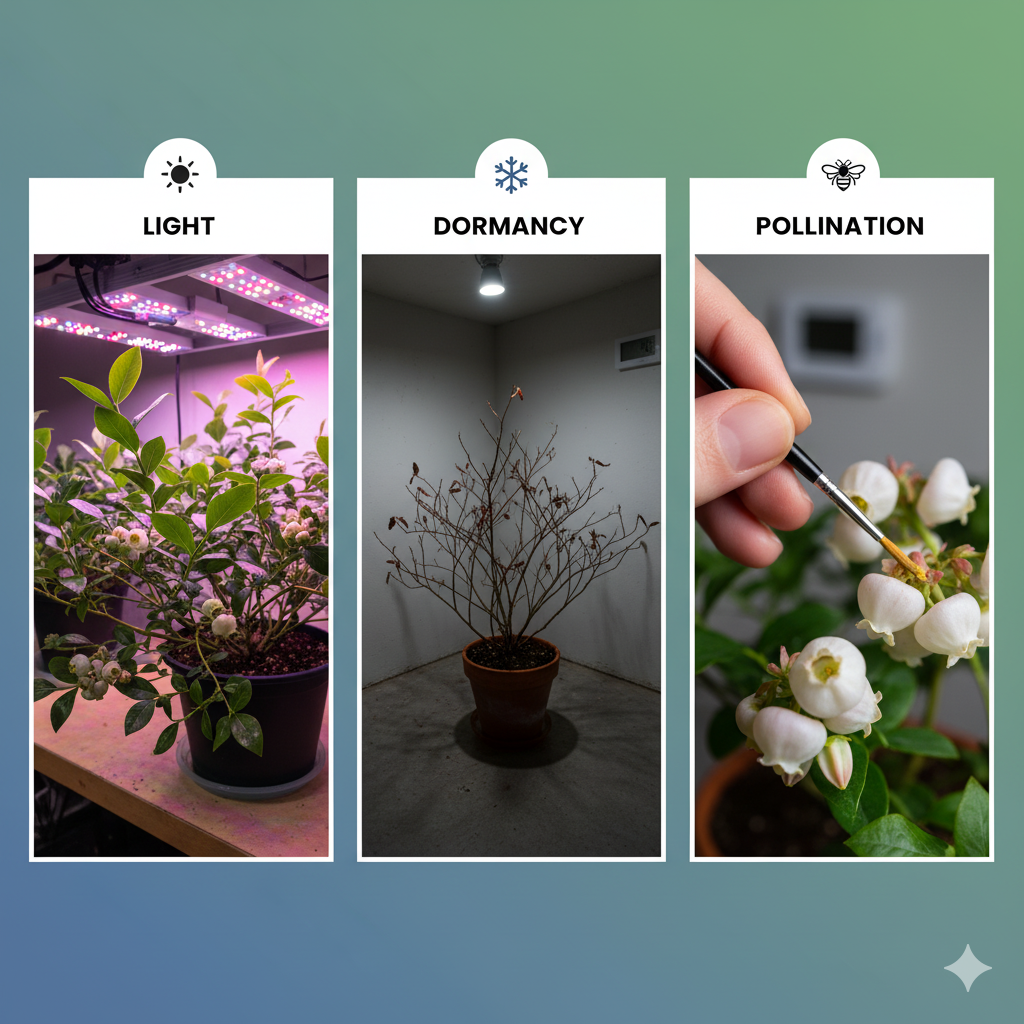
Growing blueberries indoors offers several advantages — and distinct challenges:
🏡 Advantages
- Year-round access to fresh berries, regardless of outdoor climate.
- Precise control over growing conditions: soil, pH, light, temperature.
- Protection from pests, extreme cold, or heat.
- Space efficiency — ideal for apartments and urban gardening.
⚠️ Challenges
- Blueberries are hardy but finicky about dormancy (chill hours) and pollination.
- Achieving enough light intensity is difficult indoors.
- Containers restrict root expansion, requiring careful soil and pot choice.
Key facts you should cite early:
- Blueberries require acidic soil (pH 4.5–5.5) for optimal uptake of nutrients.
- Roots are mostly in the top 8–12 inches, but container dimension matters for long-term growth.
- Dormancy (a cool period) is biologically required for many varieties to fruit well.
- Successful indoor setups in controlled environments exist (greenhouses, research stations, hobbyists).
Which Varieties Work Best Indoors?
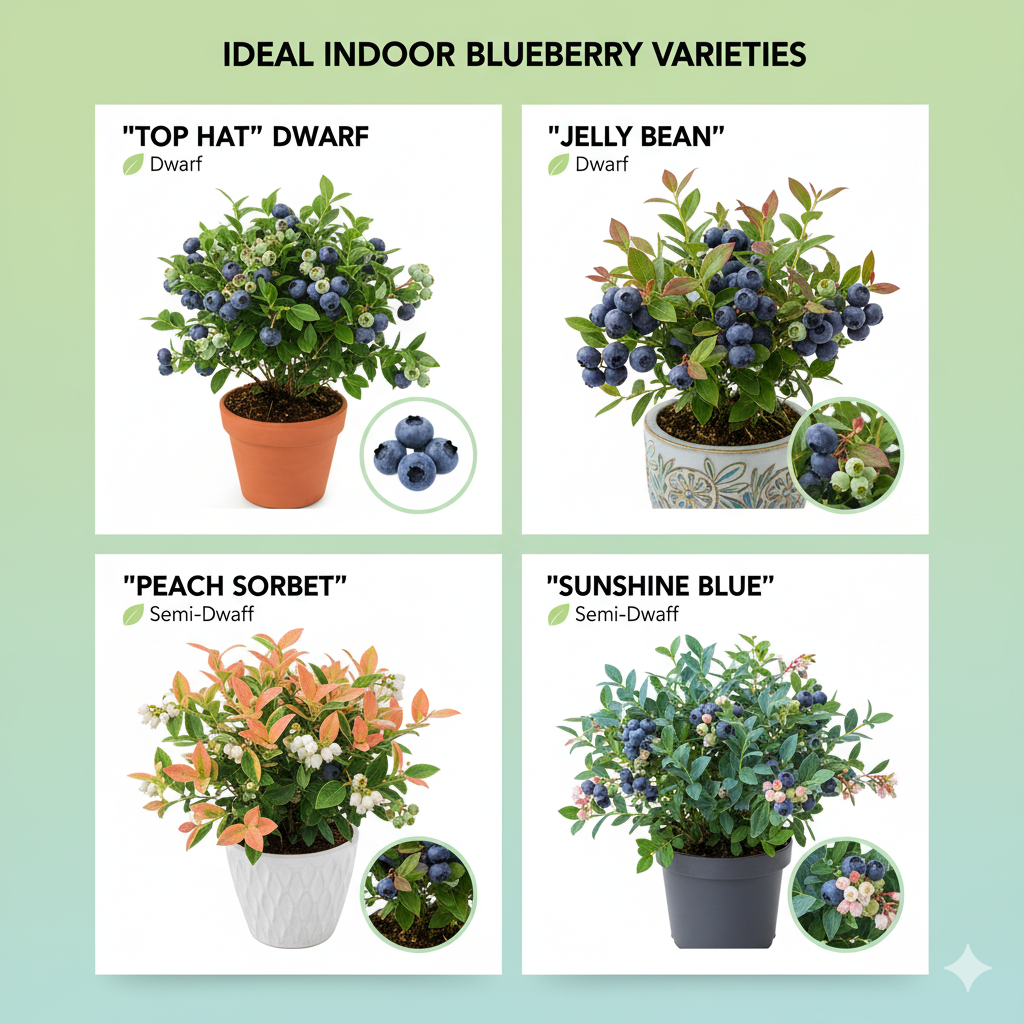
Not all blueberries are suited to indoor life. Here’s what to prioritize:
Traits to Seek
- Compact growth habit
- Low to moderate chill requirement
- Self-fertility or good cross-compatibility
- Adaptability to container rooting
Recommended Indoor Varieties
| Variety | Type | Expected Size | Chill Hours | Why It Works Indoors |
| Top Hat | Dwarf Northern Highbush | ~1.5–2 ft | ~800–1,000 | Compact, manageable size, good in deep pots |
| Jelly Bean | Dwarf Hybrid | ~2 ft | ~800 | Sweet fruit, ornamental, adapts to container limits |
| Sunshine Blue | Southern Highbush | ~2–3 ft | ~150–200 | Tolerates warmer conditions, semi-evergreen habit |
| Northsky | Half-High | ~1.5–2 ft | ~800 | Good cold tolerance for seasonal indoor/outdoor rotation |
Be cautious with full-scale highbush or rabbiteye varieties — they often grow too large or require deeper rooting than indoor setups allow.
Indoor Setup Options & Kits
Below are three reproducible setups (low, medium, and premium) for indoor blueberry growing:
| Setup Level | Description | Core Components | Expected Yield / Notes |
| Budget / Windowsill | Small apartment setup | 10-gal pot, acidic mix, clamp LED grow light (45–60 W), hand pollination brush | ~1–3 lbs after 2+ years |
| Hybrid Indoor / Outdoor | Moveable plants | 15-gal containers, grow light, combined dormancy strategy | ~3–6 lbs, better fruiting reliability |
| Indoor Greenhouse | Controlled environment | 24-gal pots, LED grow lights (≥200 W), humidity control, timer irrigation | Up to full potential yields given conditions |
You can mix and match parts depending on your space and budget.
Lighting: Natural vs Grow Lights
Natural Light
- Blueberries need 6–8 hours of direct light, ideally.
- In most indoor settings, windows don’t deliver enough intensity — consider south-facing windows or glass balconies.
Grow Lights
- Use full-spectrum LED or high-output fluorescent lights.
- Aim for PAR (Photosynthetically Active Radiation) around 200–400 µmol m⁻² s⁻¹ during fruit set periods.
- Keep lights ~12–18 inches above foliage, run 12–16 hours/day.
- For yield, supplemental lighting is practically mandatory in many latitudes.
Chill (Dormancy) Simulation — A Critical Step
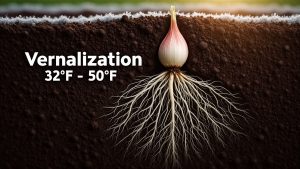
Many blueberry varieties require a cold period (chill hours) to break bud dormancy in the spring and fruit well. Indoor growers often struggle with this.
Strategies to Simulate Chill
- Move potted plants to a cool, unheated room or garage at 32–45°F for 6–10 weeks (variety dependent).
- Use a refrigerator or cold basement if safe and space permits (monitor humidity).
- Alternatively, pair indoor growth with winter outdoor placement if possible (balcony or cold room) and then bring them in.
Caution: Be sure humidity stays moderate during chill; dry air can damage branches. Research extension sources for variety-specific chill requirements.
Soil, pH & Watering Best Practices
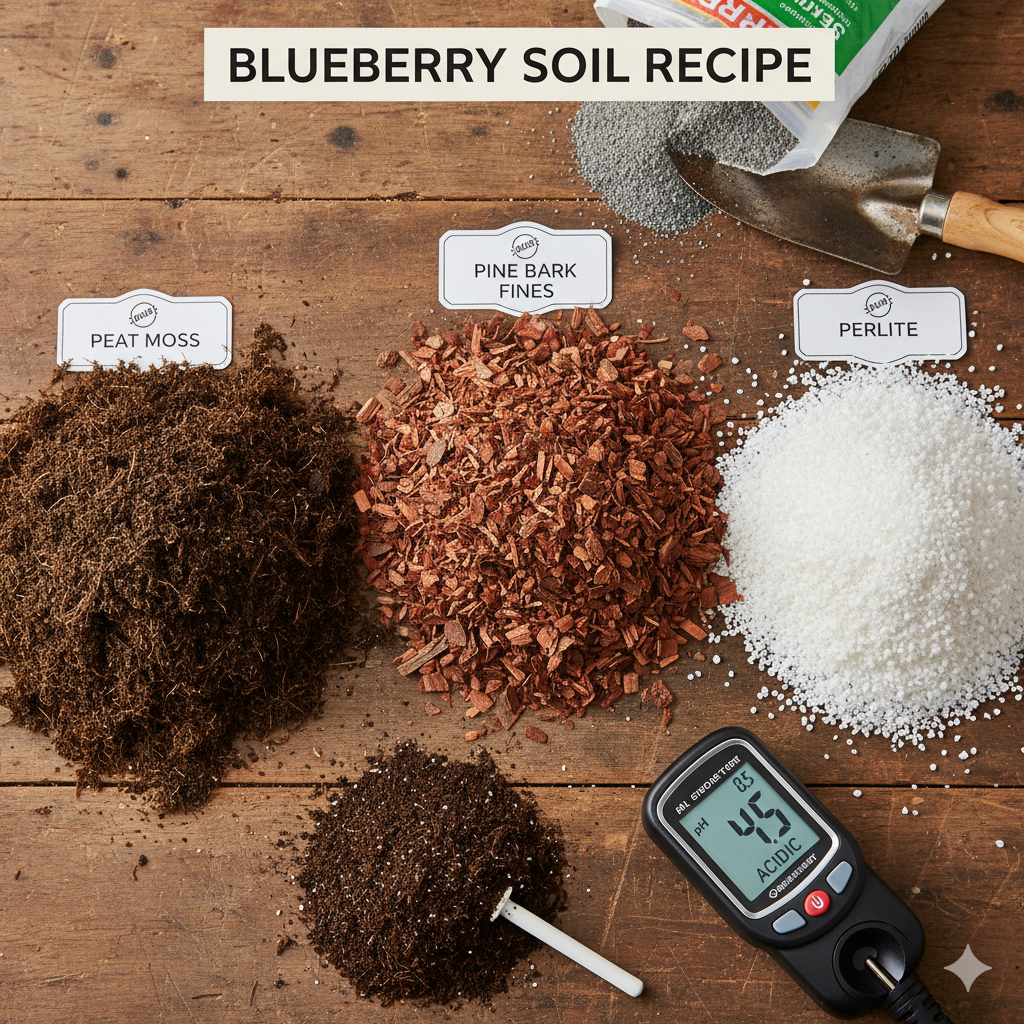
Soil Mix Recipe (Indoor-optimized)
- 40% pine bark fines
- 30% peat moss or coco peat
- 20% perlite or pumice
- 10% composted leaf mold or aged needles
pH Management
- Target 4.5–5.5, test monthly with a probe or digital meter (affiliate placeholder).
- If pH > 5.5, add elemental sulfur (at safe rates) or acidic fertilizer.
Watering
- Water deeply but infrequently — let the top ~2-3 inches of soil dry before next watering.
- Use rainwater or dechlorinated water, especially in areas with alkaline tap water.
- In dry indoor air, consider bottom watering or a moisture meter to avoid overwatering.
Pollination, Pruning & Yield Expectations
Pollination
- Indoor bees may be absent; use a small paintbrush or electric pollen vibrator between flowers.
- Cross-pollination increases yield — plant two varieties or alternate pots.
Pruning
- Prune lightly to maintain a manageable shape, remove crossing branches, and improve air circulation.
- Remove spent wood after harvest.
Yield Expectations
- Dwarf varieties in 10–15 gal indoor setups: ~1–3 lbs/year once mature.
- Larger setups (greenhouse-level): 4–6+ lbs possible with premium light & care.
- Expect first harvest in years 2–4 depending on plant maturity at purchase.
Troubleshooting Indoor Blueberry Growing
| Issue | Probable Cause | Solution |
| No fruit or weak clusters | Inadequate chill, poor pollination, low light | Apply dormancy simulation, hand pollinate, boost lighting |
| Yellow leaves (chlorosis) | pH too high, iron deficiency | Lower pH, apply chelated iron, test soil |
| Wilting or root rot | Overwatering or poor drainage | Repot, use lighter mix, ensure drainage holes |
| Leggy growth | Insufficient light / too little pruning | Raise light intensity, prune for compact form |
| Cold damage | Wrong indoor temps during dormancy | Use controlled chill zones, insulation |
Maintenance Over Time & Longevity
- Repot every 2–4 years into an incremental size pot.
- Refresh top 1–2 inches of soil each spring to replenish nutrients.
- Record your observations: pH, lighting changes, yields — helps you optimize over seasons.
- Well-cared container blueberries can live 8–12+ years.
Recommended Tools & Products
Here are tools and products that help indoor blueberry growing (affiliate placeholders):
- pH meter / soil probe
- Full-spectrum LED grow light panel
- Acidic (ericaceous) fertilizer
- High-quality fabric or insulated pots
- Pollination brushes or vibration tools
- Air humidifier or small misting system
FAQs- Growing Blueberries Indoors
Can you grow blueberries indoors year-round?
Yes — with dormancy simulation and adequate lighting, indoor blueberry fruiting is possible.
Do blueberries need chill hours if grown indoors?
Most varieties require some dormancy. Simulating chill is critical for consistent fruiting.
What is the best pot size for indoor blueberries?
At least 10–15 gallons is recommended for stable root development and moisture buffer.
How much light do indoor blueberries need?
Aim for PAR of 200–400 µmol m⁻² s⁻¹ for 12–16 hours a day during fruiting phases.
How do you pollinate indoor blueberries?
Use a fine brush or pollen vibrator across open flowers, or grow two compatible varieties for cross-pollination.