![[Experts Opinion] What is the Best Lawn Fertilization Schedule with Chart](https://gardeningtab.com/wp-content/uploads/2024/10/Experts-Opinion-What-is-the-Best-Lawn-Fertilization-Schedule-with-Chart.png)
Knowing when to fertilize your lawn is crucial for its health and vitality. A well-planned lawn fertilization schedule can make all the difference in achieving a lush green yard, a sight that will fill you with pride and satisfaction.
In my 5 years of gardening experience, I can easily say fertilizing your lawn at the right times promotes its growth and helps maintain a vibrant appearance throughout the seasons. Whether you’re a seasoned gardener or a beginner, you have the power to create a fertilization schedule that suits your specific needs. This guide will empower you with the best practices and tips for doing so.
Importance Of Fertilization
A well-maintained lawn enhances your home’s curb appeal and provides a lush, green outdoor space. Fertilizing your lawn at the right times ensures that your grass receives essential nutrients for growth and resilience. Early spring fertilization starts the growing season, while late spring helps strengthen the grass before the summer heat.
Summer fertilization supports plant growth during peak season, and fall fertilization prepares the lawn for winter dormancy. Understanding the specific needs of your grass type and regional climate will help you adjust the schedule for the best results. Consistent lawn fertilization promotes a healthy, vibrant lawn year-round.
Nutrient Needs
Your lawn needs three primary nutrients for optimal growth: nitrogen (N), phosphorus (P), and potassium (K). These nutrients are vital for various functions:
- Nitrogen (N): Promotes lush, green growth and is essential for photosynthesis.
- Phosphorus (P): Supports root development and helps form flowers and seeds.
- Potassium (K): Enhances overall health, disease resistance, and drought tolerance.
To ensure your lawn gets these nutrients, follow a seasonal fertilization schedule:
| Season | Fertilizer Type | Application Rate |
| Spring | High Nitrogen | One lb. per 1,000 sq. ft. |
| Summer | Balanced N-P-K | 0.5 lb. per 1,000 sq. ft. |
| Fall | High Potassium | One lb. per 1,000 sq. ft. |
Soil Health
Soil health is the foundation of a vibrant lawn. Healthy soil supports root growth and nutrient absorption. Regular soil testing helps you understand your soil’s needs and adjust your fertilization plan accordingly.
Here are some key aspects of maintaining soil health:
- pH Levels: Most lawns thrive in soil between 6.0 and 7.0. Test your soil and amend it if necessary.
- Organic Matter: Adding compost or organic matter improves soil structure and fertility.
- Aeration: Aerating your lawn allows air, water, and nutrients to reach the roots.
Proper fertilization enhances soil health by providing nutrients that might be lacking. For example, apply a nitrogen-rich lawn fertilizer if your soil test shows low nitrogen. If potassium is low, choose a lawn fertilizer high in potassium.
A healthy lawn starts with healthy soil. Focusing on nutrient needs and soil health ensures your lawn remains lush and green year-round.
Types Of Fertilizers
Maintaining a lush, green lawn requires a proper fertilization schedule. Knowing the different types of fertilizers can help you choose the best option for your lawn. Fertilizers can be broadly categorized into Organic Options and Synthetic Choices. Each type has its benefits and drawbacks, which we will explore in detail below.
Organic Options
Organic fertilizers are derived from natural sources such as plant and animal matter. They are eco-friendly and promote healthy soil by improving its structure and microbial activity. Some common organic fertilizers include:
- Compost: Made from decomposed organic matter, compost enriches soil with essential nutrients.
- Manure: Animal waste, such as cow, horse, or chicken, is rich in nitrogen and other nutrients.
- Bone Meal: Ground animal bones provide a slow-release source of phosphorus and calcium.
- Blood Meal: Dried animal blood is high in nitrogen and helps promote lush, green growth.
- Fish Emulsion: A liquid lawn fertilizer made from fish waste, offering a balanced mix of nutrients.
Organic fertilizers release nutrients slowly, which reduces the risk of over-fertilization. They also improve soil health, making it more fertile over time. However, they may not provide immediate results compared to synthetic options.
Here is a comparison table for better understanding:
| Organic Fertilizer | Primary Nutrient | Advantages | Disadvantages |
| Compost | All | Improves soil structure | It may contain weed seeds |
| Manure | Nitrogen | Rich in nutrients | Odor |
| Bone Meal | Phosphorus | Encourages root growth | Risk of attracting animals |
| Blood Meal | Nitrogen | Boosts growth | Can fertilizer burn plants if overused |
| Fish Emulsion | Balanced | Fast-acting | Strong odor |
Synthetic Choices
Synthetic fertilizers are artificial and usually come from chemical compounds. They provide a quick release of nutrients, giving immediate results. Some common synthetic fertilizers include:
- Urea: A high-nitrogen fertilizer that promotes rapid growth and green lawns.
- Ammonium Nitrate: Another high-nitrogen option that is quick-acting and effective.
- Superphosphate: Provides a concentrated source of phosphorus to encourage root development.
- Potassium Chloride: Supplies essential potassium, promoting disease resistance and drought tolerance.
- Complete Fertilizers: Balanced formulas containing nitrogen, phosphorus, and potassium (NPK).
Synthetic fertilizers can be tailored to meet specific lawn needs. They are easy to apply and provide consistent results. The table below compares different synthetic fertilizers:
| Synthetic Fertilizer | Primary Nutrient | Advantages | Disadvantages |
| Urea | Nitrogen | Quick-acting | Can burn lawn if over-applied |
| Ammonium Nitrate | Nitrogen | Effective | Explosive risk |
| Superphosphate | Phosphorus | Encourages root growth | This can lead to runoff |
| Potassium Chloride | Potassium | Improves resilience | It may cause salt buildup |
| Complete Fertilizers | NPK | Balanced nutrients | Costly |
Synthetic fertilizers can be highly effective but may lead to soil degradation over time. They need careful application to avoid harming the lawn.
Seasonal Lawn Fertilization Schedule
Having a well-maintained lawn enhances the beauty of any home. A good lawn fertilization schedule is key to achieving lush green grass. A Seasonal Schedule helps apply the right nutrients at the right time, ensuring your lawn stays healthy throughout the year.
Creating A Lawn Fertilization Schedule
Creating an effective lawn fertilization schedule involves understanding the needs of your lawn. This schedule varies based on local climate, soil type, and grass species. It’s your responsibility as a homeowner and gardening enthusiast to be attentive to these needs.
Here’s how to create a fertilization table:
- Identify Your Grass Type: Different grasses have different needs. Common types include Bermuda, Kentucky Bluegrass, and St. Augustine.
- Soil Testing: Conduct a soil test to determine pH and nutrient levels. This helps in choosing the right fertilizer.
- Seasonal Planning: Plan your applications according to the seasons. This ensures the lawn gets nutrients when it needs them most.
Below is a sample table for a basic lawn fertilization schedule:
| Season | Fertilizer Type | Application Rate |
| Spring | Nitrogen-rich | 1 lb per 1,000 sq ft |
| Summer | Balanced N-P-K | 0.5 lb per 1,000 sq ft |
| Fall | Slow-release | 1 lb per 1,000 sq ft |
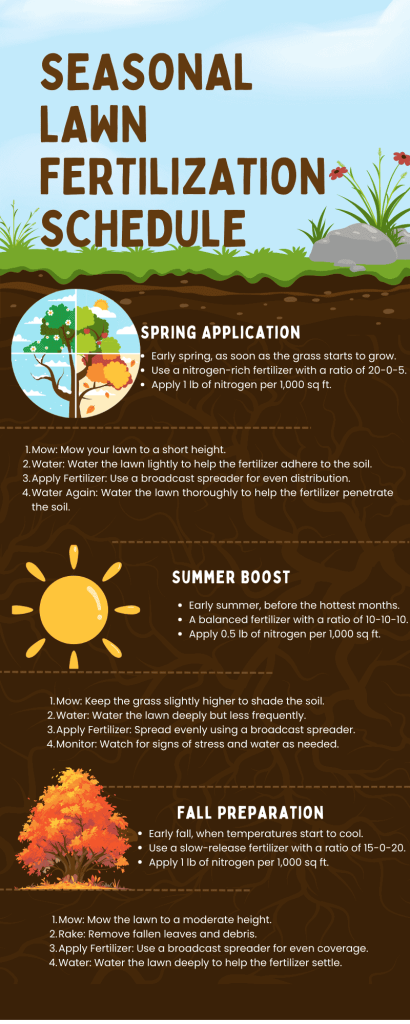
Spring Application
The Spring Application is crucial for kick-starting your lawn’s growth after winter. Apply a nitrogen-rich fertilizer to promote lush green grass.
- Timing: Early spring, as soon as the grass starts to grow.
- Fertilizer Type: Use a nitrogen-rich fertilizer with a ratio of 20-0-5.
- Application Rate: Apply 1 lb of nitrogen per 1,000 sq ft.
Here are the steps for spring application:
- Mow: Mow your lawn to a short height.
- Water: Water the lawn lightly to help the fertilizer adhere to the soil.
- Apply Fertilizer: Use a broadcast spreader for even distribution.
- Water Again: Water the lawn thoroughly to help the fertilizer penetrate the soil.
Summer Boost
The Summer Boost keeps your lawn healthy during the hot months. Use a balanced N-P-K fertilizer to maintain its vigor.
- Timing: Early summer, before the hottest months.
- Fertilizer Type: A balanced fertilizer with a ratio of 10-10-10.
- Application Rate: Apply 0.5 lb of nitrogen per 1,000 sq ft.
Steps for summer boost:
- Mow: Keep the grass slightly higher to shade the soil.
- Water: Water the lawn deeply but less frequently.
- Apply Fertilizer: Spread evenly using a broadcast spreader.
- Monitor: Watch for signs of stress and water as needed.
Fall Preparation
Fall Preparation helps your lawn recover from summer stress and prepare for winter. Use a slow-release fertilizer to strengthen the roots.
- Timing: Early fall, when temperatures start to cool.
- Fertilizer Type: Use a slow-release fertilizer with a ratio of 15-0-20.
- Application Rate: Apply 1 lb of nitrogen per 1,000 sq ft.
Steps for fall preparation:
- Mow: Mow the lawn to a moderate height.
- Rake: Remove fallen leaves and debris.
- Apply Fertilizer: Use a broadcast spreader for even coverage.
- Water: Water the lawn deeply to help the fertilizer settle.
Soil Testing
Establishing a proper lawn fertilizer schedule ensures a lush, green yard. Soil testing is essential to achieve this. Soil testing helps you understand your soil’s nutrient levels and pH balance. This knowledge allows for accurate fertilization, promoting healthy grass growth.
Testing Methods
Understanding the right testing methods is crucial. There are several ways to test your soil. Here are some common methods:
- Soil Test Kits: Home soil test kits are user-friendly. They provide quick results. These kits usually test for pH, nitrogen, phosphorus, and potassium levels.
- Laboratory Testing: Sending soil samples to a lab is more accurate. Labs test for a wider range of nutrients and pH levels. They also provide detailed reports.
- Electronic Soil Testers: These devices give instant readings. They are easy to use. Simply insert the probe into the soil to get a digital readout.
Follow these steps to collect a soil sample:
- Use a clean shovel or trowel.
- Dig small holes in different areas of your lawn.
- Collect soil from each hole and mix them in a clean container.
- Remove any debris like rocks or roots.
- Let the soil dry before placing it in a sample bag.
Using the right testing method and following proper sample collection ensures accurate results. This leads to a better lawn care schedule.
Interpreting Results
Interpreting soil test results is the next step. Most test results include nutrient levels and pH balance. Here’s how to understand them:
| Nutrient | Optimal Levels |
| Nitrogen (N) | 2-4% of soil composition |
| Phosphorus (P) | 0.3-0.5% of soil composition |
| Potassium (K) | 1-2% of soil composition |
pH Balance: Ideal soil pH for lawns is between 6.0 and 7.0. If your soil is too acidic (below 6.0), adding lime can help. Sulfur can lower the pH if it’s too alkaline (above 7.0).
Nutrient Deficiencies:
- Low Nitrogen: Grass may look yellow and grow slowly. Use a nitrogen-rich fertilizer.
- Low Phosphorus: Root growth may be poor. Apply a phosphorus-rich fertilizer.
- Low Potassium: Grass may be less resistant to disease. Use a potassium-rich fertilizer.
Understanding these results helps you choose the right fertilizers. This ensures your lawn gets the nutrients it needs.
Application Techniques
Proper lawn fertilization is essential for a lush, green yard. Understanding the right techniques to apply fertilizers can make a significant difference. This section will explore three primary application techniques: spreaders, liquid fertilizers, and adjusting fertilization based on grass type.
Spreaders
A spreader is one of the most common ways to apply granular fertilizers. Spreaders come in two main types: broadcast spreaders and drop spreaders. Each has its advantages:
- Broadcast Spreaders: These spreaders cover a wide area and are great for large lawns. They throw fertilizer in a fan-like pattern, ensuring even distribution.
- Drop Spreaders: These are ideal for smaller lawns or precise applications. They release fertilizer directly below, reducing waste.
Steps to use a spreader effectively:
- Calibrate your spreader according to the fertilizer package instructions.
- Fill the hopper with the right amount of fertilizer.
- Walk at a consistent pace to ensure even coverage.
- Overlap slightly to avoid missed spots but avoid over-fertilizing.
Tips: Always wear gloves and wash your hands after handling fertilizers. Clean the spreader after use to prevent rust and buildup.
Liquid Fertilizers
Liquid fertilizers are another effective way to nourish your lawn. They are usually mixed with water and applied using a spray. Liquid fertilizers offer rapid nutrient absorption and are perfect for quick fixes.
Advantages of liquid fertilizers:
- Fast-acting: Nutrients are quickly available to the grass.
- Even distribution: The liquid form ensures uniform coverage.
- Flexibility: Can be used for both foliar and soil applications.
Steps to apply liquid fertilizers:
- Mix the fertilizer with water according to the manufacturer’s instructions.
- Use a hose-end sprayer for large areas or a handheld sprayer for small spots.
- Spray evenly across the lawn, ensuring consistent coverage.
- Water the lawn lightly after application to help the fertilizer penetrate the soil.
Tips: Avoid applying liquid fertilizers on windy days to prevent drift. Wear protective gear to avoid skin contact.
Adjusting Fertilization Based On Grass Type
Different grass types require different fertilization schedules. Knowing your grass type helps you apply nutrients at the right time.
Common grass types and their needs:
| Grass Type | Fertilization Schedule | Best Fertilizers |
| Bermuda Grass | Every 4-6 weeks during the growing season | Nitrogen-rich fertilizers |
| Fescue | Early spring and fall | Balanced fertilizers |
| St. Augustine Grass | Every 6-8 weeks during the growing season | Slow-release fertilizers |
Tips for adjusting fertilization:
- Identify your grass type to tailor your fertilization schedule.
- Use soil tests to determine nutrient deficiencies.
- Avoid over-fertilizing, which can harm your lawn and the environment.
Understanding your lawn’s specific needs ensures optimal growth and health. Adjust your fertilization techniques to achieve the best results.
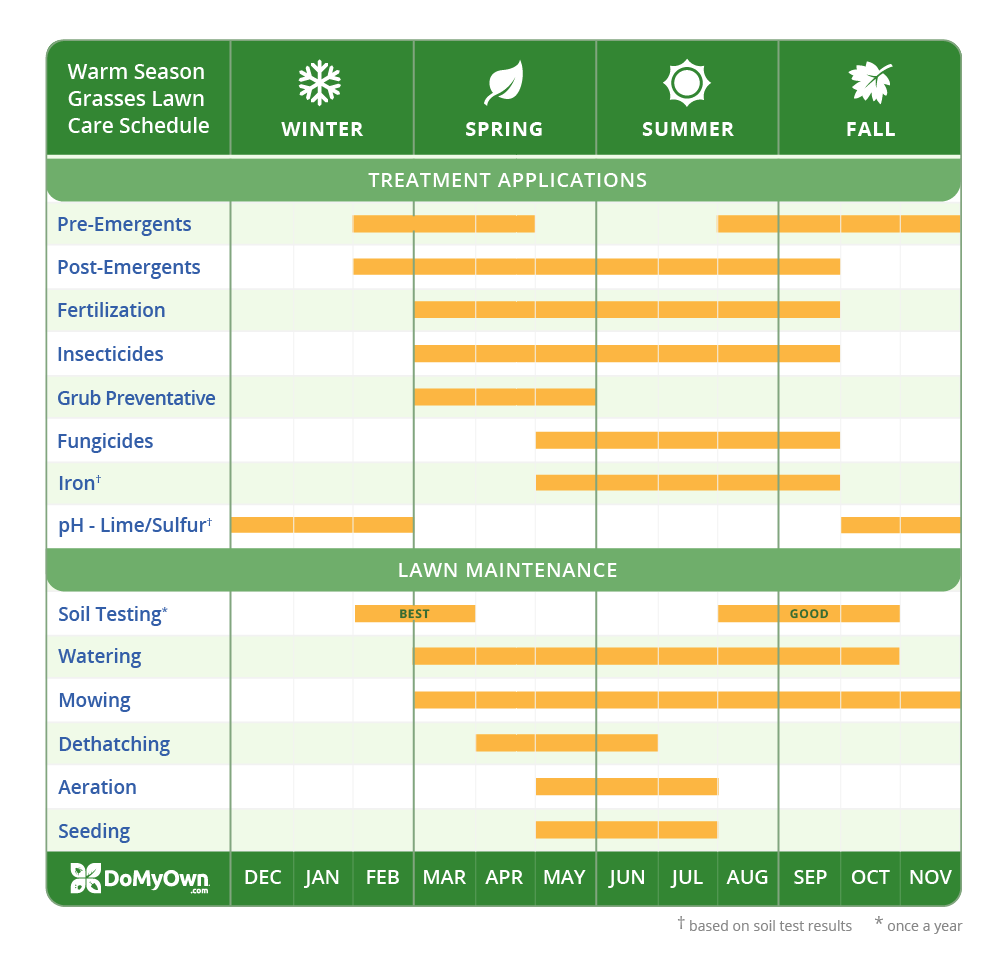
Credit: www.domyown.com
Watering Guidelines
Establishing a proper lawn fertilization schedule is crucial for maintaining a lush, green yard. One key aspect of this schedule is understanding the watering guidelines. Proper watering ensures that the nutrients are absorbed effectively and your lawn stays healthy and vibrant.
Before Application
Watering your lawn before applying fertilizer is essential. It helps prepare the soil to receive the nutrients. Here are some steps to follow:
- Water deeply a day or two before fertilizing. This ensures the soil is moist but not saturated.
- Avoid watering on the day of application to prevent runoff.
- Check the weather forecast. Ensure no heavy rain is expected on the day of fertilization.
Consider the following table for a quick overview:
| Action | Timing |
| Deep Watering | 1-2 days before application |
| Avoid Watering | On the day of application |
| Weather Check | 1 day before the application |
Ensure the soil is neither too dry nor too wet. This balance helps the fertilizer penetrate the soil efficiently. Deep watering a day or two before creates the perfect environment for nutrient absorption.
After Application
Once the fertilizer has been applied, proper watering is equally important. Follow these steps:
- Water lightly immediately after application to help dissolve the fertilizer.
- Ensure water reaches the root zone. This helps nutrients get absorbed effectively.
- Avoid overwatering. Excess water can wash away the fertilizer, reducing its effectiveness.
Consider this table for a quick reference:
| Action | Timing |
| Light Watering | Immediately after application |
| Root Zone Focus | Throughout the week |
| Avoid Overwatering | Continuously |
Watering lightly after fertilization helps dissolve the granules and pushes the nutrients into the soil. Focusing on the root zone ensures the grass absorbs the maximum nutrients. Regular, light watering is more effective than heavy watering, which can lead to runoff.
Common Mistakes
Setting up a lawn fertilization schedule is crucial for achieving a lush, green yard. Yet, many people make common mistakes that hinder their lawn’s growth. Understanding these mistakes can help ensure your lawn thrives year-round.
Over-fertilization
Over-fertilization is one of the most frequent errors in lawn care. Adding too much fertilizer can burn your grass and lead to nutrient imbalances.
Signs of over-fertilization include:
- Yellowing grass
- Brown patches
- Excessive thatch buildup
Too much fertilizer can also contaminate local water sources. Runoff can carry excess nutrients into rivers and lakes, causing algae blooms. To avoid this, always follow the recommended application rates on the fertilizer package.
A soil test can help determine the exact nutrient needs of your lawn. This ensures you apply the right amount of fertilizer. Here’s a simple table to guide you:
| Soil Nutrient Level | Fertilizer Amount |
| Low | Apply the full recommended rate |
| Medium | Apply half the recommended rate |
| High | Apply minimal or no fertilizer |
Always water your lawn after fertilizing. This helps the nutrients soak into the soil and minimizes the risk of burning the grass.
Ignoring Soil Type
Ignoring the soil type can lead to poor lawn health. Different soils have different nutrient needs and water retention capabilities.
Here are the main soil types and their characteristics:
- Clay Soil: Holds water well but drains poorly. Nutrients are usually abundant.
- Sandy Soil: Drains quickly but doesn’t hold nutrients well. Needs more frequent fertilization.
- Loamy Soil: A mix of sand, silt, and clay. It is generally ideal for most plants.
Conducting a soil test can identify your soil type. This information helps you choose the right fertilizer and watering schedule. For example, sandy soil may require more frequent, lighter fertilizer applications. Clay soil might need less frequent but heavier applications.
Here’s a quick guide for different soil types:
| Soil Type | Fertilization Frequency | Watering Needs |
| Clay | Low | Less frequent |
| Sandy | High | More frequent |
| Loamy | Moderate | Moderate |
Understanding your soil type helps you create an effective lawn fertilization schedule. This ensures your lawn gets the nutrients it needs without waste or harm.
Signs Of Healthy Grass
Understanding the right lawn fertilization schedule is essential for a lush, green lawn. One key aspect of this is recognizing the signs of healthy grass. Healthy grass doesn’t just look good; it also plays a vital role in the overall ecosystem of your garden. Let’s dive into the specific indicators that can help you assess the health of your grass.
Color Indicators
The color of your grass is one of the most obvious signs of its health. Healthy grass typically boasts a vibrant green hue. This rich color indicates that your grass receives the right nutrients and water. Here are some color indicators to watch for:
- Deep Green: A deep green color suggests your lawn is well-fertilized and healthy.
- Yellowing Grass: Yellow patches can indicate nutrient deficiencies, such as a lack of nitrogen.
- Brown Spots: Brown areas often point to problems like drought stress, pests, or diseases.
Monitoring the color of your grass can help you catch issues early. Make sure to adjust your fertilization schedule based on these visual cues. The table below summarizes the color indicators and their possible causes:
| Grass Color | Possible Cause |
| Deep Green | Adequate nutrients and water |
| Yellow | Nitrogen deficiency or overwatering |
| Brown | Drought, pests, or diseases |
Growth Patterns
Healthy grass grows consistently and evenly across your lawn. Uneven growth can signal issues that need your attention. Here are some growth patterns to look for:
- Consistent Growth: Even and steady growth indicates a well-balanced fertilization schedule.
- Patchy Growth: Fast or slow-growing grass patches can point to uneven nutrient distribution.
- Stunted Growth: Grass that grows slowly or appears stunted may lack essential nutrients.
Regularly mowing your lawn helps you monitor these growth patterns. If you notice inconsistencies, adjusting your fertilization routine can help. Consider the following tips to maintain healthy growth patterns:
- Fertilize Evenly: Use a spreader to ensure the fertilizer is evenly distributed.
- Water Consistently: Water your lawn thoroughly, but avoid overwatering.
- Monitor Soil Health: Test your soil periodically to ensure it has the right pH and nutrient levels.
Maintaining healthy growth patterns enhances your lawn’s appearance and strengthens its resilience against pests and diseases.
Frequently Asked Questions
What Is A Lawn Fertilization Schedule?
A lawn fertilization schedule outlines specific times to apply nutrients to your lawn for optimal growth.
How Often Should I Fertilize My Lawn?
Fertilize your lawn 3-4 times a year for best results. Adjust depending on your grass type.
When Is The Best Time To Fertilize?
Early spring, late spring, summer, and fall are ideal times for lawn fertilization.
Can I Fertilize My Lawn In Winter?
It’s best to avoid fertilizing in winter. Grass is usually dormant and won’t absorb nutrients effectively.
What Type Of Fertilizer Should I Use?
Choose a balanced, slow-release fertilizer for a steady nutrient supply over time. Consider your grass type and soil needs.
How Does Lawn Fertilization Benefit Grass?
Fertilization promotes healthy growth, vibrant color, and strong roots, which help resist disease and drought.
Should I Water My Lawn After Fertilizing?
Yes, water your lawn after fertilizing. This helps dissolve the fertilizer and distribute nutrients to the roots.
Conclusion
A proper lawn fertilization schedule is crucial for a healthy, lush lawn. Follow the tips and stick to a seasonal plan. Your grass will thrive, and your yard will be the envy of the neighborhood. Regular maintenance ensures long-term beauty and vitality for your lawn.