The best liquid fertilizer for vegetable garden soil is balanced with essential nutrients. Look for a 10-10-10 or 20-20-20 NPK formula.
Liquid fertilizers provide essential nutrients quickly, promoting rapid growth and healthy vegetable development. These fertilizers are easy to apply and readily absorbed by plants, ensuring they get the necessary nutrients. A balanced fertilizer like the NPK formula (nitrogen, phosphorus, and potassium) supports robust foliage, strong roots, and abundant fruit production.
Organic fertilizers, like fish emulsion or seaweed extract, enrich soil fertility and enhance plant nutrients without chemicals. As per the manufacturer’s instructions, regular application yields the best results. Choosing the best fertilizer ensures a thriving, productive vegetable garden, offering fresh and nutritious produce.
Top Liquid Organic Fertilizer
Growing a thriving vegetable garden requires the best liquid fertilizers. Liquid fertilizers provide essential nutrients quickly. They help plants grow strong and healthy. Let’s explore the top liquid fertilizers for your vegetable garden.
Organic Fertilizer
Organic liquid fertilizers are natural and eco-friendly. They improve soil health and promote sustainable gardening. Here are some top organic choices:
- Fish Emulsion: Fish emulsion is rich in nitrogen, phosphorus, and potassium. It’s great for leafy greens like spinach and lettuce.
- Seaweed Extract: Seaweed extract provides essential micronutrients. It helps with root growth and overall plant health.
- Compost Tea: Compost tea is made from steeping compost in water. It adds beneficial microbes to the soil.
- Molasses: Molasses is high in sugar and minerals. It feeds soil microbes and boosts plant growth.
Here’s a table summarizing the benefits of these organic options:
| Fertilizer | Benefits |
| Fish Emulsion | Rich in NPK, boosts leaf growth |
| Seaweed Extract | It provides micronutrients, promotes root growth |
| Compost Tea | Adds beneficial microbes, improves soil health |
| Molasses | Feeds soil microbes, enhances growth |
Synthetic Fertilizer
Synthetic liquid fertilizers are made from chemical compounds. They provide nutrients quickly and are easy to use. Here are some top synthetic choices:
- Miracle-Gro: Miracle-Gro is a well-known brand. It provides a balanced mix of nutrients for all vegetables.
- Jobe’s Liquid Fertilizer: Jobe’s offers a variety of formulas. Their liquid fertilizer is easy to apply and effective.
- Neptune’s Harvest: This liquid fertilizer contains fish and seaweed. It provides a quick nutrient boost.
- General Hydroponics: General Hydroponics offers liquid fertilizers for hydroponic systems. They ensure plants get all the necessary nutrients.
Here’s a table summarizing the benefits of these synthetic options:
| Fertilizer | Benefits |
| Miracle-Gro | Balanced nutrients, easy to use |
| Jobe’s Liquid Fertilizer | Variety of formulas, effective |
| Neptune’s Harvest | It contains fish and seaweed, a quick boost |
| General Hydroponics | Great for hydroponics, complete nutrients |
Benefits of Liquid Fertilizers
Choosing the best liquid fertilizer for your vegetable garden can significantly impact the growth and health of your plants. Liquid fertilizers offer many advantages, making them popular for vegetable gardening. Below, we explore the benefits of using liquid fertilizers for your vegetable garden.
Quick Absorption
One of the most significant benefits of liquid fertilizers is their quick absorption rate. Unlike granular fertilizers, liquid forms are immediately available to plant roots. This means your plants get the nutrients they need faster, leading to quicker growth and healthier vegetables.
Here are some key points to consider:
- Immediate Nutrient Availability: Liquid fertilizers provide nutrients that plants can absorb almost instantly.
- Faster Growth: Quick absorption leads to rapid plant growth, which is ideal for short growing seasons.
- Reduced Nutrient Loss: Less chance of nutrient loss through leaching than granular fertilizers.
For a better understanding, here is a comparison table:
| Aspect | Liquid Fertilizer | Granular Fertilizer |
| Absorption Rate | Immediate | Slow |
| Nutrient Availability | High | Moderate |
| Application Frequency | More frequent | Less frequent |
Targeted Application
Liquid fertilizers allow for targeted application, ensuring that specific plants get the necessary nutrients. This precision helps in maximizing the health and yield of your vegetable garden.
Consider the following benefits:
- Spot Treatment: Easily apply nutrients to individual plants showing signs of deficiency.
- Foliar Feeding: Spray liquid garden fertilizer directly on leaves for quick nutrient uptake.
- Controlled Dosage: Measure and adjust the amount of fertilizer to avoid overfeeding or underfeeding.
Here’s a breakdown of targeted application methods:
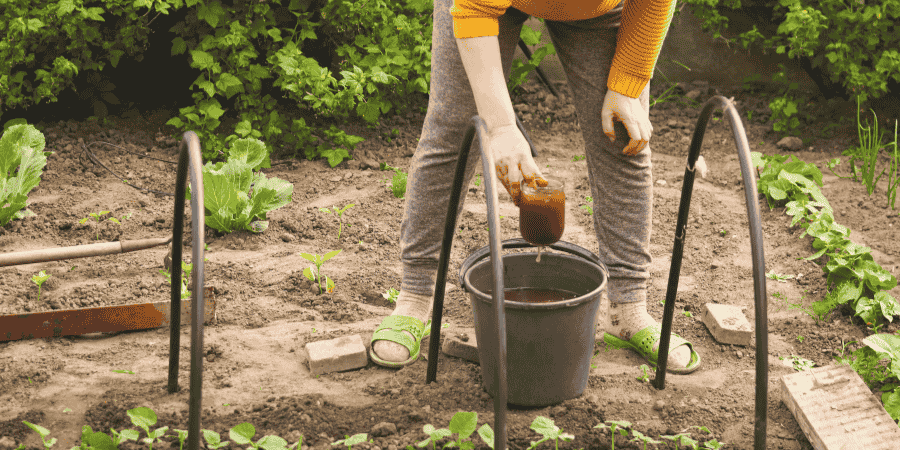
- Direct Soil Application: Pour liquid fertilizer directly at the base of the plant for root absorption.
- Foliar Spray: Mix fertilizer with water and spray on leaves for quick nutrient absorption.
- Drip Irrigation: Integrate liquid fertilizer into your drip irrigation system for consistent feeding.
With these targeted application techniques, you can ensure that your vegetable garden thrives, producing healthy and abundant crops.
Npk Ratios Explained
Choosing the best liquid fertilizer for your vegetable garden is crucial for healthy and productive plants. One of the most important aspects to consider is the NPK ratio. NPK stands for Nitrogen (N), Phosphorus (P), and Potassium (K), the three primary nutrients every plant needs. Understanding these ratios can help you select the most suitable fertilizer for your garden.
Importance Of N
Nitrogen (N) is essential for leafy growth. It helps plants develop lush green foliage. Without enough nitrogen, plants may become yellow and stunted.
Benefits of Nitrogen include:
- Boosts chlorophyll production: Chlorophyll is crucial for photosynthesis, allowing plants to convert sunlight into energy.
- Encourages vegetative growth: This is vital for leafy vegetables like lettuce, spinach, and kale.
- Improves overall plant health: Healthy plants are more resistant to diseases and pests.
Signs of Nitrogen deficiency:
- Yellowing leaves: Particularly the older leaves at the bottom.
- Stunted growth: Plants appear smaller and weaker.
- Poor fruit development: Fruits may be fewer and smaller.
A table of common vegetables and their nitrogen needs:
| Vegetable | Nitrogen Requirement |
| Lettuce | High |
| Tomatoes | Medium |
| Carrots | Low |
Role Of P And K
Phosphorus (P) is crucial for root development and flower production. It helps plants transfer energy and develop strong roots.
Benefits of Phosphorus include:
- Promotes strong root systems: Essential for a healthy foundation.
- Encourages flowering and fruiting: Vital for fruit-bearing plants like tomatoes and peppers.
- Increases plant resilience: Helps plants withstand environmental stress.
Potassium (K) aids in overall plant health. It helps regulate various physiological processes, including water uptake and enzyme activation.
Benefits of Potassium include:
- Regulates water balance: Ensures plants maintain proper hydration.
- Enhances disease resistance: Stronger plants are less prone to infections.
- Improves fruit quality: Results in larger, tastier fruits.
Common signs of Phosphorus and Potassium deficiency:
- Purple or dark green leaves: Indicate Phosphorus deficiency.
- Brown leaf edges: Often a sign of Potassium deficiency.
- Poor flowering and fruiting Can result from either deficiency.
A table summarizing the roles of P and K:
| Nutrient | Primary Role |
| Phosphorus (P) | Root development and energy transfer |
| Potassium (K) | Water regulation and enzyme activation |
Choosing The Right Fertilizer
Choosing the best liquid fertilizer for your vegetable garden can be tricky. Choosing the right fertilizer is essential for healthy plant growth and bountiful harvests. Many factors, such as soil type, plant needs, and nutrient content, come into play. Let’s dive deeper into how to make the best choice for your garden.
Soil Testing
Soil testing is a crucial first step in choosing the right fertilizer. It helps you understand the nutrient levels and pH of your soil. Knowing what your soil lacks, you can select a fertilizer that addresses those deficiencies.
Here are some key points on soil testing:
- Collect soil samples from different parts of your garden.
- Send the samples to a local extension service or soil lab for analysis.
- Review the results to identify nutrient deficiencies and pH levels.
You can choose a liquid fertilizer that provides the necessary nutrients based on the soil test results. For example, if your soil lacks nitrogen, look for a fertilizer high in nitrogen. If your soil is too acidic, a fertilizer that helps balance pH levels will be beneficial.
Here’s a simple table for understanding common soil nutrients and their roles:
| Nutrient | Role |
| Nitrogen (N) | Promotes leaf and stem growth |
| Phosphorus (P) | Encourages root and flower development |
| Potassium (K) | Enhances overall plant health |
Plant Needs
Understanding your plants’ specific needs is equally important. Different vegetables require different nutrients at various growth stages. Tailoring your fertilizer to match these needs will ensure optimal growth and yield.
Here are some tips for determining plant needs:
- Identify the vegetables you are growing. Each type has unique nutrient requirements.
- Research the growth stages of your plants. For example, leafy greens need more nitrogen during their early stages.
- Match the fertilizer to the growth stage and type of vegetable. For instance, tomatoes benefit from higher potassium levels during fruiting.
Some common vegetable needs include:
- Leafy greens like spinach and lettuce thrive with high nitrogen levels.
- Root vegetables like carrots and beets need more phosphorus for healthy root development.
- Fruiting plants like tomatoes and peppers require extra potassium during flowering and fruiting stages.
You can choose the best liquid fertilizer for your vegetable garden by focusing on soil testing and understanding plant needs. This approach ensures that your plants receive the right nutrients, leading to a healthy and productive garden.
5 Best Liquid Fertilizer for Vegetable Garden
The best liquid fertilizer for a vegetable garden is Triple 10 All Purpose Liquid Fertilizer 10-10-10 with Amino Acids and Seaweed Extract. Another top choice is Miracle-Gro Water Soluble Tomato Plant Food.
Choosing the right liquid fertilizer can significantly enhance the growth and yield of your vegetable garden. Triple 10 All Purpose Liquid Fertilizer 10-10-10 with Amino Acids and Seaweed Extract is a well-rounded option, providing essential nutrients and organic compounds for healthy plant development.
Miracle-Gro Water Soluble Tomato Plant Food is formulated to boost tomato growth, ensuring juicy and flavorful harvests. Other notable options include Miracle-Gro Pour & Feed Plant Food, Pendelton Turf Supply Jackpot Micronutrient Liquid Fertilizer Mix, and 18-3-6 All Purpose Liquid Fertilizer with Micronutrients. Each of these products offers unique benefits tailored to different gardening needs.
Triple 10 All-Purpose Liquid Fertilizer
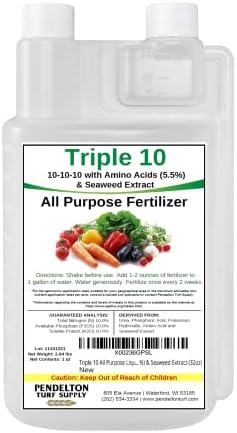
The Triple 10 All Purpose Liquid Fertilizer 10-10-10 with Amino Acids (5.5%) & Seaweed Extract (32oz) is an excellent choice for anyone looking to boost their garden’s growth. With a balanced ratio of 10-10-10 nutrients, this fertilizer is designed to provide essential nutrients for various plants. Manufactured by Jay-Mar Inc. and branded by Pendelton Turf Supply, this fertilizer comes in a 32oz bottle and weighs 2.0 pounds.
Pros:
- It contains Amino Acids (5.5%), which promote plant health and growth
- Seaweed Extract enhances nutrient uptake and soil health
- Balanced 10-10-10 nutrient ratio suitable for a wide range of plants
- Convenient 32oz bottle for easy application
Cons:
- Brown color might not be visually appealing for some users
- A weight of 2.0 pounds may be heavy for some individuals to handle
The Triple 10 All Purpose Liquid Fertilizer offers a balanced mix of nutrients essential for the growth and health of various plants. The inclusion of Amino Acids (5.5%) and Seaweed Extract makes it a unique product that provides immediate nutrients and helps in long-term soil improvement. This fertilizer is particularly useful for diverse gardens, as it caters to many plants.
One of the standout features of this fertilizer is its convenient 32oz bottle, which makes it easy to measure and apply. However, the brown color might not appeal to all users, and the 2.0 pound weight could be a bit cumbersome for some to handle. Overall, this product from Pendelton Turf Supply and Jay-Mar Inc. offers a comprehensive nutrient solution for gardeners looking to improve their plant health and soil quality.
Miracle-gro Water Soluble Tomato Plant Food
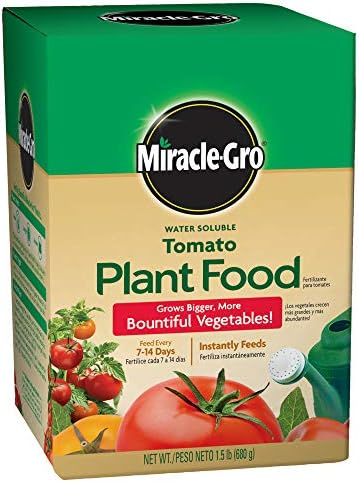
Miracle-Gro Water Soluble Tomato Plant Food is a highly effective fertilizer designed to support tomato plants’ growth and health. Manufactured by The Scotts Company LLC, this product is compact, making it easy to store and handle. Its targeted nutrient formula aims to provide essential nourishment to tomato plants, ensuring a bountiful yield.
Pros:
- Highly effective in promoting tomato plant growth
- Water-soluble formula for easy application
- Compact and lightweight packaging
- Manufactured by a trusted brand
Cons:
- Requires frequent application
- It may not be suitable for all types of plants
The Miracle-Gro Water Soluble Tomato Plant Food stands out for its efficacy in boosting the growth and health of tomato plants. The water-soluble formula ensures that nutrients are easily absorbed, leading to healthier plants and higher yields. The compact packaging makes it a convenient choice for gardeners with limited storage space.
However, the product does require frequent application to maintain its effectiveness, which might not be ideal for those seeking a low-maintenance solution. Additionally, while it is specifically formulated for tomatoes, it may not be suitable for other types of plants, limiting its versatility. Despite these minor drawbacks, the product remains popular among tomato growers for its proven results and ease of use.
Related: 12 Best Fertilizer for Tomato Plants: Top Choices for Lush Growth 2025
Miracle-gro Pour & Feed Plant Food
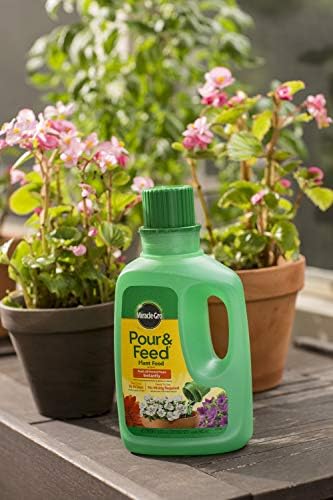
Miracle-Gro Pour & Feed Plant Food (Liquid), 32 fl. oz (Pack of 2), is a convenient and effective solution for providing essential nutrients to indoor and outdoor plants. This liquid plant food comes from the well-known brand Miracle-Gro, manufactured by The Scotts Company LLC. Its Brown/A color and easy-to-use formula make it a popular choice among gardening enthusiasts. The product weighs 4.0 pounds, making it easy to handle and store.
Pros:
- Easy-to-use liquid formula
- Provides essential nutrients for plant growth
- Suitable for both indoor and outdoor plants
- Trusted brand with a good reputation
- Convenient pack of 2 for extended use
Cons:
- It may not be suitable for all plant types
- Requires careful measurement to avoid overfeeding
- Some users may find the color unappealing
Miracle-Gro Pour & Feed Plant Food is designed to make plant feeding as simple as possible. Its liquid formula means you can pour it directly onto the soil, ensuring that your plants get the nutrients they need without mixing or diluting. This product is especially beneficial for those with a variety of plants, as it is suitable for indoor and outdoor use. The convenient pack of 2 ensures enough supply to last through multiple feeding cycles.
While Miracle-Gro Pour & Feed Plant Food has many advantages, it’s important to use it correctly. Overfeeding can be detrimental to your plants, so careful measurement is crucial. Additionally, while the Brown/A color may not be visually appealing to everyone, it does not affect the product’s effectiveness. Overall, this plant food is a reliable option for those looking to maintain healthy and vibrant plants with minimal effort.
Pendelton Turf Supply Jackpot Micronutrient Liquid Fertilizer Mix
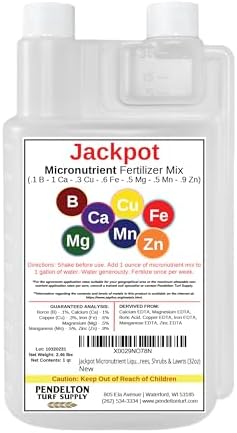
The Pendelton Turf Supply Jackpot Micronutrient Liquid Fertilizer Mix is a versatile solution designed for indoor and outdoor use. It is suitable for various plants, including flowers, vegetable gardens, trees, shrubs, and lawns. This 32oz bottle of fertilizer promises to deliver essential nutrients to your plants, ensuring robust growth and vibrant health.
Pros:
- Versatile for both indoor and outdoor use
- Suitable for a wide range of plants, including flowers, vegetable gardens, trees, shrubs, and lawns
- Convenient size (32oz) for easy application
- Enhanced nutrient mix for improved plant health
- Trusted brand: Pendelton Turf Supply
Cons:
- Brown color might stain surfaces
- Weight (2.0 pounds) can be slightly heavy for some users
This micronutrient liquid fertilizer from Pendelton Turf Supply stands out due to its versatility and effectiveness. This fertilizer can cater to your needs, whether nurturing indoor plants or tending to outdoor gardens. The formula is enriched with essential nutrients that help promote healthy growth and vibrant blooms. The 32oz bottle size is also convenient for small and large garden spaces, making it a practical choice for gardeners.
However, the brown color of the liquid might be a drawback for some, as it could stain surfaces during application. Additionally, the weight of the bottle, which is 2.0 pounds, maybe a bit cumbersome for some users, especially if they need to handle multiple bottles. Despite these minor drawbacks, the overall benefits of this fertilizer make it a reliable choice for anyone looking to improve the health and appearance of their plants.
18-3-6 All-Purpose Liquid Fertilizer & Micronutrients
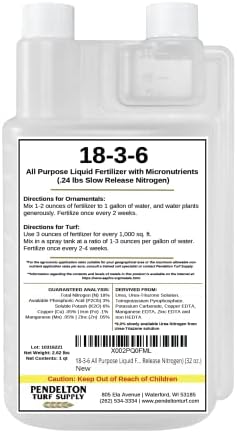
The 18-3-6 All Purpose Liquid Fertilizer & Micronutrients (50% Slow Release Nitrogen) (32 oz.) is an exceptional product designed to provide essential nutrients to your lawn. Manufactured by Jay Mar Inc. and branded by Pendelton Turf Supply Inc., this dark green liquid fertilizer ensures your grass gets a balanced diet for optimal growth.
Pros:
- Contains 50% Slow Release fertilizers for sustained nutrient delivery.
- Micronutrients are included for comprehensive lawn health.
- 32 oz. The bottle provides ample coverage.
- The dark green color indicates rich nutrient content.
- Lightweight at 2.0 Pounds for easy handling.
Cons:
- It may require frequent application depending on lawn size.
- Slow Release Nitrogen might not be suitable for immediate nutrient needs.
This 18-3-6 All Purpose Liquid Fertilizer is particularly effective because of its balanced ratio of nutrients. Including 50% Slow Release Nitrogen ensures that your lawn receives a steady nitrogen supply over time, which is crucial for maintaining vibrant, green grass. Additionally, the micronutrients included in the formula help address minor deficiencies that could otherwise go unnoticed.
The dark green color of the fertilizer indicates its rich nutrient content, and the 2.0-pound weight makes it easy to handle and apply. However, it is important to consider that the slow-release nature might not meet immediate nutrient demands, and frequent applications may be necessary for larger lawns. Nonetheless, this fertilizer offers a comprehensive solution for maintaining a healthy, lush lawn.
Application Methods
The first step is choosing the best liquid fertilizer for your vegetable garden. Understanding the application methods is crucial for optimal plant growth. Different techniques ensure that plants get the nutrients they need. This section will discuss three main strategies: foliar feeding, soil drenching, and mixing the liquid fertilizer.
Foliar Feeding
Foliar feeding involves spraying liquid fertilizer directly onto the leaves of the plants. This method allows plants to absorb nutrients quickly through their leaves.
Here are some benefits of foliar feeding:
- Fast absorption: Nutrients enter the plant faster compared to soil application.
- Immediate effect: You can see visible results in a short time.
- Bypass soil issues: Helps if the soil has nutrient lock-up or pH problems.
To foliar feed your plants, follow these steps:
- Choose the right time: Early morning or late afternoon is best to avoid sunburn.
- Prepare the solution: Mix the liquid fertilizer with water according to the instructions.
- Use a fine mist sprayer: Ensure even distribution on the leaves.
- Spray both sides: Cover the top and bottom of the leaves for maximum absorption.
For a quick reference, here’s a table on the advantages of foliar feeding:
| Advantages | Details |
| Fast Absorption | Nutrients are absorbed quickly through leaves. |
| Immediate Effect | Visible results in a short time. |
| Bypasses Soil Issues | Helps with soil nutrient lock-up or pH problems. |
Soil Drenching
Soil drenching is another effective method for applying liquid fertilizer. This technique involves pouring the fertilizer solution directly onto the soil around the plant roots.
Benefits of soil drenching include:
- Direct root access: Nutrients go straight to the roots.
- Long-lasting effect: Provides sustained nutrient supply over time.
- Improves soil health: Enhances microbial activity in the soil.
Steps to perform soil drenching:
- Prepare the solution: Mix the liquid fertilizer with water as per instructions.
- Water the plants: Ensure the soil is moist but not soggy.
- Pour the solution: Apply the solution at the base of the plants.
- Repeat as needed: Follow the recommended frequency for best results.
Here’s a table summarizing the benefits of soil drenching:
| Benefits | Details |
| Direct Root Access | Nutrients go straight to the roots. |
| Long-lasting Effect | Provides sustained nutrient supply over time. |
| Improves Soil Health | Enhances microbial activity in the soil. |
Mixing The Liquid Fertilizer
Mixing the liquid fertilizer correctly is essential for the success of both foliar feeding and soil drenching. Proper mixing ensures that plants receive the right nutrient concentration.
Follow these steps to mix liquid fertilizer:
- Read the label: Always follow the manufacturer’s instructions for the correct ratio.
- Use clean water: Ensure the water is free from contaminants.
- Measure accurately: Use a measuring cup to get the right amount of fertilizer.
- Mix thoroughly: Stir the solution well to ensure even distribution.
Here are some tips for effective mixing:
- Avoid over-concentration: Too much fertilizer can harm plants.
- Store properly: Keep any unused mixture in a cool, dark place.
- Label containers: Mark the containers to avoid confusion.
Here’s a quick reference table for mixing tips:
| Tips | Details |
| Avoid Over-concentration | Too much fertilizer can harm plants. |
| Store Properly | Keep any unused mixture in a cool, dark place. |
| Label Containers | Mark the containers to avoid confusion. |
Credit: www.gardeningknowhow.com
Common Mistakes
Choosing the best liquid fertilizer for your vegetable garden can greatly affect plant health and yield. But even the best fertilizers won’t help if you make common mistakes. Here are some mistakes to avoid to get the best results from your liquid fertilizer.
Over-fertilizing
Over-fertilizing is one of the most common mistakes gardeners make. Using too much fertilizer can harm plants rather than help them. It can lead to nutrient burn, where leaves turn yellow or brown and curl up.
- Yellowing leaves
- Leaf burn or scorch
- Stunted growth
- Excessive salt buildup in the soil
- Read and follow the instructions on the fertilizer label.
- Use a fertilizer spreader for even application.
- Test your soil to know its nutrient needs.
- Apply fertilizer in smaller, more frequent doses.
Tip: Always water your plants well before and after applying liquid fertilizer. This helps distribute the nutrients and prevent root burn.
Ignoring Ph Levels
Ignoring pH levels can make your fertilizer less effective. Plants absorb nutrients best in the right pH range. Plants can’t take up nutrients properly if the soil is too acidic or too alkaline.
| Vegetable | pH Range |
| Tomatoes | 6.0 – 6.8 |
| Carrots | 5.5 – 7.0 |
| Lettuce | 6.0 – 6.7 |
- Use a pH testing kit or meter to check soil pH.
- For acidic soil, add lime to raise the pH.
- For alkaline soil, add sulfur to lower the pH.
- Re-test the soil after adjusting pH to ensure it is in the desired range.
Tip: Regularly check your soil pH, especially if you notice nutrient deficiency symptoms. Adjusting pH can make a big difference in nutrient uptake and plant health.
Seasonal Considerations
Choosing the best liquid fertilizer for your vegetable garden requires understanding the unique needs of your plants throughout the year. Seasonal considerations play a crucial role in ensuring your garden thrives. Here’s a guide to help you navigate fertilization during different seasons.
Spring Feeding
Spring is when your vegetable garden wakes up from its winter slumber. During this time, plants need a boost to start growing strong. A good liquid fertilizer should contain a balanced nitrogen, phosphorus, and potassium mix. These nutrients support root development, foliage growth, and flower production.
Here are some key points to consider for spring feeding:
- High Nitrogen Content: Promotes leafy growth.
- Phosphorus: Encourages strong root systems.
- Potassium: Helps with overall plant health.
Using a liquid fertilizer every two weeks can be beneficial. Here’s a simple schedule:
| Week | Fertilizer Type | Application Rate |
| Week 1 | Balanced Liquid Fertilizer | One tablespoon per gallon of water |
| Week 3 | High Nitrogen Fertilizer | One teaspoon per gallon of water |
Always follow the manufacturer’s instructions on the fertilizer package. Over-fertilization can harm your plants.
Fall Maintenance
Fall is crucial for preparing your vegetable garden for the cold months ahead. During this season, focus on strengthening plant roots and preparing the soil for the next planting season. A liquid fertilizer high in potassium and phosphorus is ideal.
Here are some important considerations for fall maintenance:
- High Potassium Content: Enhances disease resistance and cold tolerance.
- Phosphorus: Supports root growth and energy storage.
Apply the fertilizer once a month during the fall. Here’s a suggested schedule:
| Month | Fertilizer Type | Application Rate |
| September | High Potassium Fertilizer | One tablespoon per gallon of water |
| October | Phosphorus-rich Fertilizer | One teaspoon per gallon of water |
Ensure you water your plants well after applying the fertilizer. This helps the nutrients reach the roots effectively.
Diy Liquid Fertilizers
Using the best liquid fertilizer for your vegetable garden can make a huge difference in your harvest. DIY liquid fertilizers are a great way to feed your plants without spending much money. These homemade solutions are easy to make and provide essential nutrients for your veggies. Let’s explore some popular DIY liquid fertilizers.
Compost Tea
Compost tea is a powerful liquid fertilizer made from compost. It is rich in nutrients and beneficial microbes. To make compost tea, follow these steps:
- Fill a bucket with water. Let it sit for 24 hours to remove chlorine.
- Add a small bag of compost to the water.
- Stir the mixture daily for about a week.
- Strain the liquid to remove solid particles.
Compost tea provides your plants with the following:
- Essential nutrients like nitrogen, phosphorus, and potassium.
- Beneficial microbes that improve soil health.
Here is a simple table showing the benefits of compost tea:
| Nutrient | Benefit |
| Nitrogen | Promotes leaf growth |
| Phosphorus | Strengthens roots |
| Potassium | Boosts overall plant health |
Use compost tea every two weeks for the best results. Pour it at the base of your plants or use it as a foliar spray. Your vegetable garden will thrive with this simple, homemade fertilizer.
Fish Emulsion
Fish emulsion is another excellent DIY liquid fertilizer. It is made from fish waste and is rich in nutrients. To make a fish emulsion, follow these steps:
- Collect fish scraps or buy fish waste.
- Place the fish waste in a large container.
- Add water and a bit of molasses to the container.
- Let the mixture ferment for a few weeks, stirring it daily.
- Strain the liquid to remove solids.
Fish emulsion provides your plants with:
- High nitrogen content for leafy growth.
- Trace minerals that support overall plant health.
Here is a simple table showing the benefits of fish emulsion:
| Nutrient | Benefit |
| Nitrogen | Promotes lush foliage |
| Trace Minerals | Improves plant immunity |
Use fish emulsion every three weeks for optimal growth. Apply it around the base of your plants or as a foliar spray. Your vegetable garden will flourish with this nutrient-rich, homemade fertilizer.
Frequently Asked Questions
What Is The Best Liquid Fertilizer For Vegetables?
The best liquid fertilizer for vegetables is one that is balanced. Look for a product with equal parts of inorganic fertilizers like nitrogen, phosphorus, and potassium. Organic options, like fish emulsion, are also great.
How Often Should I Apply Liquid Fertilizer?
Apply liquid fertilizer every two to four weeks during the growing season. Follow the product’s instructions for the best results. Over-fertilizing can harm plants.
Can I Use Liquid Fertilizer On All Vegetables?
Yes, liquid fertilizer can be used on all vegetables. It provides essential nutrients quickly. However, always follow specific plant needs and product guidelines.
Is Organic Liquid Fertilizer Better For Vegetable Gardens?
Organic liquid fertilizer is often better for vegetable gardens. It’s environmentally friendly and improves soil health. Organic options include compost tea and seaweed extract.
What Is The Best Liquid Fertilizer For Vegetables?
Triple 10 All Purpose Liquid Fertilizer is excellent. It contains amino acids and seaweed extract. It promotes overall plant health and growth.
How Often Should Miracle-Gro Tomato Plant Food Be Used?
Use Miracle-Gro Tomato Plant Food every 1-2 weeks. Apply it directly to the soil for best results.
Can I Use Pendelton Turf Supply For Flowers?
Yes, Pendelton Turf Supply is versatile. It suits plants, flowers, vegetable gardens, trees, shrubs, and lawns.
Is Slow-release Nitrogen Important In Fertilizers?
Yes, slow-release nitrogen in 18-3-6 All Purpose Fertilizer is crucial. It provides a steady nutrient supply over time.
How To Apply Miracle-Gro Pour & Feed?
Simply pour Miracle-Gro Pour & Feed directly onto the soil. It’s ready-to-use and convenient for feeding your plants.
Conclusion
Choosing the right liquid fertilizer for your vegetable garden can make a big difference. Triple Ten all-purpose liquid fertilizer provides balanced nutrients with added amino acids and seaweed extract. Miracle-gro water-soluble tomato fertilizer specifically targets tomato growth and health.
Miracle-gro pours & feed plant food offers convenience and ease of use with its ready-to-use formula. Pendelton turf supply jackpot micronutrient liquid fertilizer mix is versatile for both indoor and outdoor plants. The 18-3-6 all-purpose liquid fertilizer offers slow-release nitrogen for sustained nutrient delivery.
Each of these options has unique benefits, ensuring your garden thrives. Choose a fertilizer that best suits your specific gardening needs. Happy gardening, and may your vegetables grow lush and bountiful!