In this guide, we will look at the best fertilizer for fig trees in pots. We will understand what nutrients fig trees need. We will also choose the best fertilizers and learn when to fertilize.
You will find out how often to fertilize and the best ways to apply it. Finally, we will discuss how to monitor and adjust your fertilization plan.
Growing fig trees in pots can be an enriching experience. The joy of plucking juicy, ripe figs right from your tree is unmatched.
As a fig tree lover, I have felt the joy of caring for these lovely plants. I enjoy the tasty rewards they provide. However, to ensure a bountiful harvest, proper fertilization is crucial.
I have a friend who learned this lesson the hard way. He had a thriving fresh fig garden, but his trees began to decline as time passed. Leaves are yellow, fruit production dwindles, and the once-vibrant trees look sickly.
He hadn’t been using fertilizers properly, leading to nutrient deficiencies that negatively impacted his fig trees’ health.
Common mistakes in fertilizing fig trees include over-fertilization, under-fertilization, and using the wrong type of fertilizer.
This article will explore the best fertilizer for fig trees in pots. We will discuss important topics like understanding what fig trees need for nutrients.
We will also cover how to choose the best fertilizers. You will learn when and how often to fertilize. We will go over application techniques and how to monitor your fertilization plan.
By the end, you’ll have the knowledge and tools to keep your potted fig trees thriving and producing abundant harvests.
Understanding Fig Tree Nutrient Needs
To effectively fertilize your container fig trees, it’s essential to understand their nutrient requirements. Fig trees primarily need the following essential nutrients:
- Nitrogen (N): Promotes healthy foliage growth and overall plant vigor.
- Phosphorus (P): Encourages strong root development and fruit production.
- Potassium (K): Enhances disease resistance, fruit quality, and tree resilience.
- Micronutrients: Trace elements like iron, zinc, and manganese are vital for various plant functions.
Nutrient deficiencies can significantly impact fig tree health and fruit yield. Common signs of deficiency include:
- Yellowing or chlorotic leaves
- Stunted growth
- Poor fruit set or small fruits
- Increased exposure to pests and diseases
Several factors influence a fig tree’s nutrient needs, such as:
- Soil type and quality
- Pot size and drainage
- Climate and weather conditions
- Tree age and size
Understanding these factors will help you tailor your fertilization plan to your specific fig trees’ requirements.
Related: How to Care for a Fig Plant: A Self-Tested Guide for Home Gardeners [With Pro Tips]
Choosing the Best Fertilizer for Potted Fig Trees
When selecting a fertilizer for your potted fig trees, you can use organic or synthetic products. Here’s a brief comparison:
| Organic Fertilizers | Synthetic Fertilizers |
| -Derived from natural sources Release nutrients slowly Improve soil structure and health Less risk of over-fertilization | – Manufactured using chemical processes Provide immediate nutrient availability Precise nutrient ratios Higher risk of over-fertilization if misused |
Now, let’s take a closer look at the top 7 recommended fertilizers for potted fig trees:
1. Fiddle Leaf Fig Tree Fertilizer by Aquatic Arts
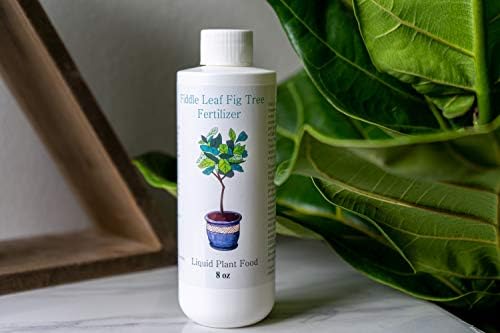
Fiddle Leaf Fig Tree Fertilizer is a special plant food. It helps improve the health and growth of your ficus trees.
This easy-to-use liquid fertilizer promotes lush, green leaves and strong branch development.
With a balanced blend of essential nutrients, it provides your potted fig trees with the nourishment they need to thrive.
Mix 1/2 tsp of fertilizer per 2 cups of water and apply to the potting soil every 1-2 weeks during the growing figs season.
Avoid getting the fertilizer on the leaves to prevent damage.
Aquatic Arts’ Fiddle Leaf Fig Tree Fertilizer is a great option for potted fig trees. It works well for both indoor and outdoor plants. This fertilizer provides the right nutrients for healthy growth and a good harvest.
Pros: Specifically formulated for fig trees, easy to use, improves leaf and branch health
Cons: May require more frequent application compared to slow-release options
How to Use: Mix 1/2 tsp of fertilizer per 2 cups of water. Apply the solution to the soil every 1-2 weeks during the growing season. Avoid getting the fertilizer on the leaves.
2. Fiddle Leaf Fig Tree Plant Food for Ficus Lyrata and Ficus Audrey
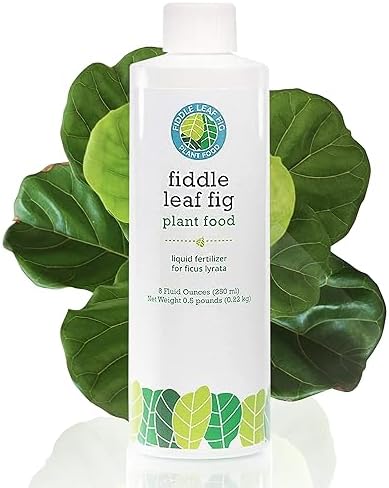
This Fiddle Leaf Fig Tree Plant Food is an expertly crafted fertilizer for Ficus Lyrata and Ficus Audrey trees.
This urea-free formula is rich in calcium and has a balanced NPK ratio of 3-1-2. It helps roots grow strong, supports sturdy stems, and encourages vibrant leaves.
The 8-ounce bottle makes it easy to provide your potted fig trees with the essential nutrients they need to flourish.
Shake the bottle well and mix 1/2 tsp per cup of water. Apply the solution to the soil every two weeks in spring and summer. In fall and winter, reduce to monthly feeding.
Using this Fiddle Leaf Fig Tree Plant Food regularly will help your ficus trees stay healthy. It will also help them produce many tasty figs.
Pros: Enriched with calcium, urea-free, balanced NPK ratio (3-1-2) for robust growth
Cons: It may not be suitable for all fig varieties
How to Use: Shake well. Mix 1/2 tsp per cup of water. Apply every 2 weeks during spring and summer. Reduce to monthly feeding in fall and winter.
3. Fiddle Leaf Fig Tree Plant Food Slow-Release Fertilizer Pellets
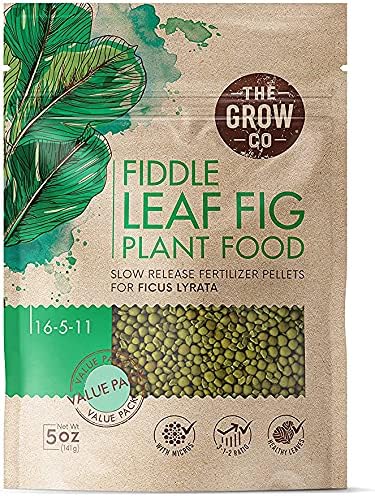
These Fiddle Leaf Fig Plant Food Slow-Release Fertilizer Pellets are the perfect choice for potted fig trees.
The slow-release formula gives a steady supply of important nutrients. This ensures your ficus plants get the food they need to grow healthy.
The 5-ounce package holds easy-to-apply pellets that you can use for both indoor and outdoor potted fig trees.
Apply 1 tbsp of pellets per 4″ pot diameter to the soil surface every 6 weeks during the growing season. Water thoroughly after application to activate the slow-release mechanism.
With consistent use, these fertilizer pellets promote lush foliage, strong roots, and a bountiful harvest of delicious figs.
If you are growing Ficus Lyrata, Ficus Audrey, or other types of fig trees, use slow-release pellets. They provide the best nutrition for your potted plants.
Pros: Slow-release formula provides a steady nutrient supply, suitable for indoor and outdoor use
Cons: It may take longer to see results compared to quick-release options
How to Use: Apply 1 tbsp of pellets per 4″ pot diameter to the soil surface every 6 weeks during the growing season. Water thoroughly after application.
4. Miracle-Gro Fruit & Citrus Plant Food Spikes
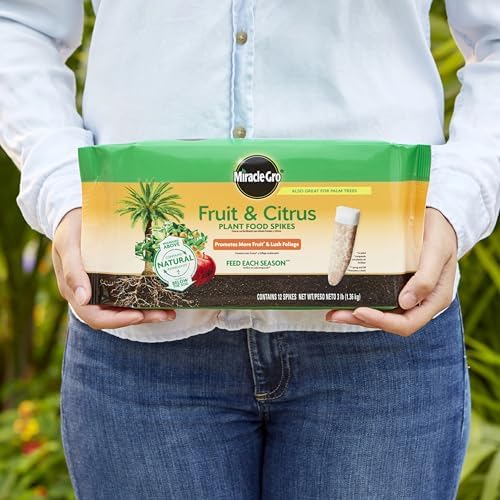
Miracle-Gro Fruit & Citrus Plant Food Spikes are an easy and effective way to give nutrients to your potted fig trees.
These simple spikes provide a steady supply of nutrients right to the roots. This helps plants grow well and produce fruit.
Each spike contains a balanced mix of important nutrients. These include nitrogen, phosphorus, and potassium, which help support plant health.
Insert 2 spikes per square foot of soil around the tree’s drip line (the edge of the branches) and water thoroughly.
Apply the spikes every 6-8 weeks during the active growing season. Miracle-Gro Fruit & Citrus Plant Food Spikes work well for many fruit trees. They are great for potted fig trees and other fruit plants.
Pros: Easy-to-use spikes, targeted nutrient delivery, suitable for various fruit trees
Cons: May not provide a complete range of micronutrients
How to Use: Insert 2 spikes per square foot of soil around the tree’s drip line (edge of the branches). Water thoroughly. Apply every 6-8 weeks during active growth.
5. Dr. Earth 70656 1 lb 5-5-2 MINIS Natural Wonder Fruit Tree Fertilizer

Dr. Earth’s Natural Wonders Fruit Tree Fertilizer is an organic, non-GMO product made for fruit trees. This includes potted fig trees.
This 1-pound bag of mini fertilizer pellets has a balanced 5-5-2 NPK ratio. It provides important nutrients for healthy growth and fruit production.
The manufacturer enriches the fertilizer with beneficial microbes and mycorrhizae, which improve soil health and enhance nutrient uptake.
Mix 1 to 2 tablespoons of fertilizer with each gallon of soil. You can also spread it around the tree. Apply this every 2 to 3 months during the growing season.
This gentle, slow-release formula is easy to apply and safe for plants and the environment. Dr. Earth’s Natural Wonders Fruit Tree Fertilizer helps plants grow thick leaves and strong roots. It also supports a rich harvest of tasty, healthy figs.
Pros: Organic fertilizer formula, contains beneficial microbes, gentle on plants
Cons: May have a strong odor and slower nutrient release compared to synthetic options
How to Use: Mix 1-2 tbsp of fertilizer per gallon of soil or topdress around the tree. Apply every 2-3 months during the growing season.
6. Fiddle Leaf Fig Slow-Release Fertilizer by Perfect Plants
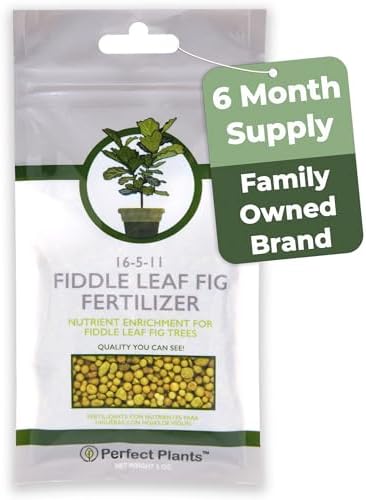
Fiddle Leaf Fig Slow-Release Fertilizer comes in a 5-ounce resealable bag. It is made to give steady nutrients to all Ficus types, including potted fig trees.
This slow-release formula provides a steady supply of important nutrients. It helps plants grow healthy, with lush leaves and a plentiful harvest.
The fertilizer is suitable for indoor and outdoor use, making it a versatile choice for potted fig trees.
To apply, sprinkle 1 tablespoon of fertilizer around the tree’s base. Use it for each 6-inch pot. Mix the fertilizer into the top inch of soil. Then, water the area well.
Repeat the application every 2 months during the active growing season.
The resealable bag ensures the fertilizer stays fresh and ready for use throughout the season. With Perfect Plants’ Fiddle Leaf Fig Slow-Release Fertilizer, your potted fig trees will get the nutrition they need to grow well.
Pros: Resealable packaging, consistent nutrient enrichment, suitable for all Ficus varieties
Cons: May attract pets or wildlife due to its organic composition
How to Use: Sprinkle 1 tbsp of fertilizer per 6″ pot diameter around the base of the tree. Mix into the top inch of soil and water well. Apply every 2 months during active growth.
7. Jobe’s Organics Granular Garden Fertilizer for Fruit and Citrus Trees
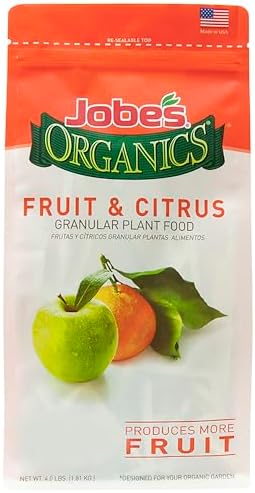
Jobe’s Organics Granular Garden Fertilizer is an organic plant care product. It is OMRI-listed and works well for fruit and citrus plants, including potted fig trees.
This 4-pound bag of granular fertilizer is easy to use. It has a balanced mix of essential nutrients, helpful microbes, and mycorrhizae. This blend supports healthy plant growth and fruit production.
The slow-release formula provides long-lasting nutrition, feeding your potted fig trees for 6 weeks.
To apply, use 1 cup of fertilizer for every 3 feet of tree height. Sprinkle it around the drip line. Scratch it into the top 1-2 inches of soil. Then, water deeply.
Reapply every 6-8 weeks during the growing season for optimal results. Jobe’s Organics Granular Garden Fertilizer promotes strong roots, lush foliage, and a bountiful harvest of delicious, nutrient-rich figs.
Pros: OMRI is listed for organic gardening, in granular form for easy application, and is long-lasting
Cons: It may require more frequent watering to activate the granules
How to Use: Apply 1 cup of fertilizer per 3 ft tree height around the drip line. Scratch into the top 1-2″ of soil and water deeply. Repeat every 6-8 weeks.
When and How Often to Fertilize Fig Trees in Pots
Timing fertilizer applications based on your fig tree’s growth cycle is crucial for optimal results. Here’s a general guide:
- Early spring (after the last frost): Apply a balanced, slow-release fertilizer to support new growth.
- Late spring to summer (during active growth): Use a higher-nitrogen fertilizer to promote foliage development.
- Late summer to early fall is when growth slows down. Switch to a fertilizer with less nitrogen and more potassium. This helps the fruit ripen and gets the tree ready for dormancy.
The frequency of fertilization depends on the type of fertilizer you use:
- Slow-release fertilizers: Apply every 2-3 months during the growing season.
- Liquid or water-soluble fertilizers: Apply every 2-4 weeks, following the product’s dosage instructions.
Be attentive to signs that your fig tree needs fertilizing, such as yellowing leaves, stunted growth, or reduced fruit production.
Be careful not to use too much fertilizer. Over-fertilizing can harm the roots and cause too much leaf growth. This can reduce fruit production and may lead to nutrient burn.
Under-fertilizing, on the other hand, can result in nutrient deficiencies and poor overall health.
How to Apply Fertilizer to Potted Fig Trees
Proper application techniques ensure that your fig tree receives the nutrients it needs. Follow these steps:
- Water your fig tree thoroughly before applying fertilizer to avoid root burn.
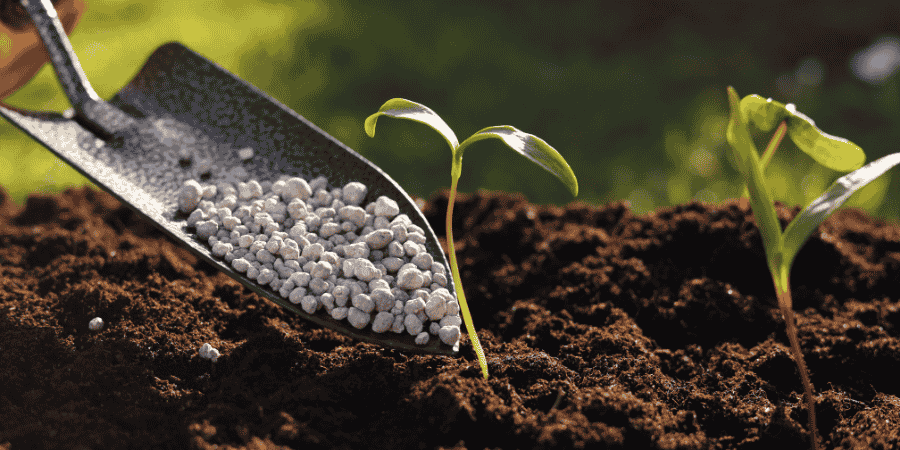
- For granular fertilizers, sprinkle the product evenly around the tree’s drip line (the edge of the canopy). Avoid placing fertilizer directly against the trunk.
- If you use liquid fertilizers, mix the product as the label says. Then, spread it evenly on the soil surface.
- Gently scratch the fertilizer into the top inch of soil to promote absorption.
- Water the tree deeply after fertilization to distribute the nutrients and prevent root damage.
Always wear gloves and follow safety precautions when handling and applying fertilizers.
Monitoring and Adjusting Fertilization
Regularly assess your fig tree’s health and growth to determine if your fertilization plan works. Here’s what to look for:
- Healthy, green leaves with no signs of yellowing or nutrient deficiencies
- Steady growth and development of new branches and leaves
- Consistent fruit production (when age-appropriate)
Change your fertilizer type, amount, or how often you use it if you see signs of nutrient problems. Look for leaf bruiseor unusual growth patterns.
Keeping a fertilization log or journal can help you track your tree’s progress and make informed decisions.
Additional Tips to Grow Healthy Fig Trees
Along with proper fertilization, other factors also affect the health and productivity of your potted fig trees:
- Choose a large pot. Make sure your fig tree has enough space to grow. Select a pot that is at least 18 to 24 inches wide and deep.
- Make good drainage a priority. Use a potting mix that drains well. Also, make sure your pot has enough drainage holes to avoid waterlogging.
- Fill your pot with quality soil: Choose a nutrient-rich, loamy potting mix for fruit trees.
- Give your fig tree plenty of sun. Fig trees grow best in full sun. Place your pot where it gets at least 6-8 hours of direct sunlight each day.
- Avoid excess water: While fig trees need consistent moisture, overwatering can lead to root rot. Allow the top inch of soil to dry between waterings.
- Mulch around your fig tree. Use a layer of organic mulch. This helps keep moisture in the soil. It also regulates soil temperature and stops weeds from growing.
- Prune in early spring: Remove dead, damaged, or crossing branches to promote healthy growth and improve fruit yield.
- Bring your fig inside before a hard freeze. If you live in a cold area, protect your potted fig tree. Move it indoors or to a sheltered spot before the first frost.
Enjoy Your Fig Harvests
By using this guide to the best fertilizer for fig trees in pots, you will enjoy a great harvest of homegrown figs.
Remember to pay attention to your tree’s needs. Change your fertilization plan if needed. Give your fig tree the best care possible.
As you begin this exciting journey, share your experiences with other fig tree lovers. Talk about your successes and challenges.
Gardening is a process of constant learning. By sharing knowledge and tips, we can all become better caretakers of these amazing fruit trees.
So roll up your sleeves, grab your favorite fertilizer, and get ready to nurture your potted fig tree to its fullest potential.
With dedication and the proper techniques, you’ll soon be savoring the sweet rewards of your labor. Happy fig growing!