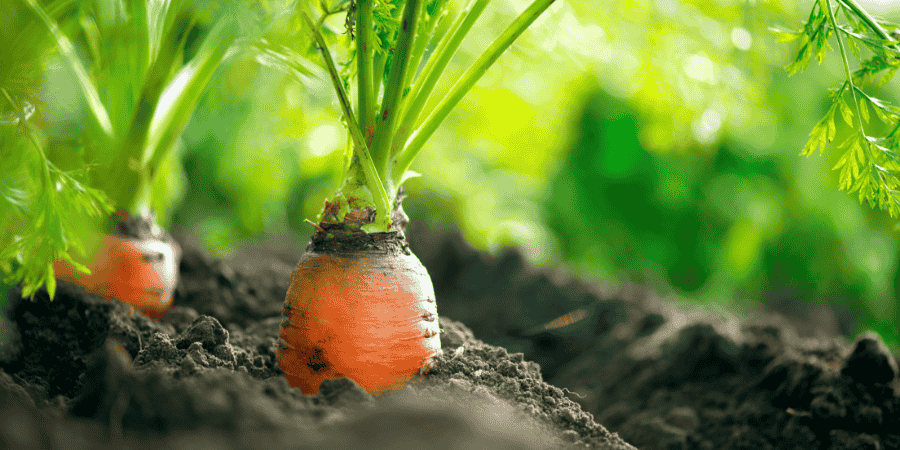
Picture this: It’s a crisp autumn morning, and you’re standing in your garden, gently brushing away the soil to reveal a vibrant orange carrot. As you pull it from the ground, you smell the unique earthy scent of homegrown carrots and vegetables.
Growing your own carrot seedlings is immensely satisfying. They taste sweeter and crunchier than store-bought ones. The journey from seed to harvest connects you to a long tradition of vegetable gardening.
I remember my first attempt at growing carrots. They came out looking more like twisted tree roots than the straight veggies I had imagined.
Over the years, I have learned from other gardeners. I found the secrets on how to grow sweet carrots.These carrots would make any gardener proud.
In this guide, I’ll share everything I’ve learned to help you achieve carrot-growing success in your own backyard.
Growing your own carrots provides several key benefits:
| Benefit | Description |
| Cost Savings | A single packet of baby carrot seeds costs less than a bag of carrots and can yield dozens of pounds of produce |
| Superior Taste | Home-grown carrots are typically sweeter and more flavorful than store-bought varieties |
| Nutritional Value | Fresh-picked carrots retain more nutrients than those that have been stored and shipped |
| Carrot Variety Choice | You can grow unique varieties not found in grocery stores |
| Educational Value | Growing carrots teaches children about food production and healthy eating |
You May Also Like: Best Tomatoes to Grow in Central Texas: 4 Top Varieties for Success
Requirements: How to Grow Sweet Carrots
Before diving into soil preparation and planting, it’s crucial to understand what makes carrots thrive.
Think of carrots as underground architects – they need the right building conditions to create their perfect home.
Just as you wouldn’t build a house on shaky ground, carrots need specific conditions to develop their sweet, crisp texture and straight growth pattern.
Success in growing sweet carrots depends on meeting their specific growing requirements:
Optimal Soil Conditions
The secret to growing sweet carrots lies in the soil preparation. Carrots need:
- Loose, well-draining soil at least 12 inches deep
- Sandy loam texture
- pH between 6.0 and 6.8
- Rich in organic matter but not freshly manured
- Free from stones and debris
Temperature and Climate Considerations
Carrots grow best under these conditions:
| Growth Stage | Temperature Range |
| Germination | 55-75°F |
| Growing | 60-70°F |
| Root Development | 60-65°F |
Light Requirements
- Full sun (6-8 hours daily)
- Partial shade tolerated in hot climates
- Even exposure for straight growth
Space Requirements
Proper spacing ensures optimal growth:
| Plant Spacing | Measurement |
| Between Seeds | 2-3 inches |
| Between Rows | 12-18 inches |
| Soil Depth | 12-18 inches |
| Bed Width | 3-4 feet |
Selecting the Right Sweet Carrot Varieties
Not all carrots are created equal, and choosing the right variety for your garden makes a significant difference.
This section helps you learn about different types of carrots. Some are short and sturdy, great for container gardening. Others are long and elegant, perfect for deep garden beds.
We will look at colorful choices that make your garden more interesting. We will also discuss disease-resistant plants that thrive in tough conditions.
Our recommendations will help you select the best varieties for year-round growing.
Short-Rooted Varieties (3-4 inches)
Perfect for shallow or rocky soil:
- Thumbelina
- Paris Market
- Romeo
- Oxheart
Long Varieties (6-10 inches)
Ideal for deep, loose soil:
- Imperator
- Danvers
- Nantes
- Chantenay
Rainbow Varieties
Add color to your garden:
- Purple Haze
- Cosmic Purple
- Solar Yellow
- Atomic Red
Disease-Resistant Varieties
- Bolero F1
- Maverick F1
- SugarSnax 54
- Newcastle
Soil Preparation Guide
Proper soil preparation is perhaps the most crucial factor in growing straight, sweet carrots.
This comprehensive section walks you through soil testing, pH adjustment, and amendment techniques.
Learn how to create the perfect growing medium by removing obstacles and achieving optimal soil texture.
We provide specific ratios and measurements to help you create the ideal growing environment for your carrots.
Proper soil preparation is crucial for sweet, straight carrots.
Soil Testing
Test your soil for:
- pH level
- Nutrient content
- Organic matter
- Texture
- Drainage
Soil Amendment Techniques
| Amendment | Purpose | Application Rate |
| Compost | Improve structure | 2-3 inches surface layer |
| Sand | Improve drainage | 20-30% by volume |
| Lime | Raise pH | According to test |
| Sulfur | Lower pH | According to test |
Bed Preparation Steps
- Remove all vegetation and debris
- Double dig to 12-18 inches deep
- Break up soil clumps
- Level the surface
- Create raised rows if needed
Planting Process
Timing and technique are everything for planting carrots. This section provides detailed guidance on when to plant carrots based on your climate zone, proper seed spacing, and planting depth.
We look at the pros and cons of different planting methods. This includes succession planting for carrots to ensure a steady harvest.
The information here will help you avoid common planting pitfalls and establish healthy carrot beds.
Success starts with proper planting techniques.
Timing by Climate Zone
| Zone | Spring Planting | Fall Planting |
| 3-5 | April-May | July |
| 6-7 | March-April | August |
| 8-10 | February-March | September |
Planting Guidelines
- Sow seeds 1/4 inch deep
- Space seeds 1 inch apart
- Rows 12-18 inches apart
- Thin to 2-3 inches when seedlings reach 2 inches
Essential Care and Maintenance
Once your carrots are in the ground, proper care ensures optimal growth. This extensive section covers all aspects of carrot maintenance, from watering schedules to pest control.
Learn about thinning techniques, fertilization requirements, and strategies for managing weeds.
We also discuss disease prevention methods to protect your crop throughout the growing season.
Regular maintenance ensures healthy growth and sweet carrots.
Watering Schedule
- Keep soil consistently moist
- Water deeply once weekly
- Avoid overhead watering
- Use drip irrigation when possible
Fertilization Program
| Growth Stage | Fertilizer Type | Application Rate |
| Planting | 5-10-10 | 2 lbs per 100 sq ft |
| Growing | Balanced liquid | Every 4-6 weeks |
| Pre-harvest | Low nitrogen | As needed |
Pest Control Methods
Natural pest control options:
- Companion planting with onions
- Floating row covers
- Neem oil spray
- Beneficial nematodes
Common Problems and Solutions
Even experienced gardeners encounter challenges with carrot growing. The troubleshooting section addresses common issues like forked roots, pest infestations, and growth problems.
We offer practical solutions and preventive steps for every problem. This helps you keep your carrot beds healthy and productive all season long.
Common Issues and Fixes
| Problem | Cause | Solution |
| Forked roots | Rocky soil | Better soil preparation |
| Green shoulders | Exposed tops | Cover with mulch |
| Splitting | Irregular watering | Consistent moisture |
| Stunted growth | Compacted soil | Proper bed preparation |
Harvesting Your Carrots
Knowing when and how to harvesting carrots are crucial for optimal flavor and storage. This section explains how to determine harvest readiness, proper harvesting techniques, and timing considerations.
We discuss essential tools and preparations needed for a successful harvest, ensuring your carrots remain in perfect condition
Proper harvesting ensures the best flavor and storage life.
Harvest Readiness Signs
- Shoulder diameter 1/2 to 3/4 inch
- Bright color development
- Tops of roots visible
- 70-80 days after planting
Harvesting Tools
- Garden fork
- Trowel
- Harvest basket
- Clean pruners
- Garden hose
Storage and Preservation
Proper storage extends the life of your harvest significantly. This section details various storage methods, from short-term refrigeration to long-term carrot root cellar techniques.
Learn about different preservation methods, including freezing and dehydrating, to enjoy your carrots throughout the year.
We include specific temperature and humidity requirements for optimal storage conditions.
Proper storage maintains quality and extends shelf life.
Storage Methods
| Method | Temperature | Humidity | Duration |
| Refrigerator | 32-40°F | 90-95% | 4-6 weeks |
| Root cellar | 32-40°F | 90-95% | 4-6 months |
| Freezer | 0°F | N/A | 12 months |
Advanced Growing Tips
For gardeners ready to take their carrot growing to the next level, this section provides advanced techniques and strategies.
We explore companion planting, season extension methods, and specialized growing techniques for containers and raised beds.
These advanced tips help you maximize your harvest and improve carrot quality.
Take your carrot growing to the next level.
Companion Planting
Best companions:
- Onions
- Leeks
- Rosemary
- Sage
- Tomatoes
Avoid planting near:
- Dill
- Parsley
- Queen Anne’s Lace
Container Growing
Requirements:
- Minimum 12 inches deep
- Good drainage
- Quality potting mix
- Regular feeding
- Consistent moisture
Recipe and Usage Ideas
Carrots are versatile vegetables with countless culinary applications. This section provides creative ideas for using your harvest, from fresh serving suggestions to preservation methods.
We offer tips for using often-overlooked parts of carrots, like the greens. We also provide ideas for using your crop from garden to table.
Make the most of your harvest.
Fresh Serving Ideas
- Crunchy snacks
- Salad additions
- Juice blends
- Vegetable platters
- Lunch box treats
Storage Preparations
- Wash thoroughly
- Remove tops
- Air dry completely
- Sort by size
- Package appropriately
Seasonal Growing Calendar
Success in carrot growing requires proper timing throughout the year. This section provides a detailed calendar of carrot-growing activities, from spring planting through winter preparation.
Learn how to plan your garden for continuous harvests and maintain optimal growing conditions in every season.
Plan your carrot growing year-round.
Season-by-Season Tasks
| Season | Tasks |
| Spring | Soil preparation, first planting |
| Summer | Maintenance, succession planting |
| Fall | Main harvest, storage preparation |
| Winter | Planning, seed ordering |
Expert Tips and Common Mistakes
Learn from experienced growers and avoid common pitfalls with this collection of professional insights and lessons learned.
This section offers time-saving tips, ways to use resources better, and sustainable practices. These will help you become a more efficient and successful carrot grower.
Learn from experience for better results.
Professional Insights
- Start with small plantings
- Keep detailed records
- Practice crop rotation
- Save best seeds
- Learn local conditions
Common Mistakes to Avoid
- Overcrowding plants
- Inconsistent watering
- Poor soil preparation
- Harvesting too late
- Improper storage
Conclusion
Growing sweet carrots is more than just planting seeds and waiting for harvest. Connecting with nature and understanding the rhythms of your garden is essential. Also, it’s about the joy of growing your own food.
Whether you are a new gardener or an experienced one, this guide will help you grow the sweetest and crunchiest carrots.
Extra Tips For Beginners:
- Choose an appropriate growing area
- Test and prepare soil
- Select suitable varieties
- Gather necessary supplies
- Start with a small plot
Remember, successful carrot growing is a journey of learning and improvement. Join local organic gardening groups, share experiences, and keep learning from each season’s successes and challenges.