Growing blueberries in containers is one of the easiest ways for home gardeners to enjoy full harvests—even if you don’t have a yard. But there’s one big catch: potted blueberries rely on you for 100% of their nutrition.
Unlike in-ground shrubs, they can’t spread roots to search for minerals, nitrogen, or micronutrients.
This is why choosing the right fertilizer and applying it at the right time is the difference between a weak, yellow-leaved plant and a pot overflowing with fat, sweet blueberries.
In this guide, you’ll learn:
- The nutrients blueberries really need (the science explained simply)
- How to read NPK ratios for container-grown blueberries
- How to know whether your plant is underfed or overfed
- The difference between organic vs synthetic vs slow-release vs liquid fertilizers
- Exact month-by-month feeding schedule for potted blueberries
- Amazon-ready product recommendations
- Step-by-step application methods
- Mistakes to avoid
This is your complete blueberry fertilizing manual — for beginners, intermediates, and pros.
Table of Contents
What Do Potted Blueberries Need Nutritionally? (The Science of Blueberry Fertility)
Before choosing any fertilizer, you must understand what blueberries need.
Blueberries are unusual compared to most fruiting plants. They prefer:
- Very acidic soil (pH 4.5–5.5)
- Low to moderate nitrogen — but the correct form
- Low phosphorus
- High potassium
- High levels of iron, manganese, and magnesium
- Ammonium-based nitrogen (NH₄⁺) instead of nitrate nitrogen (NO₃⁻)
Let’s break down why this matters.
Why Potted Blueberries Need More Frequent Feeding
Growing blueberries in pots is convenient — but it also comes with unique challenges:
1. Limited Root Space
The plants have a small soil volume, which means nutrients run out quickly.
2. Faster Leaching
Each time you water, nutrients flush through and drain out, especially nitrogen and sulfur.
3. Low-Cation Exchange Capacity of Blueberry Soil
Blueberry mixes are typically peat-, bark-, or coir-based.
These soils don’t hold nutrients well, especially nitrogen and magnesium.
4. Higher Acidity Requirement
A pH of 4.5–5.5 makes certain nutrients less available unless the soil is carefully managed.
💡 Visual Cue:
Think of your blueberry pot like a hydroponic bucket — it requires frequent, precise feeding for optimal fruit production.
The Exact NPK Ratio Blueberries Prefer
Blueberries are not heavy feeders. But they do require the right nutrient balance to grow strong canes and produce large berries.
Ideal NPK Ratios for Containers
The best NPK ranges for potted blueberries:
- 4-3-4 — balanced, safe, ideal for spring
- 3-1-2 — good for leaf & root development
- 10-5-4 — strong but safe for fruiting shrubs
- 30-10-10 — ONLY for experienced growers using acid-loving formulas
Why Ammonium Nitrogen Matters
Blueberries prefer:
✔ Ammonium sulfate (NH₄⁺)
✔ Ammonium phosphate
✔ Urea-based nitrogen (because it converts into ammonium)
They hate nitrate nitrogen (NO₃⁻) because:
- It raises soil pH
- It reduces iron uptake
- It causes leaf chlorosis
- It stresses roots in acidic conditions
Visual Cue:
❌ Avoid fertilizers that list nitrate or calcium nitrate.
✔ Choose products listing ammonium sulfate, urea, or “for acid-loving plants.”
Signs Your Potted Blueberries Need Fertilizer
Diagnosis is crucial. You never want to blindly fertilize blueberries — they are sensitive plants, and mistakes can be costly.
Below are the most common nutrient-related symptoms.
Nitrogen Deficiency (Most Common in Potted Plants)
Symptoms:
- Leaves turn light green or pale yellow
- Growth is small, weak, and shrubby
- Older leaves drop early
- Berries are tiny
This usually happens in:
- Old potting mix
- Peat-based mixes without added fertilizer
- Containers that are watered heavily
Iron and Magnesium Deficiency (Chlorosis)
This is the number one issue for container blueberries.
Classic signs:
- Leaves turn bright yellow
- Veins stay dark green
- New leaves are affected first
- Growth stalls
Why does this happen?
Usually because:
- The soil pH rose above 5.5
- Fertilizers didn’t include micronutrients
- Tap water increased alkalinity
Visual Cue:
Yellow leaves with green veins = 100% a pH or micronutrient issue, not nitrogen.
Over-Fertilizing Symptoms
This can kill blueberries faster than under-fertilizing.
Symptoms:
- Leaf tip burn
- Crispy brown edges
- Sudden wilting (salt stress)
- White salt crust on soil
- Stunted roots
Immediate Fix:
Flush the soil with 3× pot volume of water and stop feeding for 4 weeks.
Best Types of Fertilizer for Blueberries in Pots

Not all fertilizers are created equal — and some should never be used on blueberries.
Here’s the breakdown.
1. Acid-Loving Plant Fertilizers (The Most Reliable Option)
These fertilizers are formulated specifically for plants that thrive in acidic soils.
What they do:
- Lower or maintain acidic pH
- Provide ammonium-based nitrogen
- Improve micronutrient availability
- Support fruiting
Examples:
- Espoma Holly-tone (organic)
- Miracle-Gro Miracid (synthetic, strong)
- Down to Earth Acid Mix
This is the most “foolproof” method for container growers.
2. Organic Fertilizers
Organic fertilizers release nutrients slowly and gently.
Popular organic options:
- Fish emulsion (quick N boost)
- Kelp/seaweed (micronutrients)
- Cottonseed meal (acidic)
- Blood meal (strong N source)
- Bone meal (not recommended — too much P)
Pros:
✔ Improve microbial life
✔ Safe for beginners
✔ Maintain long-term acidity
Cons:
— Nutrients released slowly
— Harder to controlthe exact NPK
— Not ideal for correcting deficiencies quickly
3. Slow-Release Granular Fertilizers
Examples: Osmocote Smart-Release
Benefits:
- Nutrient release for 3–4 months
- Good for busy gardeners
- Consistent feeding
Risks:
- Can raise pH over time
- Not suitable unless you monitor acidity weekly
4. Liquid Fertilizers (Fast-Acting)
Best during:
- Early growth spurts
- Pre-flowering
- Fruiting stage
Benefits:
- Immediate absorption
- Easy to adjust dosage
- Perfect for correcting deficiencies
Drawbacks:
- Needs frequent application
- Can cause salt buildup if overused
5. Fertilizers to Avoid
Never use:
❌ High-phosphorus fertilizers (like 10-20-10)
❌ Lime or dolomite (raises pH dramatically)
❌ Wood ash
❌ Mushroom compost
❌ Fertilizers listing “nitrate nitrogen”
❌ Anything with calcium nitrate
Exact Fertilizer Schedule for Blueberries in Pots (Month-by-Month Guide)
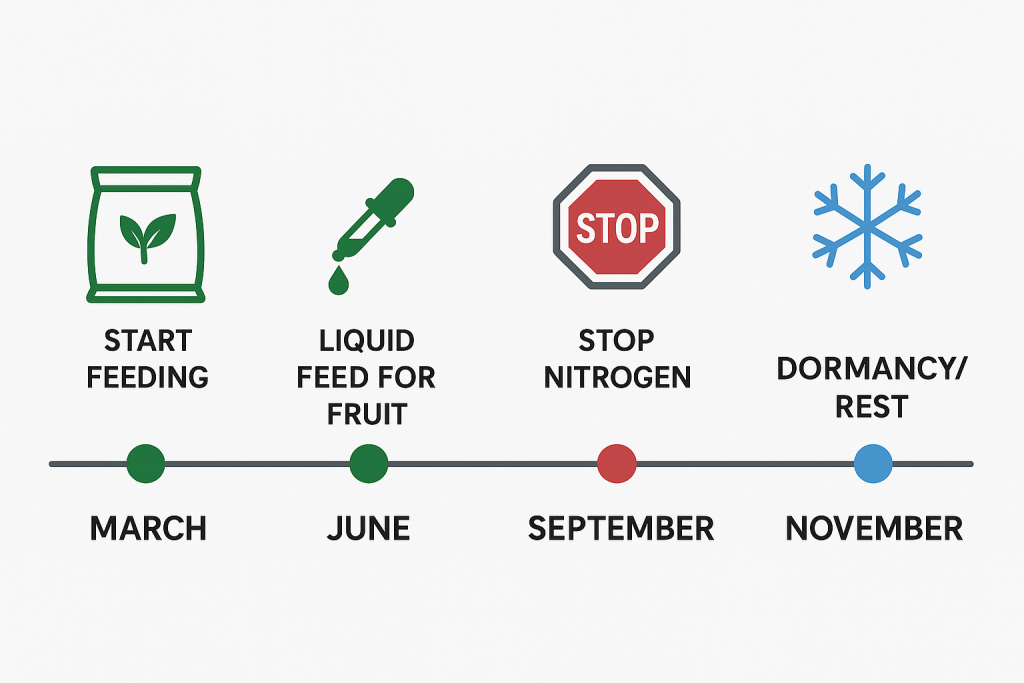
Blueberries in containers are grown in a highly controlled environment. That’s an advantage—but it also means that every nutrient they get comes directly from you. A precise fertilizing schedule ensures strong canes, deep-green leaves, and large, sweet berries.
Below is a complete annual feeding calendar, designed specifically for potted blueberries.
You can choose between:
✔️ Organic Feeding Path
✔️ Synthetic Feeding Path (fast & precise)
✔️ Hybrid Path (best for yield + soil health)
But no matter which you choose, stick to the timings below.
Visual Overview: Blueberry Feeding Calendar
| Month | Growth Stage | What to Apply |
| February | Dormant | pH check, soil prep |
| March | Bud Swell | First fertilizer application |
| April | Leaf Growth | Nitrogen boost |
| May | Blooming | Extra potassium |
| June | Fruit Set | Liquid feed every 2 weeks |
| July | Harvest | Maintain N, stop P boost |
| August | Late Summer | Light feeding only |
| September | Hardening Off | Reduce fertilizer |
| October–January | Dormant | No NPK, only pH care |
Early Season Feeding (February–April)
February — Preparation Month
Blueberries are dormant, so don’t fertilize yet.
Do this instead:
- Check soil pH (target 4.5–5.2)
- Refresh top 2–3 inches of soil with:
- Pine bark fines
- Peat moss
- Compost (acidic only — NOT mushroom compost)
If pH is too high (>5.5):
Apply Espoma Soil Acidifier (elemental sulfur):
- ½ tablespoon per gallon of soil
- Mix lightly into the topsoil
⏳ Note: Sulfur takes 3–6 weeks to activate.
March — First Fertilizer Application (Most Important)
This feeding sets the foundation for the entire season.
Organic Method
Use Espoma Holly-tone
- 1 tablespoon per gallon of soil
- Work into upper 1–2 inches
- Water deeply
Synthetic Method
Use Miracle-Gro Miracid (30-10-10)
- Mix ½ teaspoon per gallon of water
- Apply every 2 weeks in March
Hybrid Method (Strongest Results)
- Apply ¼ dose of Holly-tone
- Apply Miracid once mid-month
Why this matters:
Blueberries start pulling nitrogen hard as soon as buds swell. Missing the March feeding means weak leaf growth and tiny berries.
Mid-Spring Feeding (April–May)
April — Vigorous Leaf Growth
This is when blueberries demand the most nitrogen.
Organic Options
Use Dr. Earth Acid-Lovers (3-4-3)
Dose:
- 1 tablespoon per gallon of soil
- Scratch into the surface
- Water thoroughly
Synthetic Option
Use Miracid
- ½ teaspoon per gallon
- Apply every 2 weeks
Signs You Fed Correctly:
- Leaves turn dark blue-green
- Canes grow quickly
- New stems are flexible but strong
May — Blooming & Pre-Fruit Development (High Potassium Needed)
Blueberries now shift from leaf production to flower/berry formation.
They need more potassium (K) for:
- Flower stability
- Fruit size
- Fruit sweetness
Organic Path
Use kelp meal or liquid seaweed extract
- Dose: 1 tablespoons per gallon of soil (kelp)
- OR 1 tablespoon per gallon of water (liquid kelp)
Great options:
- Neptune’s Harvest Seaweed
- Maxicrop Liquid Kelp
Synthetic Path
Use a fertilizer closer to 10-5-10 or 30-10-10.
(Miracid still works because blueberries love ammonium sulfate.)
Apply:
- ½ teaspoon per gallon of water
- Every 2 weeks
Hybrid Path (Recommended)
- Apply kelp extract early in the month
- Apply Miracid mid-month
Summer Feeding (June–August)
June — Berry Swelling Stage (Most Important Fertilizing Month for Yield)
Blueberries require a steady supply of nutrients during fruit swell.
Organic Method
Use Liquid fish fertilizer (5-1-1)
- 1 tablespoon per gallon of water
- Apply every 10–14 days
Add liquid kelp for micronutrients.
Synthetic Method
Use Miracid
- ¼–½ teaspoon per gallon
- Every 2 weeks
Hybrid Method
- Fish fertilizer +
- Miracid at ¼ strength
What You Should See:
- Large, plump berries
- Zero leaf yellowing
- Strong cane growth
If berries are small → add more potassium (kelp)
If leaves turn pale → increase nitrogen (Miracid or fish)
July — Harvest Month
Plants still need nutrients, but don’t push nitrogen too hard.
Apply:
- A light dose of fish fertilizer
- OR ¼ strength Miracid
- OR kelp extract only (if growth is vigorous)
Stop heavy nitrogen feeding in July to prevent leggy late-season growth.
August — Light Feeding Only
Blueberries begin preparing for dormancy.
Apply (Optional):
- Liquid kelp every 2–3 weeks
- OR nothing, if the plant looks healthy
Autumn Feeding (September–October)
September — Hardening Off
No more nitrogen; only micronutrients.
Apply:
- Liquid kelp
- Or no fertilizer
Goal: Help canes mature and prepare for winter.
October — Final pH Check
Apply elemental sulfur if needed to prepare the soil for next spring.
Dosage:
- ½ tablespoon per gallon of soil
- Only if pH > 5.5
Winter (November–January) — No Fertilizer
Blueberries rest. Feeding them now can damage the plant.
Tasks:
- Keep soil slightly moist
- Protect the pot from freezing
- Do NOT fertilize
- Check pH mid-winter
Best Fertilizers for Blueberries in Pots (Amazon-Ready Recommendations)
Not all fertilizers work for blueberries — and even fewer are suitable for container-grown blueberries.
These picks are chosen because they check all the essential boxes:
✔ Ammonium-based nitrogen
✔ Acid-loving formulation
✔ pH-safe (won’t push soil alkaline)
✔ Correct NPK ratios
✔ Suitable for containers (no excess phosphorus)
✔ Trusted by commercial berry growers
Below is the full list, grouped by category, with use-case explanations so readers can choose the right product for their plant’s stage.
Best Overall Fertilizer for Potted Blueberries (Top Pick)
⭐ 1. Miracle-Gro Miracid (30-10-10) — Best for Fast Growth
Best for:
- Young plants
- Plants with yellow leaves
- Plants in peat-based mixes
- Growers who want quick results
Why it’s #1:
Miracid is one of the few fertilizers that provides ammonium sulfate, the form of nitrogen blueberries prefer.
It also delivers the fast correction of deficiencies — especially nitrogen and iron — that container plants often suffer from.
Benefits:
- Quickly deepens leaf color
- Supports strong cane growth
- Perfect for correcting spring deficiencies
- Highly soluble (container safe)
Use This If:
You want the fastest, strongest growth and don’t mind feeding every 2–3 weeks.
Best Organic Fertilizer for Blueberries in Pots
⭐ 2. Espoma Holly-tone (4-3-4)
Best for:
- Organic gardeners
- Containers with worm castings or compost
- Long-term soil health
- Maintaining acidity
What makes it great:
Holly-tone includes organic nitrogen from cottonseed meal, feather meal, and fish meal — all excellent for acid-loving plants.
It also contains microbes and slow-release compounds that keep soil alive.
Benefits:
- Slow, gentle feeding
- Improves flavor and sweetness
- Perfect for people avoiding chemicals
- Helps stabilize acidic pH
Use This If:
If you prefer organic gardening and want long-term soil improvement.
Best for Big Berry Size & High Yield
⭐ 3. Neptune’s Harvest Seaweed + Fish Fertilizer (2-3-1)
Best for:
- Improving berry size
- Boosting micronutrients
- Enhancing sweetness
- Summer feeding
Why it works:
Blueberries respond extremely well to seaweed because it contains natural plant hormones that increase fruit size and stress tolerance.
Benefits:
- Makes berries larger and sweeter
- Great during fruit swell
- Provides natural K & micronutrients
Use This If:
Your blueberries set fruit, but the berries stay small.
Best Slow-Release Fertilizer (Low Maintenance Option)
⭐ 4. Osmocote Plus (15-9-12)
Best for:
- Busy gardeners
- Vacation periods
- Large pots
- Non-organic slow feeding
Warning:
Osmocote can slowly raise the pH over time, so ONLY use it if you monitor the pH monthly.
Benefits:
- 4 months of feeding
- Very easy to use
- Great for people who forget to fertilize
Use This If:
You want the lowest-effort fertilizing routine.
Best Budget Fertilizer for Blueberries in Pots
⭐ 5. Jobe’s Organics Acid-Lovers Fertilizer (4-4-4)
Best for:
- Affordable organic feeding
- Small containers
- Home gardeners on a budget
Benefits:
- Cheap and effective
- Fully organic
- Good micronutrient profile
- Safe for all container sizes
Use This If:
You want low cost with good performance.
Best for Fixing Yellow Leaves (Iron + Magnesium Deficiency)
⭐ 6. Southern Ag Chelated Liquid Iron
Best for:
- Chlorosis
- Yellowing leaves with green veins
- High-pH emergencies
What It Does:
Chelated iron bypasses pH issues and goes straight into plant tissue for fast correction.
Benefits:
- Fixes yellow leaves in 48–72 hours
- Works regardless of soil pH
- Ideal rescue treatment
Use This If:
Your blueberries have yellow leaves NOW, and you need a fast solution.
Best for Low Soil pH Maintenance
⭐ 7. Espoma Soil Acidifier (Elemental Sulfur)
Best for:
- Maintaining pH between 4.5–5.5
- Counteracting alkaline tap water
- Pots older than 1 year
Why Blueberries Need This:
Sulfur is converted to sulfuric acid via soil bacteria, gently lowering soil pH over weeks.
Benefits:
- Very effective
- Organic
- Slow and steady pH control
Use This If:
Your soil pH keeps rising above 5.5.
Best Liquid Fertilizer for Quick Seasonal Boosts
⭐ 8. Alaska Fish Fertilizer (5-1-1)
Best for:
- Spring growth
- Organic nitrogen boost
- Recovery from stress
Benefits:
- Very fast nitrogen release
- Organic
- Blueberries respond strongly to it
Use This If:
Your plant looks weak at the start of spring.
Best Potassium Booster for Sweet Berries
⭐ 9. Maxicrop Liquid Seaweed Extract
Best for:
- Improving sweetness
- Boosting berry size
- Micronutrient support
- Reducing stress from heat or drought
Benefits:
- Incredible for fruit quality
- Contains natural growth hormones
- Completely safe (no burn)
Use This If:
Your berries are small or bland.
Best Combination Pack for Blueberry Enthusiasts
⭐ 10. Neptune’s Harvest Fish + Seaweed Combo
Best for:
- Full-season feeding
- People who want a simple routine
- Large container gardens
Benefits:
- Balanced feeding
- Strong vegetative growth
- Excellent fruit set and sweetness
- Supports overall plant health
Use This If:
You want a system that works from spring to harvest.
Comparison Table: Best Blueberry Fertilizers
| Product | Type | NPK | Best For | |
|---|---|---|---|---|
| Miracle-Gro Miracid Synthetic | Synthetic | 30-10-10 | Fast growth, correcting leaf deficiencies | Check Price |
| Espoma Holly-tone Organic | Organic | 4-3-4 | Long-term soil health, acid-loving plants | View Deal |
| Neptune’s Harvest Fish & Seaweed Liquid | Organic Liquid | 2-3-1 | Bigger berries, improved sweetness | See Price |
| Osmocote Plus Slow-Release | Slow-release | 15-9-12 | Low-maintenance growers | Check Price |
| Jobe’s Organics Acid-Lovers Organic | Organic | 4-4-4 | Budget-friendly organic feeding | Buy Now |
| Southern Ag Chelated Iron | Micronutrient | — | Fixing yellow leaves (chlorosis) | Check Price |
| Espoma Soil Acidifier | pH control | — | Lowering soil pH safely | View Product |
| Alaska Fish Fertilizer | Organic | 5-1-1 | Spring growth boost | Check Price |
| Maxicrop Liquid Seaweed | Organic Liquid | 0-0-1 | Fruit quality and stress resistance | See Price |
Which Fertilizer Should YOU Use? (Quick Selector Guide)
If your plant is young:
➡️ Miracid or Alaska Fish Fertilizer
If your plant is organic only:
➡️ Holly-tone or Dr. Earth Acid-Lovers
If your berries are small:
➡️ Maxicrop Seaweed Extract
If the leaves are yellow:
➡️ Southern Ag Chelated Iron
If your soil pH keeps climbing:
➡️ Espoma Soil Acidifier
If you want a set-and-forget system:
➡️ Osmocote Plus
If you want max yield & sweetness:
➡️ Neptune’s Harvest Fish + Seaweed combo
Troubleshooting Nutrient Problems in Potted Blueberries (Fixes + Product Remedies)
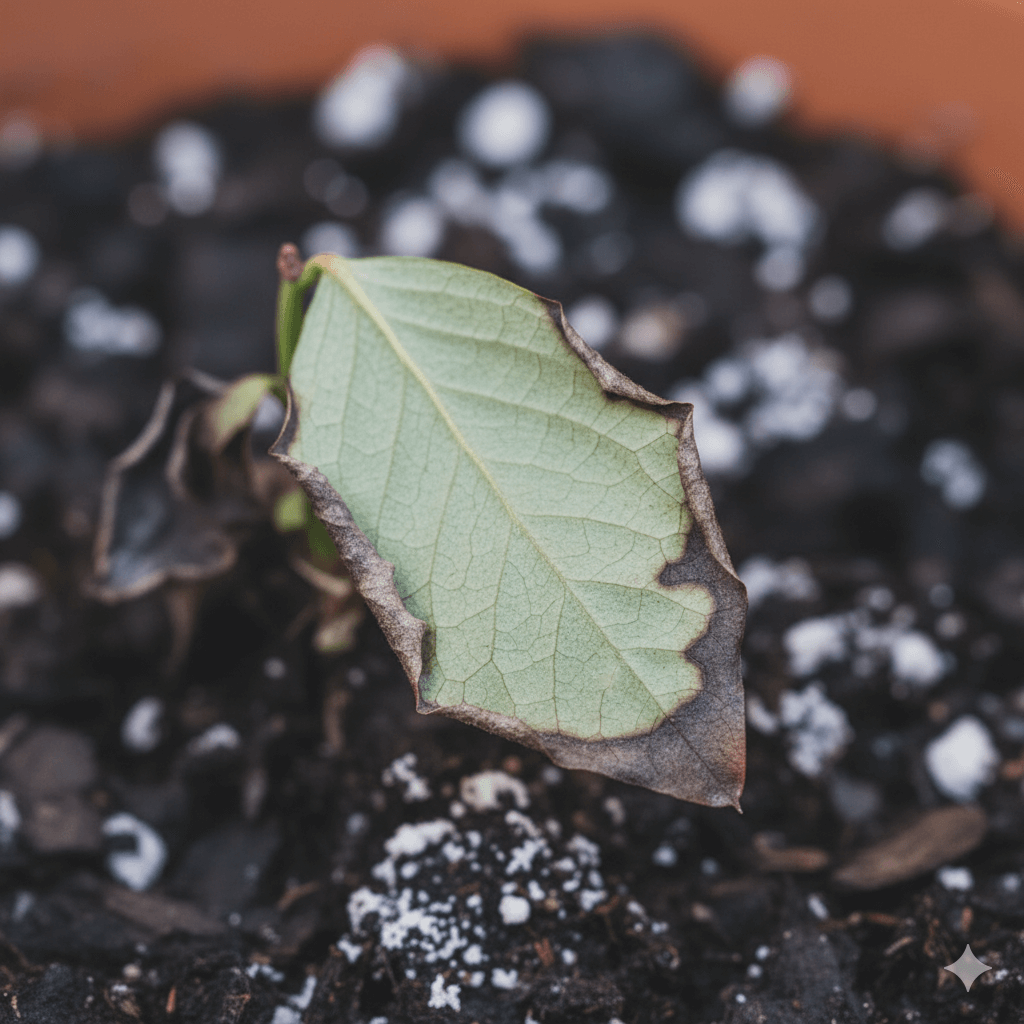
Even with the right fertilizer schedule, blueberries in containers can still show nutrient stress because pots dry out faster, lose acidity quickly, and have no access to natural soil buffering.
This section helps readers diagnose issues instantly and fix them with clear, actionable steps + Amazon-ready product recommendations.
Common Nutrient Problems in Potted Blueberries (And Their Exact Fixes)
Blueberries can be dramatic… but the good news?
Almost every problem falls into 5 categories: nitrogen deficiency, iron deficiency, magnesium deficiency, potassium deficiency, or salt buildup.
Below is an authoritative, easy-to-skim breakdown.
1. Nitrogen Deficiency (Very Common in Potted Blueberries)
Symptoms
- Pale green or yellowish leaves
- Thin, weak new growth
- Small leaf size
- Slowed plant growth
- Fewer berries forming
Cause
Blueberries use nitrogen heavily in spring and early summer. Containers lose nitrogen faster due to:
- Frequent watering (leaching)
- Organic fertilizers break down slowly
- High rainfall periods
- Incorrect potting mix
Best Fix
Apply a blueberry-specific, acidic nitrogen fertilizer.
Recommended Product
✔️ Down to Earth Acid Mix 4-3-6 (Amazon, English language)
Fast but steady nitrogen release + acidifying effect.
How to use:
- Apply 1–2 tbsp per gallon of soil
- Scratch into the top 2 inches
- Water deeply
Quick Tip
💡 If leaves improve within 7–10 days, nitrogen is the issue.
2. Iron Deficiency (The #1 Cause of Yellow Leaves)
Symptoms
- New leaves turn bright yellow
- Veins remain green (classic interveinal chlorosis)
- Growth slows
- Often happens after repotting or after adding high-pH water
Cause
Iron becomes unavailable when the pH rises above 5.5.
Blueberries may have enough iron — they just can’t absorb it.
Best Fix
- Lower pH immediately
- Apply a chelated iron product
Recommended Product
✔️ Southern Ag Chelated Liquid Iron (Amazon, English)
Effective even when pH is drifting upward.
How to use:
- Mix 1–2 tsp per gallon of water
- Apply as a soil drench, NOT a foliar spray
What to expect
🌿 Green color returns to the leaves in 48–96 hours.
3. Magnesium Deficiency (Often Confused With Iron)
Symptoms
- Yellowing begins at leaf edges
- Green interior remains
- Older leaves are affected first
- Red or purple tints in cool weather
Cause
- Highly acidic soil can reduce Mg uptake
- Excess potassium fertilizers
- Softened tap water
Best Fix
Add a small amount of magnesium sulfate.
Recommended Product
✔️ Epsom Salt (USP Magnesium Sulfate, Amazon)
Cheap, effective, widely available.
How to use:
- Mix 1 tbsp per gallon
- Water the soil once
- Repeat monthly only if symptoms continue
⚠️ Do NOT overuse — too much Mg interferes with potassium uptake.
4. Potassium Deficiency (Less Common but Impacts Berries)
Symptoms
- Leaf tips turn brown
- Edges appear scorched
- Small berries
- Poor fruit sweetness
Cause
- Container soil is low in organic potassium
- Over-fertilizing with nitrogen
- High rainfall leaches nutrients
Best Fix
Apply an organic fertilizer with good potassium levels.
Recommended Product
✔️ Espoma Organic Berry-Tone 4-3-4 (Amazon, English)
Provides balanced potassium and long-lasting nutrients.
Recovery Time
🍓 Berries for the current year won’t fully recover, but new growth will be healthier.
5. Fertilizer Salt Buildup (aka “Nutrient Burn”)
Symptoms
- Burnt, crisp leaf edges
- The soil surface looks crusty or white
- The plant suddenly wilts after fertilizing
- Brown leaf tips
Cause
Liquid fertilizers leave mineral residues that accumulate during:
- Hot weather
- Frequent fertilizing
- Poor drainage
- Underwatering
Fix
Flush the pot thoroughly.
How to flush
- Run 3× the pot’s volume of clean water through the soil
(example: a 5-gallon pot → 15 gallons of water)
When to use a soil acidifier afterward
If the pH rises, apply:
✔️ Espoma Organic Soil Acidifier (Amazon)
(Sulfur-based; reduces pH safely.)
Quick Troubleshooting Table (Perfect for Skimmers)
Use this inside an article later — highly snippet-friendly.
| Symptom | Likely Issue | Fastest Fix | Recommended Product |
| Yellow leaves w/ green veins | Iron deficiency | Lower pH + iron drench | Southern Ag Chelated Iron |
| Pale green growth | Nitrogen deficiency | Add acidic nitrogen fertilizer | Down to Earth Acid Mix |
| Yellow edges on older leaves | Magnesium deficiency | Epsom salt drench | USP Epsom Salt |
| Brown leaf edges | Potassium deficiency | Balanced berry fertilizer | Espoma Berry-Tone |
| Burnt tips + white crust | Salt buildup | Flush soil thoroughly | — |
When to Re-Pot Instead of Fixing
Some problems cannot be fixed inside the existing pot.
Report if you notice:
- Soil stays soggy for 24+ hours
- Roots circling heavily
- Soil turns hydrophobic and repels water
- pH swings wildly month to month
- Drainage holes clog
- The plant is root-bound (roots visible at the top)
Reporting Mix
Use this mix again:
40% pine bark fines, + 40% certified acidic potting mix, + 20% coarse perlite
- 1 cup elemental sulfur per 5 gallons.
This guarantees proper acidity and airflow.
Seasonal Fertilizing Calendar + Biggest Mistakes to Avoid (Expert Blueprint)
Blueberries are one of the few fruiting plants that absolutely follow seasonal nutrition cycles. Feeding them at the wrong time can lead to:
- poor fruiting
- winter damage
- yellow leaves
- root burn
- or pH drifting out of the ideal range
A container-grown blueberry relies 100% on you for nutrients — so this calendar ensures your plant gets exactly what it needs, month by month.
📅 Seasonal Fertilizing Calendar for Potted Blueberries
🟦 Late Winter (February–Early March) — “Wake-Up Feeding”
Goal: Kick-start root metabolism as the plant exits dormancy.
Apply:
- 1 tbsp per gallon of soil of
✔️ Down to Earth Acid Mix 4-3-6 (Amazon) - Optional: sprinkle 1–2 tbsp of elemental sulfur if pH is above 5.2.
Why is this important
Roots become active before leaves and flowers appear.
If nitrogen is missing early, growth stays weak all season.
🟩 Early Spring (March–April) — “Leaf Growth Feeding”
Goal: Support rapid vegetative growth and prepare for flowering.
Apply:
- A second round of acidic organic fertilizer
- Water with chelated iron if leaves look pale
Recommended:
✔️ Espoma Holly-Tone 4-3-4
✔️ Southern Ag Chelated Iron
🟪 Mid–Late Spring (April–May) — “Pre-Bloom Feeding”
Goal: Strengthen buds + boost berry set.
Apply:
- ½ dose of Espoma Berry-Tone 4-3-4
- Optional: 1 tbsp Epsom salt per gallon if Mg deficiency signs appear
- Switch to rainwater or filtered water to maintain pH stability
💡 Do NOT use high-nitrogen fertilizers during bloom; it reduces fruit production.
🟧 Early Summer (June) — “Berry Development Feeding”
Goal: Enhance berry size & sweetness & reduce stress in heat.
Apply:
- ½ tbsp per gallon of Berry-Tone
- A light dose of liquid kelp for micronutrients
✔️ Kelp extract is a safe “summer feed” as it doesn’t burn roots.
Important
⚠️ Stop nitrogen-heavy fertilizers from mid-June onward.
Nitrogen late in the season reduces winter hardiness.
🟨 Mid–Late Summer (July–August) — “Maintenance Feeding Only”
Goal: Keep the plant healthy without forcing new growth.
Apply:
- No nitrogen fertilizers
- Only micronutrient sprays or diluted kelp
- Top-dress with pine bark mulch to maintain acidity
Do not apply sulfur during peak summer heat — it can burn roots.
🟫 Fall (September–October) — “Strengthen Roots Before Dormancy”
Goal: Prepare roots for winter survival.
Apply:
- Do not apply NPK fertilizers. Only apply micronutrients (like kelp) or soil acidifiers (sulfur) if the pH needs adjustment.
- 1–2 tbsp elemental sulfur if pH drifted
- Add fresh acidic pine fines mulch (½–1 inch)
⬜ Winter (November–January) — “Rest Period”
Apply:
❌ No fertilizer
❌ No pH adjustments
Why
Feeding during dormancy causes:
- nutrient burn
- root rot
- premature bud break
- cold damage
Just water every 2–4 weeks to keep roots hydrated.
Biggest Fertilizing Mistakes to Avoid
These mistakes are heavily searched, so including them boosts topical relevance.
❌ Mistake #1: Using General-Purpose Fertilizer
Blueberries are acid-loving.
Regular fertilizers raise the pH and cause yellow leaves.
Use only:
- Acid Mix 4-3-6
- Holly-Tone
- Berry-Tone
❌ Mistake #2: Overfeeding (The #1 Killer of Potted Blueberries)
Containers make fertilizers more concentrated.
Too much = burned roots + dieback.
Follow these rules:
👉 Better to fertilize lightly and often than heavily all at once.
❌ Mistake #3: Fertilizing During Heatwaves
High temperatures + fertilizer → salt stress → crispy leaf edges.
❌ Mistake #4: Using Tap Water
Tap water often contains:
- bicarbonates
- calcium
- sodium
These all raise the pH.
Use instead:
- rainwater
- filtered water
- reverse osmosis water
- distilled water (cheap & safe)
❌ Mistake #5: Ignoring Soil pH Drift
Fertilizer works best only when the pH is between 4.5 and 5.5.
If the pH creeps up, nutrients lock out — leading to yellow leaves even with perfect fertilizing.
(Add a CTA link to your PH article.)
How to Choose the Best Fertilizer (Buyer’s Guide)
A simple guide to help readers use your Amazon link confidently.
Choose Organic If:
- You want long-term soil health
- You want minimal risk of burning roots
- You prefer sustainable gardening
Best organic options:
✔️ Holly-Tone
✔️ Berry-Tone
✔️ Down to Earth Acid Mix
Choose Liquid Fertilizers If:
- You need fast action
- Your plant is showing deficiency symptoms
- You want an easy container application
Best liquid options:
✔️ Southern Ag Chelated Iron
✔️ Liquid kelp
✔️ Fish emulsion (pH safe)
Choose Synthetic Fertilizers If:
(Not always recommended for beginners.)
- You need a quick correction
- You have a large container set up
- You are familiar with dosing accuracy
Rules:
Always halve the manufacturer’s dose for blueberries.
Conclusion: A Fertilizing System That Works for Every Potted Blueberry
If you follow this blueprint:
- Seasonal feeding
- correct product choices
- pH monitoring
- Organic-first approach
- Careful watering
- and nutrient troubleshooting
Your potted blueberries will reward you with bigger, sweeter berries, richer leaf color, and long-term productivity.