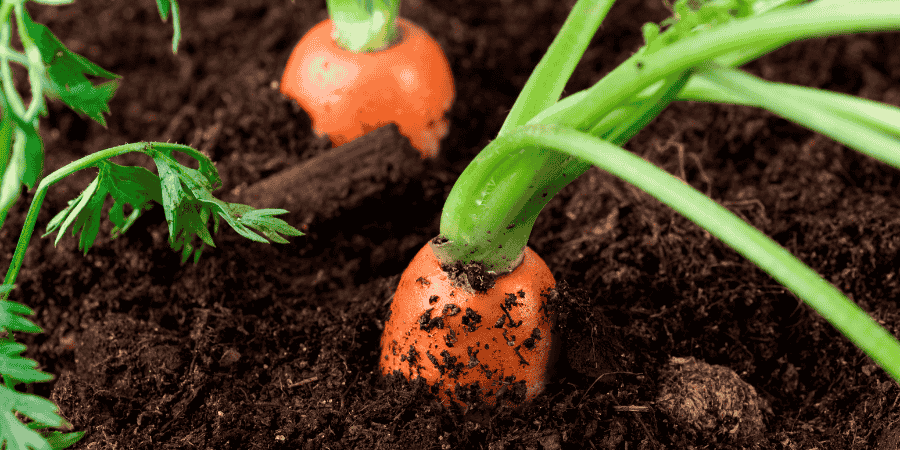
Growing carrots in Oklahoma presents unique opportunities and challenges for gardeners looking to cultivate these nutritious root vegetables.
This guide will help you learn how to grow carrots in Oklahoma’s unique climate and soil.
Carrots are a rewarding and nutritious crop well-suited for home gardens in Oklahoma. Gardeners can enjoy a great harvest of fresh, tasty carrots.
They just need to understand the state’s growing conditions and the best ways to grow carrots.
Oklahoma’s climate presents challenges and opportunities for carrot growers – from heavy clay soils to intense heat and drought periods.
With proper planning and care, carrots can grow well in Oklahoma City. They can also enhance your home vegetable garden.
Planting carrots at home in Oklahoma delivers multiple benefits:
- Access to fresh, organic produce.
- Cost savings compared to store-bought options.
- The ability to choose from numerous varieties not commonly found in supermarkets.
Home-grown carrots also offer superior flavor and texture compared to their commercial counterparts.
Understanding Oklahoma’s Climate for Carrot Growing
Oklahoma’s climate presents both opportunities and challenges for carrot cultivation. The state spans USDA growing zones 6a through 7b, creating diverse growing conditions across different regions.
Seasonal Temperature Patterns
Oklahoma includes USDA hardiness zones 6a to 7b. The average minimum winter temperatures range from -10°F to 10°F.
While carrots can tolerate light frost, frigid winters can damage or kill unprotected carrot crops.
The state’s hot summers often have daytime highs over 90°F. This can be a problem because carrots grow best in cooler temperatures.
| Zone | Min Temp (°F) |
| 6a | -10 to -5 |
| 6b | -5 to 0 |
| 7a | 0 to 5 |
| 7b | 5 to 10 |
Spring (March-May): Mild temperatures ideal for carrot development. Summer (June-August): High temperatures require additional care measures.
Fall (September-November): Excellent growing conditions for fall crops. Winter (December-February): Potential for growing with protection
Rainfall and Moisture Considerations
Oklahoma gets about 36 inches of rain each year. However, the rain is not always evenly spread. There are times of drought followed by heavy downpours.
Carrots require consistent soil moisture, so irrigation management is key. Oklahoma’s soils are heavy in clay, impeding carrot roots’ straight and profound growth. Careful soil preparation is essential for success.
- Spring: Regular rainfall is beneficial for germination
- Summer: Often dry with sporadic heavy rains
- Fall: Generally moderate rainfall
- Winter: Limited precipitation
Impact of Oklahoma Soil Composition
Oklahoma’s predominantly clay soil presents specific challenges for carrot cultivation. The dense structure can impede root development and proper drainage. However, you can overcome these challenges with proper soil amendment techniques.
Selecting the Best Carrot Varieties for Oklahoma Gardens
With heavy clay soils prevalent in Oklahoma, short-rooted carrot varieties are often the best choice. These types are less likely to grow misshapen or forked than longer varieties that struggle to push through dense soil. Heat-tolerant and disease-resistant cultivars are also wise selections for Oklahoma’s growing conditions.
Some recommended carrot varieties for Oklahoma gardens include:
- Danvers Half-Long: A dependable 7″ carrot that performs well in heavy soils.
- Nantes: Cylindrical roots with sweet flavor. Does well in heavier soils.
- Imperator: The classic long and slender carrot. Best suited for deep, loose soils.
- Little Fingers: A small 3-4″ Nantes type good for dense soils.
- Sugarsnax 54: Sweet “baby” carrots with firm carrot tops. Highly disease resistant.
A study by the Oklahoma Cooperative Extension Service found something interesting.
Carrots grown in sandy loam soils produced 28% more than those grown in other types of soil. Researchers compared this to carrots grown in silt loam or clay loam soils.
However, amending clay soil with aged compost yields much closer to the sandy loam results.
This shows that soil modification practices allow heavier Oklahoma soils, even the more extended carrot types, to grow successfully.
You will learn about short-rooted varieties that are great for clay soils. You will also discover heat-tolerant plants that can handle Oklahoma summers.
Finally, you will find disease-resistant options that help keep crops healthy.
The variety of recommendations includes specific traits and growing features. This will help you make smart choices for your garden.
Short-Rooted Varieties for Heavy Soils
- Chantenay Red Core
- Paris Market
- Oxheart
Heat-Tolerant Cultivars
- Danvers Half-Long
- Red Core Chantenay
- Kuroda
Disease-Resistant Options
- Yellowstone
- Naval
- Bolero
Recommended Varieties with Proven Success
Danvers Half-Long: Excellent performance in clay soils
- Length: 6-8 inches
- Days to maturity: 75
- Special features: Strong tops, good storage capability
Nantes: Superior flavor profile
- Length: 6-7 inches
- Days to maturity: 65-70
- Special features: Sweet taste, crisp texture
Imperator: Ideal for more profound, amended soils
- Length: 8-10 inches
- Days to maturity: 75-80
- Special features: Traditional supermarket appearance
Growing Carrots in Oklahoma: Step-by-Step Guide
Success in growing carrots requires careful attention to fundamental cultivation practices. This section guides you through the growing process. It covers choosing the best garden location and using proper planting techniques.
You’ll find detailed guidance on soil preparation, including specific amendments for Oklahoma’s clay soils, along with precise planting instructions.
This practical guide ensures you know how to establish healthy carrot crops in your Oklahoma garden.
Site Selection
Carrots grow best in full-sun locations that receive at least 6-8 hours of direct sunlight daily. Choose a spot with good drainage and avoid low-lying areas where water tends to collect. Areas with some protection from strong winds are ideal.
Optimal Sun Exposure:
- Morning sun exposure is ideal
- Afternoon shade can benefit summer squash
- Avoid areas shaded by buildings or large trees
Drainage Patterns:
- Slightly sloped ground promotes proper drainage
- Avoid low-lying areas where water collects
- Consider raised beds for improved drainage
Soil Preparation Requirements
Before sowing carrots, conduct a soil test to determine the soil’s nutrient profile and pH. Carrots prefer a pH between 6.0 to 6.8. Oklahoma soils are more alkaline, so sulfur may be needed to lower the pH.
Work the soil to a depth of at least 12 inches, removing rocks and breaking up clumps. Mixing in aged compost will improve moisture retention and help loosen heavy clay. Aim for a fine, crumbly consistency. Avoid using fresh manure, as it can cause forking of carrot roots.
Testing and Amending Clay Soil:
- Conduct soil tests through Oklahoma State University Extension
- Add organic matter to improve the structure
- Incorporate sand to enhance drainage
- Apply gypsum to break up clay particles
Achieving Proper Depth:
- Minimum soil depth: 12 inches
- Preferred depth: 18-24 inches
- Loose, friable texture throughout
pH Requirements:
- Optimal range: 6.0-6.8
- Test annually
- Adjust using appropriate amendments
Planting Process
Gardeners usually plant carrots directly in the garden 2-3 weeks before the last spring frost. This is typically from mid-March to early April in most of Oklahoma.
For fall harvests, sow carrots 10-12 weeks before the first fall frost, usually mid-July to early August.
Create shallow furrows ¼ inch deep and 1 foot apart. Sow seeds ½ inch apart and cover lightly with soil. Gently water to moisten the carrot seed bed.
Maintain consistent moisture until seedlings emerge, which can take up to 21 days.
Thin carrots are 1-4 inches apart, depending on the variety’s mature size, while tops are 2 inches tall. Thinning is essential to allow room for proper root development.
Seed Bed Preparation:
- Till the soil has a fine texture
- Remove rocks and debris
- Level surface carefully
- Create raised rows if desired
Planting Guidelines:
- Depth: 1/4 inch
- Row spacing: 12-18 inches
- Seed spacing: 1-2 inches
- Thin to: 3-4 inches apart
Essential Care Guide for Oklahoma Carrot Gardens
Proper care and maintenance are critical for developing healthy, flavorful carrots. This section provides detailed information about irrigation requirements, fertilization strategies, and protection measures specific to Oklahoma conditions.
You will learn how to manage water needs in hot summers. You will also create effective fertilization schedules. Finally, you will protect your crops from environmental stresses.
The guide offers both conventional and organic ways to care for carrots. This lets you pick methods that match your gardening style.
Irrigation Management
Consistent moisture is crucial for carrot root development. Carrots require about 1 inch of water per week from rain or irrigation.
Oklahoma’s tendency for dry spells means gardeners must be diligent with watering.
Use drip irrigation or hand watering to supply moisture directly to the root zone. Avoid overhead watering to reduce the risk of fungal diseases on foliage.
Monitor soil moisture regularly and water deeply to encourage profound root growth.
Using straw, grass clippings, or shredded leaves as mulch helps keep soil moist. It also helps control soil temperatures during Oklahoma’s hot summers. Apply mulch when carrots are 3-4 inches tall.
Watering Schedule:
- Germination phase: Light, frequent watering
- Growing phase: Deep, less frequent watering
- Mature phase: Moderate, consistent moisture
Moisture Monitoring:
- Use a moisture meter or finger test
- Maintain even moisture 6 inches deep
- Adjust for rainfall and temperature
Fertilization Strategy
Carrots have moderate fertility needs. Excess nitrogen can cause hairy and forked roots. Instead, fertilize according to soil test recommendations, focusing on phosphorus and potassium.
You can apply a balanced fertilizer like 10-10-10 at 2-3 pounds per 100 square feet before planting. Avoid fertilizing once you see carrots growing unless you notice severe deficiencies.
Compost and well-aged manure in the soil before planting are good organic fertilizer options for carrots. Oklahoma soils often benefit from supplementation with organic matter.
| Growth Stage | Fertilizer Need |
| Pre-planting | Incorporate balanced fertilizer or compost |
| Early growth | None, unless deficiencies noted |
| Root sizing | Side-dress if tops pale and growth slow |
Oklahoma State University Extension says that a pre-plant soil test is the best way to check carrot fertility. This test helps avoid nutrient imbalances that can harm root development.
Deficiencies in phosphorus and potassium are more likely to occur in Oklahoma soils than nitrogen deficits.
Application Timeline:
- Pre-planting: Complete organic fertilizer
- 3 weeks after emergence: Balanced fertilizer
- 6 weeks after emergence: High-phosphorus fertilizer
Organic Options:
- Compost tea
- Fish emulsion
- Seaweed extract
Protection Measures
Oklahoma’s intense summer heat can cause carrot growth to stall and negatively impact flavor. Installing shade cloth over crops during the hottest parts of the day can help prevent heat stress. Aim to provide shade from late morning to late afternoon when temperatures are over 90°F.
Carrot seedlings are sensitive to drying winds and may need protection with row cover or windbreaks made from straw bales.
Temperatures below 50°F can cause carrots to become fibrous and bitter. Cover plants with row cover, straw, or low tunnels when cold temperatures threaten.
Early spring crops that mature as summer heat arrives may need extra protection to maintain quality.
Consider using shade cloth in combination with more frequent irrigation to cool soil and plants.
In areas prone to hard freezes, thick straw mulch over carrot beds can protect roots, allowing for harvest well into winter.
Some growers even construct low tunnels or cold frames over winter carrot plantings to extend the harvest.
The Oklahoma Cooperative Extension Service did an analysis of temperature data from Oklahoma Mesonet.
They found that the average number of days with temperatures over 90°F increased. From 1989 to 2019, this increase was 20 days. This shows a trend of more extreme summer heat.
This finding highlights the increasing importance of heat mitigation strategies like shade cloth for crops such as carrots.
Implement these protective strategies:
Summer Protection:
- 30% shade cloth during peak heat
- Mulch application
- Windbreaks as needed
Winter Protection:
- Row covers
- Cold frames
- Mulch layers
Growth Management
Regular maintenance ensures healthy development:
Thinning Schedule:
- First thinning: 2-inch height
- Second thinning: 4-inch height
- Final spacing: 3-4 inches
Weed Control:
- Regular cultivation
- Mulch application
- Hand weeding as needed
Environmental Stress Management
Oklahoma’s climate can present significant challenges for carrot growth. This section addresses specific environmental stresses daily in Oklahoma gardens and provides practical solutions for managing them. Y
You will learn to spot signs of heat and drought stress. You will also use effective prevention strategies. Finally, you will take action when problems come up.
This knowledge is essential for maintaining healthy carrot crops throughout Oklahoma’s varying weather conditions.
Heat Stress Prevention
Carrots are a cool-season crop that can suffer under Oklahoma’s intense summer heat. Growth may slow or stop altogether, and roots may become woody and bitter when soil temperatures climb above 85°F.
Signs of heat stress in carrots include:
- Wilted, yellowing foliage
- Elongated stems
- Fibrous roots
- Bitter flavor
To minimize heat stress:
- Plant early so the crop matures before the hottest weather arrives
- Provide shade using a cloth or natural shade during the midday heat
- Keep soil evenly moist; heat + drought stress is especially damaging
- Mulch to keep the soil cool
- Choose heat-tolerant varieties
Drought Management
Even with Oklahoma’s average of 36 inches of annual rainfall, drought can threaten carrot crops.
Carrots have relatively shallow root systems, and consistent soil moisture is key to optimal development.
Strategies for drought management include:
- Water early in the morning to minimize evaporation
- Water deeply and less frequently to encourage deeper rooting
- Mulching to reduce evaporation from the soil surface
- Use drip irrigation or soaker hoses for efficient water delivery
- Planting in shallow trenches to catch and hold irrigation water and rainfall
Signs of drought stress include wilting leaves, yellow or brown leaf edges, and slowed growth.
To check the moisture, stick your finger into the soil near the carrots. If it feels dry a few inches down, it’s time to water.
The Oklahoma Mesonet reports that from 1997 to 2016, an average of 38% of the state faced drought. This happened during any week of the growing season.
In the most severe drought years, over 80% of the state was under drought conditions for 50-80 weeks of the year. These statistics underscore the importance of drought management strategies for all Oklahoma crops.
Timing Your Carrot Planting in Oklahoma
Spring carrots are planted 2-3 weeks before the last spring frost, typically March 15 to April 15 in most of Oklahoma.
The soil should have warmed to at least 50°F for good germination. Farmers sow fall crops 10-12 weeks before the first fall frost, which typically occurs between July 15 and August 15 in many areas.
Use succession plantings every 3 weeks for a continuous supply of fresh carrots. Many gardeners make 2-3 plantings in both spring and fall.
High temperatures over 85°F can reduce germination, so avoid sowing in hot weather.
Season extension techniques like low tunnels can allow for winter carrot harvests. Sow carrots in Sept. for Nov.-Jan. harvest.
Cover beds with row covers or low tunnels before hard freezes to keep the ground from freezing. Harvest as needed throughout winter.
| Planting | North OK | South OK |
| Spring | Mar 15-Apr 15 | Feb 25-Mar 30 |
| Fall | Jul 15-Aug 10 | Aug 1-Sept 1 |
| Winter | Sept 1-15 | Sept 15-30 |
A study by the Noble Research Institute in Ardmore, OK, found that carrots sown on September 15 and grown in a low tunnel yielded 37% more than the same variety on October 1.
The earlier planting helped the carrots grow before the hard freezes. This led to larger carrots and a longer harvest period into winter.
Soil Preparation and Planting Techniques
Oklahoma’s dense, clay-heavy soils require extra preparation for the best carrot crop.
Loosen the soil to a depth of at least 12 inches and a width of 12 inches where you will plant each carrot row. Remove all rocks, debris, and clumps.
Mix 2-4 inches of compost to improve soil texture and fertility. If soil pH exceeds 6.8, use elemental sulfur according to soil test recommendations. Carrots grow optimally in soil with a pH of 6.0-6.8.
Direct sow carrot seeds ¼” deep, ½” apart in rows 12″ apart. Cover lightly with loose soil or vermiculite. Keep soil moist until germination. Thin carrots to 1-4″ apart when tops are 2″ tall.
An Oklahoma State University study found that adding just 1 inch of compost to the top 6 inches of soil increased carrot seedling emergence rates by 24% compared to unamended soil. The compost improved soil moisture retention and reduced surface crusting.
Carrot Care and Maintenance
Carrots need 1 inch of water per week. Consistency is key, as fluctuations in soil moisture can cause splitting and cracking. Oklahoma’s tendency for dry spells means irrigation is usually necessary for the best crop.
Using mulch is one of the best ways to maintain even soil moisture. Apply a 2-3 inch layer of straw, grass clippings, or shredded leaves when carrots are 3 inches tall. Natural mulches also help suppress weeds and moderate soil temperatures.
Pull weeds when they are small to avoid disturbing carrot roots. Carrots need to compete better against aggressive weeds.
Hand weeding is the most effective. A light layer of mulch applied after planting can help prevent weed seeds from germinating.
Common pest problems for Oklahoma carrots include aphids, whiteflies, and root-knot nematodes.
Lady beetles and lacewings provide natural aphid and whitefly control. You can avoid root-knot nematodes by planting resistant varieties and rotating crops.
Leaf blights are the most frequent disease issue. Prevent them by watering the soil, not the leaves.
If you suspect a fungal disease, remove the infected parts of the carrot plant and apply a fungicide approved for edibles.
Oklahoma Cooperative Extension Service recommends using floating row covers over carrot plantings to prevent infestation by carrot rust flies.
The adult flies lay eggs near carrots in spring and fall, and the larvae tunnel into carrot roots, causing stunting and distortion.
Harvesting Oklahoma-Grown Carrots
Most carrots are ready for harvest 60-80 days from seeding when the shoulders are about 3/4 to 1 inch across.
Some prefer the taste of baby carrots harvested earlier when roots are roughly 1/2 inch in diameter.
To harvest, gently loosen the soil with a garden fork and pull the carrots by their tops.
Wash off excess soil and refrigerate immediately for best quality. You can store carrots in the refrigerator for 4-6 weeks.
Cover carrot beds with an 18-inch-thick layer of straw mulch in the fall for a prolonged harvest.
Harvest carrots throughout the winter as needed, pulling back the mulch to dig roots. Keep the mulch in place; it will help insulate the soil on cold nights.
Data from the Oklahoma Cooperative Extension Service shows which carrot varieties taste the best in Oklahoma.
The top varieties are ‘Nelson,’ ‘Bolero,’ and ‘Sugarsnax 54.’ Each of these scored over 4 on a flavor scale of 1 to 5. They also performed well in terms of yield.
Troubleshooting Common Issues
Forked, twisted, or stubby carrot roots are usually caused by rocky soil, excess nitrogen fertilizer, or nematode damage. Prepare soil deeply and avoid fresh manures to prevent forking.
Heat stress can cause carrots to produce a woody, bitter root. Provide shade and ample water during hot spells. Always use mulch to moderate soil temperature.
Wireworms are a soil-dwelling pest that can chew holes in roots. Rotate crops yearly and turn soil at least 30 days before planting to reduce infestations.
Fungal leaf blights cause spotting on leaves. Prevent infection by keeping leaves as dry as possible. Water soil directly and space plants to allow good air circulation. Apply a fungicide if disease pressure is high.
Season Extension Techniques
With protection from the elements, carrots can be harvested nearly year-round in Oklahoma gardens. Row covers, low tunnels and cold frames extend the carrot growing season.
Row covers are lightweight fabrics draped over wire hoops to form a protective tunnel over crops. They provide several degrees of frost protection and block drying winds. Use in spring and fall to get earlier and later harvests.
Low tunnels are a larger version of row covers, tall enough to walk under. Builders usually construct them from metal conduit or PVC hoops covered with plastic sheeting. Low tunnels can extend carrot harvest into winter months.
Cold frames are bottomless boxes with a clear lid to trap solar heat around crops. You can sow carrots in cold frames for a late fall harvest. The frames keep soil workable for digging roots.
A study at Oklahoma State University showed that carrots grown in low tunnels were ready to harvest earlier.
They were ready 4 weeks sooner in spring. They also lasted 6 weeks longer into winter compared to uncovered plots. Yields were 40% higher in the low tunnel versus the open field crop.
Conclusion
Growing carrots successfully in Oklahoma requires understanding local conditions, selecting appropriate varieties, and implementing proper care techniques. By following the guidelines in this guide, Oklahoma gardeners can have plenty of carrots to harvest all year.
Additional Resources
Contact these organizations for additional support:
Oklahoma State University Extension Service
- Website: extension.okstate.edu
- Phone: [Local office numbers]
- Services: Soil testing, plant disease diagnosis
Local Garden Clubs
- Oklahoma Horticultural Society
- County Master Gardener Programs
- Community Gardens
Recommended Suppliers
- Local garden centers
- Oklahoma-based seed companies
- Regional organic suppliers
This comprehensive guide provides Oklahoma gardeners with the knowledge and resources to grow carrots successfully in local conditions. Remember that successful gardening often requires experimentation and adaptation to specific local conditions