Welcome to your comprehensive guide to growing delicious, home-grown carrots in Texas!
Whether you have a small backyard or a container garden, this guide will help you grow carrots in Texas.
Growing carrots in Texas is more than just a task. It is a great chance for gardeners. They can grow fresh, tasty carrots and healthy vegetables in their backyard. The Lone Star State’s climate and soil conditions offer a canvas for your gardening skills to flourish.
Texas has different climate zones, from USDA zones 6a to 9b. These zones create different conditions that affect carrot growth throughout the year.
This guide specifically addresses the needs of small-space gardeners, container enthusiasts, and those working with limited growing areas.
Why grow carrots in Texas? Home-grown carrots offer superior flavor, enhanced nutritional value, and the satisfaction of harvesting your produce. Additionally, growing carrots can
- Save money on grocery bills
- Provide educational opportunities for children
- Ensure access to pesticide-free vegetables
- Create a sustainable food source
Related: Growing Carrots in Oklahoma: A Complete Guide for Success
Best Carrot Varieties for Texas Conditions
Not every carrot performs well in Texas’s clay soils or summer heat. The following varieties are proven performers.
| Variety | Days to Maturity | Heat Tolerance | Soil Suitability | Container-Friendly |
| Danvers Half Long | 70–75 | High | Handles clay & shallow soils | Moderate |
| Chantenay Red Core | 65–70 | Excellent | Thrives in heavy soils | Very good |
| Nantes | 70 | Good | Loose soils, sweet flavor | Good |
| Imperator 58 | 75–80 | Moderate | Needs deep, sandy soil | Limited |
| Little Finger | 55–60 | Medium | Perfect for raised beds & pots | Excellent |
| Thumbelina (round carrot) | 60 | Moderate | Ideal for shallow, rocky soils | Excellent |
Carrot Planting Calendar for Texas
Timing your planting is the #1 predictor of success. Use this regional calendar:
| Region | Spring Planting Window | Fall Planting Window | Notes |
| North Texas | Feb 1 – Mar 15 | Aug 15 – Sep 30 | Protect seedlings from late frosts |
| Central Texas | Jan 15 – Mar 1 | Aug 20 – Oct 15 | Shade cloth recommended for late summer |
| South Texas | Jan 1 – Feb 15 | Sep 1 – Nov 15 | Can even attempt winter crops with row covers |
Understanding Texas’s Carrot-Growing Zones & Climate
Understanding Texas’s climate is not just a matter of interest; it’s a key factor for successful carrot cultivation. Strategic timing is essential for optimal growth and development of your carrot crop.
The following detailed breakdown considers variations across different regions of Texas, ensuring gardeners can plan their plantings effectively regardless of location.
North Texas (Zones 6a-7b):
- Fall Planting: August 15 – September 15
- Spring Planting: January 15 – March 1
- Days to Maturity: 70-80 days
Central Texas (Zones 7b-8b):
- Fall Planting: September 1 – October 1
- Spring Planting: January 1 – February 15
- Days to Maturity: 65-75 days
South Texas (Zones 8b-9b):
- Fall Planting: September 15 – October 15
- Spring Planting: December 15 – February 1
- Days to Maturity: 60-70 days
Temperature Guidelines:
- Ideal Soil Temperature: 65-75°F
- Minimum Germination Temperature: 40°F
- Maximum Germination Temperature: 85°F
Successfully timing your carrot plantings in Texas requires careful attention to the calendar and local weather patterns.
These guidelines offer a good starting point. Gardeners should keep detailed records of their planting dates and results. This will help them adjust their timing for their specific microclimate.
This attention to detail will help develop a more precise growing calendar.
The complexities of Texas weather patterns mean that gardeners must remain flexible and prepared to adapt their planting schedule. This adaptability is a key trait for successful gardening in Texas.
Understanding this framework allows for successful carrot cultivation while working within the constraints of our challenging climate.
Before we start the step-by-step process of growing carrots, we need to know that success relies on good preparation and careful attention.
Each step builds upon the previous one, creating a foundation for healthy carrot development. This systematic approach helps ensure that your efforts yield the best possible results.
Step-by-Step Guide to Growing Carrots in Texas
This comprehensive guide breaks down the carrot-growing process into manageable steps, each crucial for success in Texas gardens.
By following these detailed instructions, novice and experienced gardeners can achieve satisfying results.
Site Selection
Choosing the right location is crucial for carrot success:
Light Requirements:
- Full sun (6-8 hours daily)
- Partial shade during intense summer months
- Protection from strong winds
Space Requirements:
- Row Spacing: 12-18 inches
- Plant Spacing: 2-3 inches
- Soil Depth: Minimum 12 inches
Soil Preparation
Proper soil preparation is essential for straight, well-formed carrots:
Soil Testing:
- pH Range: 6.0-6.8
- Texture: Light, loose, well-draining
- Organic Matter: 5-10%
Soil Amendment Guide:
| Amendment Type | Amount per 100 sq ft | Purpose |
| Compost | 2-3 inches | Organic matter |
| Sand | 1-2 inches | Drainage |
| Peat Moss | 1 inch | Moisture retention |
Planting Process
Follow these steps for successful carrot planting:
- Prepare Soil
- Remove rocks and debris
- Loosen soil to 12 inches depth
- Level the surface carefully
- Sow Seeds
- Depth: 1/4 inch
- Spacing: 1 inch apart
- Row Width: 12-18 inches
- Initial Care
- Water gently
- Keep soil consistently moist
The success of your carrot crop largely depends on how well you execute these fundamental steps.
While the process may seem detailed, each element plays a vital role in establishing healthy, productive plants.
Remember that attention to detail during these early stages will pay dividends when harvest arrives.
As we discuss carrot varieties, consider how the previous steps create the foundation for successful growth.
The variety selection process builds on this foundation. It helps make sure your gardening efforts match your goals and growing conditions.
Selecting the Right Carrot Varieties for Texas
The choice of carrot varieties can significantly impact your gardening success in Texas. Knowing the traits and needs of different plant types helps you choose the right one for your growing conditions and goals.
Heat-Tolerant Varieties:
- Danvers Half Long
- Nantes
- Imperator 58
- Chantenay Red Core
Container-Friendly Varieties:
- Little Finger
- Romeo
- Paris Market
- Thumbelina
Disease-Resistant Options:
- Bolero F1
- Mokum F1
- Naval F1
Carrot Variety Comparison Table:
| Variety | Days to Maturity | Length | Heat Tolerance | Container Suitable |
| Danvers | 75 days | 6-8″ | High | Yes |
| Nantes | 70 days | 6-7″ | Medium | Yes |
| Little Finger | 55 days | 3-4″ | Medium | Excellent |
Recommended Varieties for Texas Gardens
Heat-Tolerant Varieties
- Danvers Half Long
- Nantes
- Imperator 58
- Chantenay Red Core
Container-Friendly Options
- Little Finger
- Romeo
- Paris Market
- Thumbelina
Disease-Resistant Choices
- Bolero F1
- Mokum F1
- Naval F1
Choosing appropriate carrot varieties represents a crucial decision point in your gardening journey. The success of your harvest often depends on choosing the right varieties for Texas conditions. It would be best if you also considered your specific needs and preferences.
Before discussing care and maintenance, remember that even the hardiest varieties require proper attention to reach their full potential.
The following section outlines the essential practices to help your chosen varieties thrive.
Essential Care and Maintenance
Proper maintenance forms the backbone of successful carrot cultivation in Texas. This section outlines the critical care requirements to help carrots develop properly and reach their full potential.
Watering Schedule:
- Seedlings: Daily light watering
- Established Plants: 1-1.5 inches weekly
- Morning watering preferred
Mulching Guidelines:
- Material: Straw or grass clippings
- Depth: 2-3 inches
- Application: After carrot seedlings emerge
Fertilization Schedule:
| Growth Stage | Fertilizer Type | Application Rate |
| Planting | 5-10-10 | 2 lbs/100 sq ft |
| 3 Weeks | Fish Emulsion | Per package |
| 6 Weeks | 5-10-10 | 1 lb/100 sq ft |
These care guidelines represent the minimum requirements for successful carrot growing in Texas.
As you gain experience, you’ll likely develop additional techniques that work well.
The key is maintaining consistency in your care routine while remaining observant of your plants’ needs.
Understanding proper maintenance practices provides the foundation for addressing the unique challenges that Texas gardeners face.
The next section explores these challenges and provides practical solutions for overcoming them.
Managing Texas Garden Challenges
Before exploring the specific challenges of growing carrots in Texas, it’s important to understand that these obstacles are manageable.
Texas gardeners can manage problems with their carrot crops. They can deal with environmental stress, pests, and diseases. Good preparation and knowledge are key to success.
Heat Stress Management:
- Install shade cloth during peak summer months (30-40% shade rating recommended)
- Maintain consistent soil moisture with drip irrigation
- Apply 2-3 inches of organic mulch to regulate soil temperature
- Monitor soil temperature (should not exceed 85°F)
Pest Control Strategy Table:
| Pest Type | Prevention | Organic Control | Chemical Control |
| Carrot Rust Fly | Floating row covers | Neem oil | Pyrethrin (last resort) |
| Wireworms | Crop rotation | Beneficial nematodes | Not recommended |
| Nematodes | Marigold companion planting | Solarization | Limited options |
| Leaf Miners | Regular monitoring | Spinosad | Only if severe |
Disease Prevention Guidelines:
- Cultural Controls
- Maintain proper spacing
- Ensure good air circulation
- Practice crop rotation (3-year minimum)
- Remove infected plants promptly
- Common Texas Carrot Diseases
- Bacterial Leaf Blight
- Alternaria Leaf Spot
- Root Rot
- Powdery Mildew
To manage these challenges well, you must stay alert and act quickly. The next sections will explain specific ways to handle common problems that Texas carrot growers face.
Harvesting Your Texas Carrots
Understanding the proper timing and techniques for harvesting ensures you’ll get the most from your carrot crop. This critical phase requires attention to detail and careful handling to maximize harvest quality.
Harvest Readiness Indicators:
- Root diameter at the soil surface (½ inch minimum)
- The bright orange color visible at the crown
- Time from planting (check variety specifications)
- Leaf development and vigor
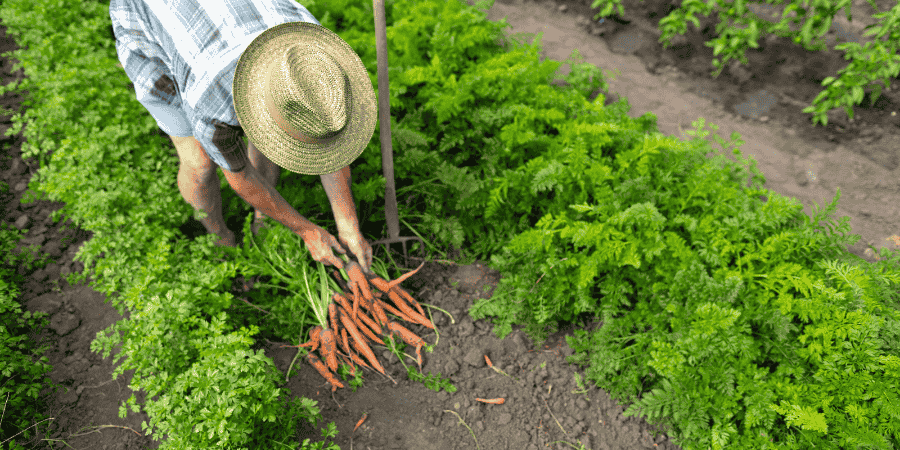
Harvesting Process:
- Water deeply 24 hours before harvest
- Loosen soil gently with a garden fork
- Grasp firmly at the crown base
- Pull straight up with steady pressure
- Clean and sort immediately
Storage Guidelines:
| Storage Method | Temperature | Humidity | Duration | Special Notes |
| Refrigerator | 32-38°F | 95% | 4-6 weeks | Remove carrot top |
| Root Cellar | 32-40°F | 90-95% | 4-5 months | Layer in sand |
| In-Ground | Soil temp below 65°F | Natural | Until needed | Cover with mulch |
Troubleshooting Common Issues
Success in carrot growing often depends on identifying and addressing problems early. This section provides systematic approaches to diagnosing and resolving common issues Texas carrot growers face.
The solution to most carrot-growing problems lies in prevention and early intervention. Knowing these common issues helps gardeners spot and fix problems early, leading to a better growing experience.
Each challenge presents an opportunity to learn and improve your gardening practices. By maintaining detailed records of problems encountered and solutions attempted, you can develop more effective growing strategies over time
Year-Round Growing Calendar
A successful year-round carrot growing strategy requires careful planning and attention to seasonal variations. The following calendar provides a comprehensive guide for Texas gardeners, accounting for regional differences and climate patterns.
Monthly Planning Guide:
January:
- North Texas: Start indoor seedlings
- Central Texas: Direct sow spring crop
- South Texas: Maintain winter crop
- Tasks: Soil preparation, bed maintenance
February:
- North Texas: Begin outdoor planting carrots
- Central Texas: Thin seedlings
- South Texas: Continue harvest
- Tasks: Fertilization, pest monitoring
[Monthly breakdown continues through December with specific regional tasks and timing]
Seasonal Considerations Table:
| Season | Temperature Range | Key Activities | Special Notes |
| Spring | 60-75°F | Main planting | Watch for late frost |
| Summer | 75-95°F+ | Heat management | Shade protection |
| Fall | 65-80°F | Second crop | Monitor moisture |
| Winter | 45-65°F | Harvest/Storage | Frost protection |
Crop Rotation Strategy:
- First Year: Root crops (carrots)
- Second Year: Leafy greens
- Third Year: Legumes
- Fourth Year: Fruiting vegetables
Conclusion: Keys to Success
Successfully growing carrots in Texas requires dedication, knowledge, and careful attention to detail. By following the guidelines outlined in this comprehensive guide, gardeners can overcome common challenges and achieve satisfying results.
Key Success Factors:
- Proper Timing
- Follow regional planting calendars
- Monitor weather patterns
- Adjust for microclimate variations
- Soil Management
- Maintain proper pH
- Ensure adequate drainage
- Regular amendment program
- Variety Selection
- Choose climate-appropriate varieties
- Consider space constraints
- Plan for succession planting
Resources for Continued Learning:
- Texas A&M AgriLife Extension Service
- Local Master Gardener programs
- Community garden organizations
- Regional gardening associations
Community Support Options:
- Join local gardening groups
- Participate in carrot seed exchanges
- Attend gardening workshops
- Share experiences online
- Partner with experienced gardeners
Final Recommendations:
- Keep detailed garden records
- Document successes and failures
- Photograph carrot plant development
- Share knowledge with others
- Continuously adapt and learn
Texas gardeners can grow carrots all year by using these methods and staying flexible.
Remember that each growing season provides new opportunities to learn and improve your gardening skills.
The joy of harvesting your home-grown carrots makes the effort worthwhile. As you gain experience, you will find techniques that work best for you. This will add to Texas’s rich tradition of vegetable gardens.